
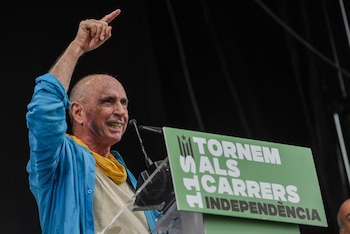
The Struggles of Catalonia and the ANC’s Stance on President Illa
The Catalan National Assembly (ANC) has recently voiced its deep concern regarding the leadership of President Salvador Illa. In what they describe as “selling smoke with a grave face,” the ANC challenges the effectiveness of the *Generalitat of Catalonia* under Illa’s administration during his first year in office.
The Political Landscape in Catalonia
The Catalan National Assembly has pinpointed significant worries about the current political stance in Catalonia. According to an official statement released this past Friday, the ANC accused the Generalitat of lacking the financial capacity and essential competencies needed to implement substantial investments or develop comprehensive social spending programs. These deficiencies have been detrimental to the region, pushing the ANC to question Illa’s ability to lead effectively.
In their view, the president has failed to meet various commitments made during his investiture, particularly concerning unique financing, the transfer of Rodalies (the regional train system), and formulating a viable strategy to address the ongoing Catalan political conflict. This perceived failure aligns with a broader critique that the current administration is pivoting toward the “Spanishization of Catalonia,” a label implying a dilution of Catalan identity and autonomy.
Discontent Among Independence Activists
The ANC’s disappointment extends beyond just Illa’s administration; it also encompasses the internal dynamics among pro-independence factions themselves. The organization has lamented that the struggle for independence, spearheaded by Junts and ERC, alongside the apparent disorientation of the CUP (Candidatura de Unidad Popular), has been pushed back indefinitely. This weakening of unity among independence activists compounds the frustrations felt by those advocating for increased autonomy.
Their statement emphasizes that Catalonia is experiencing one of the most critical moments in its history. They argue that the solutions offered by autonomist or Spanish authorities are inadequate to face the challenges posed by the 21st century. The ANC firmly holds that only through a re-energized commitment to independence can Catalonia truly address its pressing issues.
A Call to Action
“The ANC calls for a resumption of the roadmap to independence as we approach the next electoral cycle,” stated the organization. This declaration underscores a pivotal moment for Catalan politics, with the ANC positioning itself as an agent of change. There is a sense of urgency among separatists; the organization stresses the necessity of renewed political momentum to revive discussions about autonomy and independence.
Their message resonates particularly among the younger generations in Catalonia, who may feel frustrated and alienated by the slow pace of political progress. The ANC’s renewed campaigning could provide a platform for mobilizing not only seasoned activists but also the youth, who are increasingly considering the potential ramifications of maintaining the status quo.
Looking Ahead: Potential for Change
As the next elections approach, Catalonia stands at a crossroads. The ANC’s criticisms of Salvador Illa and the current political order could galvanize support for a more assertive movement advocating independence—one that shifts the focus from negotiating with Spanish authorities to advancing a self-determined future for Catalonia.
Should an assertive independence strategy emerge, it remains to be seen how the broader political landscape unfolds. Will factions like Junts, ERC, and CUP unite to streamline their efforts towards independence? Can they overcome existing divisions and public dissatisfaction?
Much hinges on the ability of these groups to appeal to the electorate’s sentiments while navigating the complex political terrain of governance and autonomy. The ANC’s call for a renewed focus on independence could be the catalyzing force needed to reinvigorate Catalonia’s political aspirations.
In conclusion, the struggle for Catalan independence remains a contentious topic filled with emotional and political complexities. The ANC’s recent statements reflect a broader yearning for change, highlighting the urgency for effective leadership and strategic action in the face of ongoing challenges. The future of Catalonia’s political landscape will largely depend on how these issues are addressed in the coming months, as aspirations for independence continue to simmer beneath the surface.