
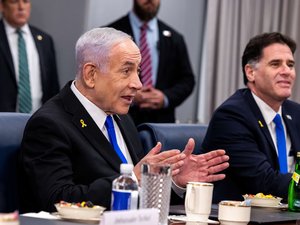
On the night of Thursday to Friday, August 8, 2025, Israeli Prime Minister Benjamin Netanyahu unveiled a controversial five-point plan aimed at “concluding the war” in Gaza. The points outline essential steps including the disarmament of Hamas , the return of all hostages , both alive and deceased, demilitarization , Israeli security control , and establishing an alternative civil administration that neither aligns with Hamas nor the Palestinian Authority. This proposal has sparked significant international backlash, reflecting widespread concern over its potential implications.
The Israeli security cabinet sanctioned the plan on the same night, positioning it as a method to take complete control over the city of Gaza, which has been besieged by conflict and humanitarian issues. France and the United States have yet to issue any official statements regarding the unfolding developments.
Occupying the city of Gaza means the “sacrifice” of the hostages for Hamas
In response, Hamas has criticized Netanyahu’s statements, calling them a “blatant blow” to the negotiation process, and accused the Israeli leadership of committing a “war crime.” A spokesperson for the group claimed, “Netanyahu’s plans undoubtedly confirm that he seeks to get rid of his captives and sacrifice them.” This sentiment emphasizes the pervasive fears surrounding the fate of hostages amid intensified military actions.
A Jordanian official, asked about the governance of Gaza under Netanyahu’s proposal, stated that Arab nations would not support any “Arab Forces” being placed in charge, arguing that security in Gaza must be entrusted to “legitimate Palestinian institutions.” This underlines the complexity of the geopolitical landscape, where local governance remains a sensitive issue.
A plan that must “be immediately stopped” for the UN
<p>The United Nations High Commissioner for Human Rights, Volker Türk, called for the plan to be immediately halted, asserting that it contravenes the International Court of Justice’s decisions on occupation. Türk emphasized that the plan undermines the established right of Palestinians to self-determination and the feasibility of a two-state solution. Ursula von der Leyen, President of the European Commission, echoed this sentiment, suggesting that the Israeli government’s military operations must be re-examined. She also called for the immediate release of all hostages held in inhuman conditions , highlighting humanitarian concerns.
The Israeli Government’s Decision to Further Extend Its Military Operation in Gaza Must Be Reconsidered.
At the same time, there must be the release of all hostages, who are being held in inhumane conditions.
And humanitarian aid must be given immediate and unhindered access to…
– Ursula von der Leyen (@vonderleyen) August 8, 2025
Germany suspends the export of weapons to Israel
In the wake of Netanyahu’s announcement, German Chancellor Friedrich Merz declared a suspension of arms exports to Israel, emphasizing that the current military plan is “more and more difficult to understand.” Until further notice, he announced that Germany would not supply any military equipment that could be employed in Gaza, reiterating international apprehensions regarding the ongoing humanitarian crisis.
“An error” for Keir Starmer
British Prime Minister Keir Starmer characterized the Israeli government’s decision as a “mistake,” urging a reconsideration of the intensified offensive. He contended that this military strategy would not contribute to conflict resolution or the release of hostages, predicting it would result in further massacres. His condemnation showcases a growing concern among Western leaders regarding the ethics of military engagement in Gaza.
Spain “firmly condemns” the plan
Spanish Foreign Affairs Minister Manuel Albares expressed unequivocal opposition to Israel’s military occupation decision. He stated, “This plan will only cause more destruction and suffering,” calling for an immediate ceasefire, urgent humanitarian aid, and a realistic solution that includes the establishment of a viable Palestinian state. Executive statements like these point to a collective demand for international accountability and peace.
Türkiye and China worried about the Palestinian fate
Turkey’s foreign ministry called upon the international community to act decisively against Israel’s plans, claiming it aims to render Gaza uninhabitable . Meanwhile, China expressed serious concern , urging an immediate halt to hostile actions, asserting that Gaza belongs to the Palestinian people and should be treated as an essential component of Palestinian territory.
The recent developments in Gaza reflect a complex interplay of military strategy, humanitarian concerns, and international politics. With leaders across the globe condemning aggressive military actions and calling for humanitarian relief and the immediate release of hostages, the future remains uncertain for those caught in this ongoing conflict. Continued diplomatic efforts will be essential in addressing both the humanitarian crisis and the broader questions of governance and sovereignty in the region.