
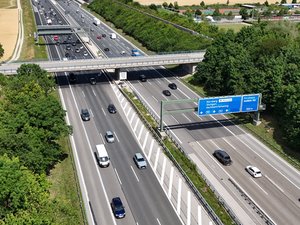
A motorist was flashed at 321 km/h behind the wheel of a Porsche on the A12 motorway , limited to 120 km/h , west of Berlin , on July 28.
This is the speed “The highest” never recorded by this type of radar, according to local police. A motorist was caught driving at an alarming speed of 321 km/h on a road that clearly has a limit of 120 km/h , significantly exceeding the speed limit.
Known worldwide for its notorious lack of speed limitations , the Autobahn indeed has many areas subject to strict limits, particularly on the more frequented stretches or during roadwork.
“Radar Marathon”
The driver was behind the wheel of a Porsche Panamera , a high-performance sports car designed for speed. However, one must wonder if the thrill of speed is worth the severe consequences that accompany such reckless driving. Those who engage in such behavior on highway 12 could face substantial penalties— 900 euros in fines, a deduction of two driving license points , and a possible three-month driving ban , according to reports from a regional public channel.
The driver was detected thanks to a method referred to as a “radar marathon” , implemented by local authorities. This technique involves strategically placing multiple radars along the Land of Jerichow to capture instances of extreme speeding.
This extraordinary incident has prompted local police to issue a grave warning to motorists, emphasizing the importance of adhering to established speed limits and driving safely. They stressed that the Autobahn, despite its reputation, is not an open invitation for reckless behavior.
Understanding Speed Limits on the Autobahn
The Autobahn is often celebrated for its high-speed driving opportunities , yet a misconception does exist. Many assume that the absence of a universal speed limit allows for unfettered speeding anywhere along the highway. In reality, specific stretches of the Autobahn are subject to speed regulations. Areas going through construction , as well as sections that are particularly congested, often have clearly marked limits to ensure safety.
Moreover, the reasoning behind these speed limits is rooted in concerns for public safety . Increasing traffic density and negative environmental impacts, including air quality degradation, have sparked discussions on how to enforce stricter measures. Authorities have also pointed out that heightened speeds result in longer stopping distances, increasing the chances of accidents, particularly during adverse weather conditions.
The Consequences of Reckless Speeding
Instance of extreme speeding, such as the one involving the Porsche Panamera , can lead to devastating repercussions far beyond monetary penalties. The risk of accidents increases dramatically at those speeds, not only for the driver but also for other vehicles on the highway. Each year, thousands of lives are affected by severe and sometimes fatal accidents attributed to reckless driving.
Furthermore, authorities have noted that vehicles, when pushed to such high speeds, become increasingly difficult to control. The vehicle’s dynamics change , affecting braking distances and overall stability. Hence, it’s crucial for drivers to recognize that speed limits are not merely suggestions but essential regulations aimed at promoting safety.
Flashing a camera at a vehicle speeding at 321 km/h serves as a strong reminder of the hazards associated with reckless driving. Such instances force us to reflect on the balance between speed, safety, and responsibility on the roads. As we navigate our highways, ensuring we are always in control should be a priority, not just a consideration. Authorities will continue to implement measures like the “radar marathon” to maintain safety standards and ensure that all motorists are held accountable for their actions on the road.