
The AI boom has propelled Big Tech into unprecedented realms of capital expenditure (capex), with spending soaring to heights never seen before. As investors grow apprehensive that the bubble may burst , they grapple with concerns about the profitability of AI. Recent results show a glimmer of hope yet come with numerous caveats. This article delves into the spending habits of major tech firms, focusing on their implications for the future of AI.
The Cloud Reaches Capex Levels. As reported in The Information, the rising capex of Big Tech in recent years has outstripped their revenue growth. However, in the last quarter, the gap is starting to close—not due to direct income from AI products, but thanks to significant profits from cloud services . This notable shift indicates that while commitments to AI are substantial, they have yet to yield direct financial returns.

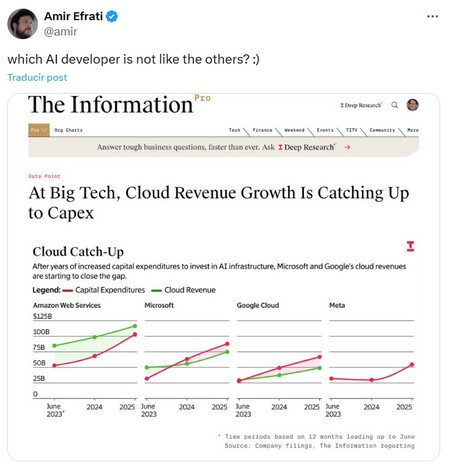
<span>Income from cloud services is approaching capital spending. Source: The Information (click on the image to access X)</span>The Four Riders. Among the major players, we see two definitive winners emerging amid this evolving landscape:
- Microsoft: The clear victor, showcasing a 25% increase in income in the last quarter, primarily attributed to the growth of Microsoft Azure .
- Google: Records a 20% increase thanks to Google Cloud and robust advertising efforts.
- Amazon: Despite a 7% decline, it remains the only major firm in positive financial territory. Amazon Web Services is still lucrative, even as its growth slows.
- Meta: While its income grew 22%, this revenue largely stems from advertising rather than direct cloud service sales. AI has enhanced the efficiency of their advertising operations, albeit indirectly.
<img alt="Infrastructure boom for AI." width="375" height="142" src="https://i.blogs.es/b4a74e/data-center-china/375_142.jpeg"/>Burning Money. The escalating capex for AI is approaching astronomical levels not seen in previous tech booms. Projections for year-end 2024 show expected investments in data centers like Microsoft ($30 billion) , Meta ($35 billion), and Google ($25 billion). These dizzying amounts continue to increase, with Amazon declaring it aims to spend $100 billion on AI data centers .
Skepticism. Such rampant spending sparked skepticism. Analysts question if AI represents yet another bubble on the verge of bursting. Despite the monumental investments, returns have been meager. Even Satya Nadella , a prominent figure in this revolution, expressed doubts, stating that while there is massive spending on AI, no one is making gold from it yet . The figures presented by analyst Ed Zitron starkly illustrate this mismatch:
Capex Planned in 2025 | Benefits in AI in 2025 | |
|---|---|---|
$75 billion | $7.7 billion | |
Amazon | $105 billion | $5 billion |
Meta | $72 billion | $3 billion |
Green Outbreak. While there are signs of optimism in the latest earnings reports, claiming that AI is a profitable venture remains premature. Current successful results are primarily due to cloud services, not directly tied to AI initiatives like chatbots or video generators . The revenue these tools generate still pales in comparison to the costs incurred. Nonetheless, irrespective of prevailing doubts, investments in AI continue to surge, suggesting that investors might maintain their faith in the sector.
Image | Microsoft
In Xataka , it has been noted that the AI industry is reminiscent of a ‘Game of Thrones’ , indicating a worrying trend for its future.