
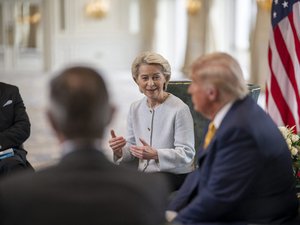
In a significant development, Brussels announced on August 5, 2025 , the suspension of its customs retaliatory measures against the United States. This decision follows the conclusion of a crucial trade agreement at the end of July between the European Union (EU) and the Trump administration . Initially, the European Commission had earmarked tariffs on €93 billion worth of American products, a move aimed at counteracting previous U.S. trade policies. However, with the new agreement in place, these planned tariffs are now on hold, though they remain activated should any complications arise in the future agreements.
Understanding the Trade Agreement
The trade agreement finalized in late July represents a critical effort to enhance collaboration between Brussels and Washington. Under this agreement, the U.S. will implement a 15% tariff on select European products entering the American market. This decision is aimed at leveling the playing field and building economic trust between the two parties. Olof Gill, a spokesperson for the European Commission, emphasized the importance of stability in international trade, saying, “The Commission has today adopted the legal procedure necessary to suspend the implementation of our European countermeasures.” This sentiment highlights the EU’s commitment to maintaining open lines of trade with the U.S., while safeguarding its economic interests.
A List of Taxed American Products
In anticipation of the lack of a trade agreement, the European Commission had prepared a thorough list of American products that would face tariffs. This extensive list included a diverse range of goods worth €93 billion , such as soybeans, airplanes, cars , and various other commodities. Such a comprehensive approach illustrates the seriousness with which the EU approached the trade negotiations, aiming to ensure that any retaliatory measures would significantly impact U.S. exports.
The move to suspend these tariffs suggests a calculated risk on the part of the European Union, hoping that the new agreement will promote better economic ties and avert further trade conflicts. It also represents a shift in the EU’s strategy from reactive to proactive in international trade negotiations.
Measures That Can Be Reactivated
Despite the promising developments, the European Union has not entirely closed the door on potential future conflicts. European officials have made it clear that these countermeasures can be reactivated if needed. A European official, who spoke on the condition of anonymity, stated, “We put (these measures) in the freezer, but we can always bring them out.” This reinforces the EU’s position that while they are optimistic about the new trade agreement, they remain vigilant and prepared to respond to any future challenges posed by the Trump administration.
This cautious optimism demonstrates a strategic approach by the EU, recognizing that international trade dynamics can change rapidly. The potential for *reinstating tariffs* not only serves as leverage in negotiations but also reflects the determination of European leaders to protect the interests of their markets.
Implications for Global Trade
The suspension of these retaliatory measures and the establishment of new tariffs will have significant implications for global trade . American exporters can now breathe a sigh of relief, knowing that their products will not be subjected to hefty tariffs in Europe. This move is likely to boost U.S. exports to the EU and enhance economic relations.
Moreover, the trade agreement could set a precedent for other countries engaging in trade with the EU. It may encourage similar negotiations that promote collaboration over confrontation, ultimately fostering a healthier global trading environment. As countries worldwide navigate the complexities of international relations, agreements like this one can pave the way for more constructive dialogues and partnerships.
Additionally, the outcome of these negotiations reflects the ever-changing landscape of politics and economics in a post-pandemic world. As economies recover, the focus on sustainable and mutually beneficial trade agreements is more crucial than ever. The EU’s ability to adapt and find common ground with the U.S. amidst previous tensions is a testament to its diplomatic efforts and desire for a stable trade environment.
The recent trade agreement marks a new chapter in U.S.-EU relations, signifying that both parties are willing to collaborate for mutual benefits while remaining vigilant against potential setbacks. As Brussels temporarily sets aside its tariffs, stakeholders across both regions will be keenly watching how this agreement unfolds and what implications it may have for the broader global marketplace.