
If you have Instagram or TikTok and you adore cats, you’ve likely seen videos of cats going for walks outside on leashes with harnesses. Some of these adventurous felines even embark on trips around the world, exploring forests, jumping, and yes, swimming as if they were dogs. But how is this possible? Is it advisable to walk a cat? We spoke with Paula Vanasco, a feline therapist and president of the association Rescues Borges Blanques, to find answers to this intriguing question.
The Phenomenon of Adventurous Cats
The trend of taking cats outdoors gained momentum around 2010 on Instagram. One of the pioneering furry explorers was Vladimir, who traveled across the United States with his owners in a motorhome. Another famous feline is Skatty, a Maine Coon that sailed the seas with its deaf owner, acting as a crucial alert system when approaching other boats.

<span>A search on TikTok returns to hundreds of results.</span>Searches like “cat harness,” “Adventure Cat,” and “Cat Leash Training” on TikTok or Instagram yield hundreds of results. Walking cats is trendy, but it’s not straightforward. Many reels include tutorials aimed at acclimatizing cats to these outings. However, the reality is that, unlike dogs, cats are generally not inclined to tolerate being leashed.
Understanding the Nature of Cats
Paula is part of a team focused on feline therapy, where she deals with cats suffering from behavioral issues, some of which stem from leash walks. Her stance is clear: it’s ill-advised to put a harness on a cat. “Cats are hypersensitive animals. Wearing a harness is stressful for them,” she explains. “When it’s first put on, many cats flop to the ground in discomfort.” Moreover, for safety, the harness should be quite snug, which enhances this distress.
Understanding a cat’s nature is crucial. Unlike dogs, whose social structure promotes movement in packs, cats are territorial creatures. They feel safest within defined boundaries, whether it’s a rural environment or a small apartment. “The cat needs to explore its territory at its own pace. You cannot force it to go where you want,” Paula adds. On the other hand, walking a dog feels more natural because dogs are conditioned to be social animals; they trust their ‘pack’ for security.
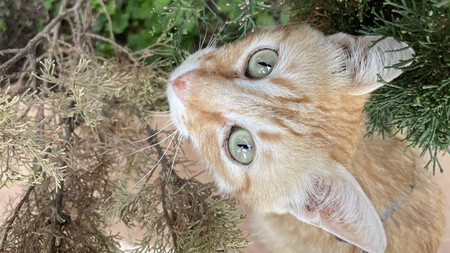
<span>Image: Amparo Babyloni, Xataka</span>Cats often rub against objects, creating safe spaces. They do this by marking territories with pheromones, leaving olfactory references. “This behavior provides them with a sense of security. If startled, they retreat and return to explore bit by bit until they establish comfort in their surroundings,” explains Paula.
“When we remove a cat from its territory, it acts instinctively like prey. If there’s a loud noise, it will attempt to flee, but if tied, it cannot escape.”
It’s crucial to remember that even though cats are natural predators, they also face predation from larger animals. “When we take a cat out of its safe area, we force it into a prey mindset. If a sudden noise frightens it, the instinct is to run, but the restraint inhibits this natural response,” Paula warns.
Of course, not all cats in those viral Instagram videos are experiencing stress. Some truly enjoy these outings, but Paula emphasizes that they are exceptions—typically cats accustomed from a young age to diverse environments. “Cats usually don’t develop fears until they are around five or six months old,” she cautions, adding, “but this doesn’t guarantee they will enjoy such experiences.” Forcing a cat into harnessed adventures is never advisable.
<img alt="Communicating with our cats has always been a complex task. A study has discovered the key: flashing" width="375" height="142" src="https://i.blogs.es/db7166/photo-1488015795646-7e22a773d72a/375_142.jpeg"/>What We Don’t See on Instagram
When outside its territory, if a cat feels threatened, its instinct is to run. But what occurs if the cat is restrained? Two possible scenarios emerge: “It might escape the harness or redirect aggression towards you.” In this video, a cat’s desperate attempts to flee lead to it biting its owner, a classic case of redirected aggression. This primal response illustrates the stress a cat faces when feeling confined.
If the cat attempts to flee while tied, it may either break free or show aggression.
Alternatively, a cat may break free from the harness when frightened, which is quite common given their fluid and agile nature. In unfamiliar environments without visual or olfactory references, many cats go missing, especially in cities where cars or aggressive dogs pose significant risks.
Some owners prefer to keep their cats secured in a backpack-style carrier for walks. While this approach might seem safer, Paula doesn’t recommend it. “I had a case where a cat appeared unbothered in the backpack but later exhibited aggression at home due to frustration,” she reveals.
Many individuals may also fail to grasp feline communication. A still cat does not always equate to a calm cat. “You must pay attention to their eyes, ears, and tail,” Paula encourages, noting that understanding the nuances of their communication can prevent misunderstandings and stresses.
Access to the Outside: Yes, but Controlled and Without a Leash
So, does this mean cats don’t benefit from outdoor experiences? Not at all! “Going outside is essential for cats—just as living in a spacious villa is preferable to a small apartment for us,” Paula laughs. Outdoor exploration stimulates cats and enhances their natural instincts like hunting and exploration. Furthermore, it reduces obesity: by encouraging physical activity, outdoor access can contribute positively to its emotional well-being.

<span>A 'catio' attached to a window. Image: Amparo Babyloni, Xataka</span>Though risks accompany outdoor excursions, they differ significantly between rural and urban settings. Experts recommend implementing protective measures, such as window and balcony screens. For those in houses, options include anti-escape fences or constructing a “catio” (cat + patio). These ranges from simple fenced areas to elaborate enclosure parks.
Indoor Cats Can Be Happy, But It Requires Effort
Many people believe their apartment-dwelling cats are unhappy and therefore should be taken outside for walks. But, “a cat can absolutely thrive in an apartment if investments are made in its environment,” asserts Paula. The emotional well-being of cats is influenced by more than their outdoor exposure; factors include social interaction, the quality of their environment, and companionship.
While it’s true that an apartment setting isn’t the natural habitat for a cat, offering enriching environments is essential. This is where environmental enrichment plays a critical role.
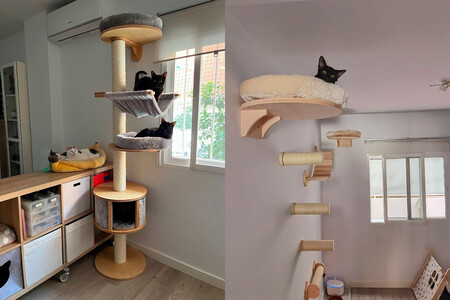
<span>Enhancing your environment is crucial for your well-being. Image: Amparo Babyloni, Xataka</span>One of the most rewarding ways to enrich a cat’s environment is by providing surfaces to climb on, such as a high scratching post, or arranging furniture in a way that allows vertical exploration. The trend of “gatifying” one’s home involves simple modifications like adding shelves, fostering agility and curiosity in cats. This also greatly expands their territory.
Moreover, engaging in play is vital, but it must be tailored to cats’ preferences. Rather than simply encouraging them to run, Paula suggests olfactory games. These can be things like olfactory gardens or interactive toys that hide rewards, facilitating mental stimulation and engagement. “That’s when they truly disconnect and derive joy from the interaction; they tire more effectively from these exercises than through mere physical activity alone,” she explains.
In summary, while the allure of walking a cat remains popular, understanding their complex behaviors and needs is essential. Creating enriching environments, respecting their boundaries, and exploring safe outdoor options can lead to a happier, healthier cat.
Cover image | Pexels