

Understanding the Weather Forecast: Cartagena de Indias
To ensure you are not caught by surprise, this is the forecast for the next hours of this Saturday in Cartagena de Indias, Colombia. Whether you’re planning a leisurely day out or heading to the office, being aware of the expected weather conditions can save you from getting drenched in a sudden downpour or unnecessarily lugging an umbrella.
For this Saturday, forecasts indicate that Cartagena de Indias will experience a 55% chance of rain, with maximum and minimum temperatures projected at 34°C and 26°C, respectively. The cloud coverage will reach 98%, and there is a 63% probability of rain during the night.
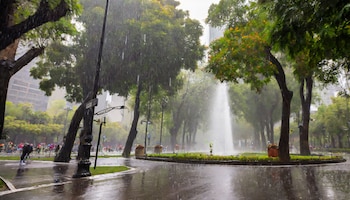
Though located on Colombia’s northern coast and near the Caribbean Sea, the weather in Cartagena is semi-arid. It is characterized by warm temperatures and dry conditions, although the coastal breeze adds a layer of comfort.
According to the Institute of Hydrology, Meteorology, and Environmental Studies (IDEAM), the annual average temperature in Cartagena hovers around 27 degrees Celsius. During the day, the maximum temperature typically ranges between 31 and 33 degrees Celsius. Meanwhile, nighttime temperatures can drop to around 24 to 25 degrees Celsius.
Cartagena is notable for its long rainy season and a brief dry period throughout the year. The rainy season usually spans from May to November, with October often being the month of heaviest rainfall. Conversely, the dry season generally runs from December to April, with January, February, and March being the driest months.
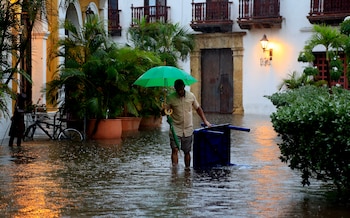
The weather patterns in Colombia are diverse. The country’s climate is influenced by its varied geographical features, including the Caribbean Sea to the north, the Pacific Ocean currents, and the mountain ranges that traverse it from north to south.
According to IDEAM, there are at least four distinct climate types across the country: tropical, dry, temperate, and high mountain cold. In the case of tropical climates, four subtypes are further classified: rainy or equatorial rain, forest or monsoon rain, savanna with dry winter, and savanna with dry summer.
Tropical rainy or equatorial climates can be found in areas spanning the Central and Northern Amazon, the Pacific region, parts of Antioquia, the western parts of Santander, Boyacá, Cundinamarca, the Catatumbo region, and Amazonian foothills. Tropical rainy or monsoon climates additionally cover the Llanero foothills and southern Caribbean ends. Meanwhile, the savannas with a dry winter encompass most of the Caribbean and Orinoquia regions, alongside low-lying areas in Santander and Antioquia. The savanna with a dry summer applies primarily to inter-Andean valleys in regions such as Tolima, Huila, Valle del Cauca, and Nariño.
In terms of a dry climate, Colombia exhibits very hot and semi-arid characteristics. Very hot conditions are primarily seen in upper Guajira, while semi-arid conditions manifest in the middle and lower sections of the same department and several Caribbean coastal regions. The temperate climate prevails across the mid and low areas of the country’s three mountain ranges, while high mountain climates, as the name suggests, are found at the elevated regions of these ranges.
In summary, understanding Cartagena’s weather dynamics—its rain patterns, temperature fluctuations, and tropical characteristics—is crucial for both residents and visitors. Planning according to the local climate not only enhances the experience but also helps individuals prepare for any unexpected weather changes.
General News – 2