
In a stunning development, Xataka reported just hours ago that Ryanair has received the hefty fine of more than 107 million euros , making it the most expensive penalty imposed on a company in Spain. This astronomical figure is nearly three times greater than the next highest fine levied against Vueling, also of which was due to non-compliance with hand luggage regulations.
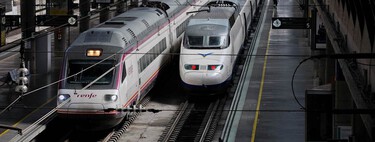
The aftermath of this ruling has implications for other operators in the region. Just recently, the Supreme Court has confirmed a 50 million euro fine imposed on Renfe by the National Commission of Markets and Competition (CNMC). The penalty stemmed from allegations that Renfe stymied the liberalization of the merchandise transport sector.
As reported by The Confidential, this judgment gives Renfe a potential pathway to face an increased penalty, possibly escalated by another 15 million euros , pending evaluation by the National Court. This means that the total fine could escalate to 65 million euros .
<img alt="Renfe punctuality report shows a lack of timeliness" width="375" height="142" src="https://i.blogs.es/428490/original/375_142.jpeg"/>A Fine and Two Payments
The Supreme Court found that the CNMC acted appropriately when it imposed a fine of 49.9 million euros against Renfe. The ruling stated that the company had “participated in collusion that hindered competition in the railway transport of goods.”
This sanction dates back to 2017 , when Renfe Operadora was hit with the 49.9 million euro fine, while Renfe merchandise incurred an additional penalty of 15.13 million euros that should be paid separately. Deutsche Bahn was also fined 10 million euros .
According to the CNMC, both Renfe and Deutsche Bahn entered into an agreement back in 2008 that obstructed the liberalization of merchandise transport within Spain. The agreement reportedly minimised competitive pressures between the two companies and entrenched the pre-existing market conditions.
<img alt="The success of train liberalization in Spain and its impacts on companies" width="375" height="142" src="https://i.blogs.es/2bf11d/guitarra-dani-renfe/375_142.jpeg"/>Details of the agreements revealed that the public entity had offered more favourable conditions to Deutsche Bahn, including better traction service options and immunity from penalties for annulments of services. In stark contrast, other operators faced onerous conditions and had their requests for traction services denied.
This situation was further corroborated by the Association of Private Railway Companies (AEFP), which filed the initial complaint. They contended that they were subjected to discriminatory treatment far less advantageous than that offered to Deutsche Bahn.
To date, the National Court has upheld two rulings confirming the penalties. In the latter ruling, it clarified that no violation of the non bis in idem principle occurred, meaning that Renfe was not penalized twice for the same offense.
Compounding matters, Deutsche Bahn decided to appeal, eventually reaching the Supreme Court. Renfe also initiated cassation resources , which have thus far yielded setbacks for them in the High Court.
The latest determinations by the court indicated that the National Court had failed to fully appreciate the arguments presented by the plaintiffs, and it did not adequately justify why it dismissed their claims. Consequently, the Supreme Court confirmed Renfe’s 49.9 million euro penalty , while sending the matter of the 15.13 million euro fine back to the National Court for further evaluation.
Photo | Nelson M. Silva
In summary, the implications of these fines extend beyond financial penalties—they encapsulate deep-rooted issues within the competitive structure of Spain’s railway and aviation sectors. The stark disparities in treatment among different companies highlight systemic challenges that need addressing, especially in a market that is seeking to embrace greater liberalization and competition .