
Imagine the scene. You have a Tesla and you are about to embark on a well-deserved vacation. The trip will be by plane, leading to an immediate decision: leave the car plugged in for the two weeks you will be out or wait to connect it when you return? If you adhere to the manufacturer’s recommendations, the answer is clear: leaving it plugged in is the best choice.
That was exactly what Aj Esguerra, a resident of Arizona, decided to do. By following the official advice, he expected no issues. However, upon returning home after his trip, he was greeted by an unpleasant surprise: his Tesla Cybertruck was completely unresponsive. This is the story detailed in Motorpasion Mexico. What went wrong? Let’s break it down.
What Happened Exactly to the Cybertruck
At first glance, everything seemed normal. As the user describes in a group of Tesla owners, the charger appeared functional, the car had been left charged to 79% , and the Tesla app reflected that the charge limit was set to 80% . But upon returning from vacation, Aj Esguerra was confronted with the last thing one would expect from a connected vehicle: a completely inert Cybertruck.
“I need help: we were out for two weeks and when we returned, the Cybertruck does not turn on at all,” he explained. To make matters worse, he couldn’t even open the doors. After restarting the charger, the flashing blue light turned red, leading him to consider possibilities: “I live in Arizona, and we have had record temperatures this week. Could the battery have overheated and been damaged?”
Aj reached out to the technical service through the app, and the response was prompt. “The Tesla service is on its way. I received a quick response through the application, and I got a call immediately,” he said. The technicians managed to access the vehicle’s interior, put it in a temporary state, and transferred it to a service center for a more thorough diagnosis.
The final explanation was enlightening. It turned out the issue lay not with the battery, nor with the heat, nor with a programming error. The problem was identified as a malfunction in a key component of the Cybertruck’s electrical system : the Power Conversion System (PCS). According to Esguerra, the technicians ruled out that leaving the car plugged in caused the breakdown. In fact, they reiterated that this is still the recommended practice.
The good news: Tesla took care of the repairs at no cost to the owner. Subsequently, the vehicle returned to normal operation.
What is the Power Converter and What Does It Do?
As Skill-Lync explains, the PCS plays a crucial role: it regulates how electrical energy enters and is distributed within the vehicle. When we connect the car to a power outlet, the PCS transforms alternating current (AC) into direct current (DC) to charge the main high-voltage battery. But its function doesn’t stop there.
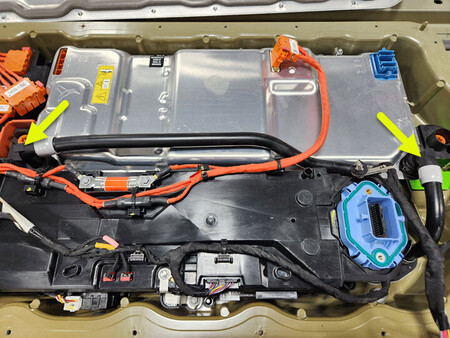
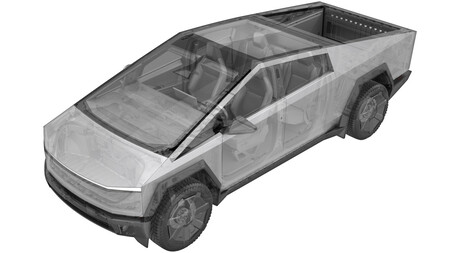
<span>Power Conversion System</span>The PCS also ensures proper functioning of the car’s auxiliary systems—such as lights, internal electronics, or sensors—by performing a second conversion from high voltage to a lower voltage. It comprises several key elements: DC-DC converters , filters, electronic controllers, and a liquid cooling system to prevent overheating. In the Cybertruck, the PCS is located in the auxiliary compartment known as the “Ancillary Bay,” which requires removing some panels for access.
The Official Recommendations
Tesla makes it abundantly clear in the Cybertruck user manual: the most crucial step to preserve the high-voltage battery is to leave the vehicle plugged in when it is not in use. This guidance comes straight from the manufacturer, which warns that even when turned off, the car still consumes energy gradually. If the energy level depletes to zero, damage not covered by the warranty may occur.
</div>Additionally, Tesla recommends not waiting for the charge level to drop too low before plugging the car in. In fact, regular charging is advised, even if the car isn’t being used. For prolonged absences, it’s suggested that drivers account for about 1% battery loss per day , though this may fluctuate depending on temperature or vehicle configurational factors.
The underlying message is unmistakable: leaving the vehicle plugged in for several weeks poses no issues, provided everything is functioning correctly. However, as seen in this particular case, sometimes uncontrollable factors can lead to unforeseen problems.
Is It Safe to Leave the Car Plugged In for Weeks?
In theory, yes. This aligns with Tesla’s recommendation and is what Aj Esguerra did. However, his situation underscores that in practical terms, external factors can influence the outcome and may be beyond the user’s control.
For example, a voltage spike in the electricity grid, a temporary charger failure, or overheating due to extreme temperatures may instigate a series of malfunctions that are challenging to detect without intervention. In the absence of supervision, minor incidents can escalate into significant problems.
Esguerra himself acknowledged that before leaving, he forgot to schedule the charging for cooler hours . The Cybertruck remained exposed to high temperatures during the day, leading to a perfect storm for potential issues. While Tesla did not attribute the malfunction to the heat or continuous charging, this scenario highlights how environmental conditions can compound risks, especially in extreme climates.
<img alt="A supercar electric car had always seemed an absurd idea. Until I tried the audi e-tron gt" width="375" height="142" src="https://i.blogs.es/6f87fa/dscf5200/375_142.jpeg"/>In summary, leaving the car plugged in is advisable, but it’s equally important to ensure the charger functions properly, that the environment is safe, and that the electrical system is protected against unforeseen events. This balance of trust and caution is crucial for minimizing potential inconveniences.
Images | Formulate (CC By-SA 2.0) | Tesla