
Unraveling the Mystery of 3i/Atlas: The Third Interstellar Object
On July 1, 2025 , astronomers confirmed the presence of a third interstellar object in our Solar System named 3i/Atlas . According to NASA, this object is a comet-like entity originating from another star. However, Harvard astronomer Avi Loeb presents a more provocative theory: that 3i/Atlas could be a piece of extraterrestrial technology , potentially hostile to humanity.
Wait, what? In a series of articles and an unreviewed scientific paper, Loeb and his team explore hypotheses that verge on the realms of science fiction . Previously recognized for his contentious views on ‘Oumuamua—the first interstellar object discovered—Loeb bases his new theory on several anomalous characteristics related to the trajectory and nature of 3i/Atlas.
The Anomalies of 3i/Atlas—Loeb points out that the retrograde path of 3i/Atlas is inclined only about five degrees with respect to the plane in which the Earth orbits. According to him, the chances of such an orbit occurring by chance are a mere 0.2% . Given his extensive research on Venus, Mars, and Jupiter , Loeb argues that such an orbit would be ideal for a probe aimed at observing the planets within the inner Solar System.
Furthermore, Loeb emphasizes the size of 3i/Atlas, which is estimated to be around 20 kilometers in diameter . He posits that theoretically, for every object the size of ‘Oumuamua (approximately 100 meters), we should have observed around a million objects of 3i/Atlas’s caliber. To complicate matters, the interstellar visitor is expected to reach its closest point to the Sun—its perihelium —on October 29, 2025 , a time when it will be concealed from our view by the Sun itself.
The Dark Forest Hypothesis
—Loeb suggests that the object’s perceived invisibility is intentional. He theorizes that the perihelium could serve as the optimal point for an inverse Oberth maneuver : a highly efficient braking technique designed to gravitationally trap the object without detection from Earth.
To further bolster his hypothesis, Loeb integrates the concept of the dark forest hypothesis , popularized by Cixin Liu in “The Three-Body Problem.” This hypothesis posits that advanced civilizations remain silent to evade detection by potentially predatory nations. In this scenario, 3i/Atlas could function as a reconnaissance probe exploring our Solar System.
NASA Does Not Believe It Is an Alien Ship—Despite Loeb’s compelling arguments, they face scrutiny from the scientific community, specifically from Ockham’s Razor , which suggests that the simplest explanation is likely the correct one. In this instance, NASA asserts that 3i/Atlas is merely a comet. They claim that accumulating evidence increasingly supports this conclusion while countering the alleged anomalies point by point.
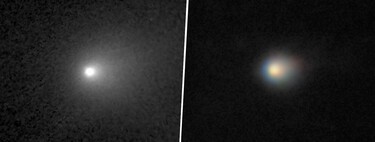
Telescopic images from observatories such as the North Gemini or the Vera C. Rubin Observatory show indications of a coma —a diffuse cloud of gas and dust surrounding the comet’s icy nucleus when heated by the Sun. This challenges Loeb’s assertion regarding its size of 20 kilometers, as the actual nucleus is likely much smaller. Loeb himself has later acknowledged that the object’s elongated appearance is due to its shift during photographic exposure, not an intrinsic property of its shape.
Disassembling the Avi Loeb Hypothesis—Loeb claims that no specific gases were detected in 3i/Atlas. However, astronomer Darryl Seligman illustrates that the object was still far from the Sun when these claims were made. Typically, comet activity —primarily the sublimation of ice—is minimal at such distances. As it approaches the Sun, the spectral lines of gases should become visible.
Loeb’s hypotheses have attracted considerable skepticism. Astronomer Chris Lentott from Oxford described Loeb’s suggestions as “nonsense” and an insult to the exhilarating work being done to understand this celestial object. This critique stems from the abundance of evidence favoring alternative explanations.
Regardless of the ongoing debates, 3i/Atlas is undeniably a captivating object—a piece of another solar system venturing into ours, likely older than our Sun. Understanding its composition and trajectory could provide invaluable insights into planetary formation in other regions of the galaxy, broadening our comprehension of the universe.
In conclusion, while the discussions surrounding 3i/Atlas continue to stir intrigue and speculation, it serves as a crucial emblem of our quest for knowledge beyond our world. The reality of discovering interstellar visitors underscores the complex nature of our universe and the narratives we construct to make sense of them.