
The Controversy Surrounding the Closure of the Reception Center in Pozuelo de Alarcón
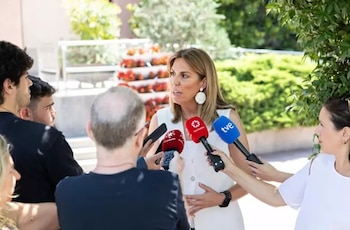
The autonomous communities led by the Popular Party (PP) have been prominently voicing their concerns about the Spanish government’s plan to relocate approximately 3,000 migrant minors from the Canary Islands, Ceuta, and Melilla to various regions in the mainland. This initiative aims to alleviate the pressure on resources and reception services in those areas. In this context, the municipality of Pozuelo de Alarcón, governed by Paloma Tejero, has taken steps to shut down the Reception, Attention, and Referral Center (CREADE) in their jurisdiction.
The Pozuelo City Council recently conducted an inspection of the CREADE facility, revealing that it lacks the necessary licensing to operate as a reception center. The property, owned by the General Treasury of Social Security, currently holds a hotel license instead of the residential use permit required for a center catering to migrants. Additionally, the local government has expressed concerns that the facility is being used for long-term accommodation rather than its intended purpose of offering temporary shelter.
In early July, the Pedro Sánchez administration announced plans to relocate around 400 unaccompanied minors to the Pozuelo center. Tejero described this decision as “reckless,” emphasizing that the facility does not meet the criteria necessary for accommodating them. She criticized the central government’s handling of immigration policy, stating, “Pozuelo is not going to remain silent or comply with what we deem an outrage. The center we have is almost at its capacity.”
Background on CREADE and Its Operations
CREADE has been operating since 2022, primarily serving Ukrainian refugees who fled due to the Russian invasion. However, since 2023, it has also been utilized by the Ministry of Social Inclusion and Migrations to facilitate the transfer of migrants from the Canary Islands. As a significant aspect of this operation, Tejero highlighted that Ukrainian families still reside in the center, along with asylum seekers from various other nationalities.
Given the recent order from the City Council regarding the cessation of activities at CREADE due to the absence of a residential permit, questions loom about the future of the nearly 500 migrants currently inhabiting the facility. The local government has communicated this decision to the organization responsible for managing the center.
Responses from the Ministry of Social Inclusion
Officials from the Ministry of Social Inclusion and Migrations indicated that they had not received any formal notification from the Pozuelo City Council regarding the shutdown or suspension of the center’s operations. They confirmed that urban inspections had been carried out recently, with full cooperation extended by the ministry to provide documentation and facilitate access to all areas of the building.
The ministry described CREADE as a “reference” center, asserting that it has successfully served over 100,000 individuals in need of international protection without any prior issues reported to the local government. They highlighted the diversity of residents, noting that while many are from Ukraine, a significant number are Latin American and include numerous women with young children.
In response to the local government’s stance, officials expressed concern that they do not comprehend why the Pozuelo City Council would opt to leave vulnerable individuals on the streets at night. They reassured the public that the services provided at the center continue to function normally for the time being.
The Politics Surrounding the Issue
Francisco Martín, the Government delegate in Madrid, has termed the Pozuelo City Council’s decision an “exercise in preventive racism.” This statement arose during an interview where he emphasized that the government’s distribution of migrants has followed established protocols, accusing the Popular Party of not treating the matter with the necessary seriousness.
As the situation continues to evolve, tensions remain high between local authorities and the central government regarding immigration policies and the management of resources intended for vulnerable populations. The ongoing debate has far-reaching implications for how Spain approaches immigration and the responsibilities of municipalities in accommodating newcomers.
The unfolding circumstances in Pozuelo de Alarcón serve as a poignant reminder of the complexities surrounding immigration, local governance, and the challenges of maintaining humanitarian standards in reception facilities during times of increased migratory pressures. Conflicting interests and political narratives will likely shape the future of such facilities and the people they serve.