
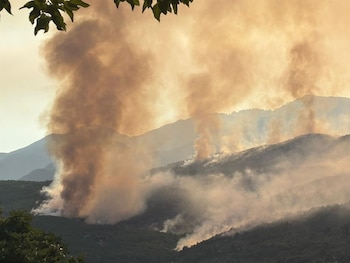
The Ongoing Battle Against the Forest Fire in Ávila
The serene landscape of Cuevas del Valle, located in the picturesque province of Ávila, is currently under siege by a devastating forest fire. According to recent reports from the Ministry of Environment, Housing, and Territory Planning, this blaze has now been contained within a security perimeter. Thankfully, flames no longer advance unchecked through the terrain. This represents a significant turn in a situation that initially posed a grave threat to the local ecosystem and community.
The Response Efforts
Currently, the focus of firefighting efforts is on cooling the perimeter and extinguishing isolated flames that continue to pose a risk. The fight against this forest fire is bolstered by the engagement of 500 dedicated professionals and up to 24 aerial units. These brave individuals are striving to stabilize the situation. Given the fire’s origin, which authorities believe was intentionally caused, and the difficult terrain, the challenges they face are immense.
The stoniness and steep slopes of the landscape have made it particularly hard for ground teams to navigate and extinguish the flames. Aerial support has been pivotal, allowing firefighters to effectively target flames in otherwise inaccessible areas. The collaboration between various response teams and the use of technology has played a crucial role in managing this crisis.
Preventive Measures and Community Impact
In the wake of this disaster, local authorities and environmental experts are urging for heightened awareness regarding forest fire prevention. Community engagement is crucial, as residents are encouraged to report any signs of smoke or unattended flames. Informational campaigns will be rolled out, educating the public on responsible behavior in nature and the significant repercussions of negligence that can lead to catastrophic fires.
In addition to the immediate danger posed by the fire, the long-term impact on the region’s biodiversity is a significant concern. The forest ecosystems, which offer habitat to countless species, are at risk of deteriorating if fires become a recurrent issue. Understanding the delicate balance of these ecosystems is key to preserving them for future generations.
Continued Monitoring and Future Outlook
As containment efforts continue, various environmental organizations are stressing the importance of post-fire assessments to determine the extent of the damage and the necessary steps for rehabilitation. Efforts will also focus on monitoring the area to prevent any recurrence of fires. It is essential to not only battle the current flames but also to actively engage in restoration practices to reinvigorate the affected ecosystems.
The situation remains fluid, and firefighting operations will continue until it is deemed safe. For now, thanks to the collective efforts of rescuers and local authorities, the immediate threat seems to be under control.
In conclusion, the battle against the forest fire in Ávila underscores the urgent need for both effective response mechanisms and preventive strategies to combat this increasing threat to our natural environments. Through community engagement and increased awareness, we can hope to mitigate the effects of such disasters in the future while fostering a safe and healthy ecosystem for all.