
The Shifting Landscape of Employment Preferences Among Graduates
According to a study by the National Society of High School Scholars (NSHSS), in 2015, Google was the most coveted company for millennials stepping out of academia. Fast forward to 2024, and the scenario has transformed dramatically. The allure of securing a position at a Big Tech company was once a pinnacle aspiration, but this fervor is no longer the case.
What happened? A recent survey conducted by NSHSS indicates that a significant number of recent graduates are no longer viewing large tech firms as their primary job targets. What once symbolized a dream job now seems laden with misgivings, as rising concerns about corporate stability and innovation loom large.
Source: NSHSS.
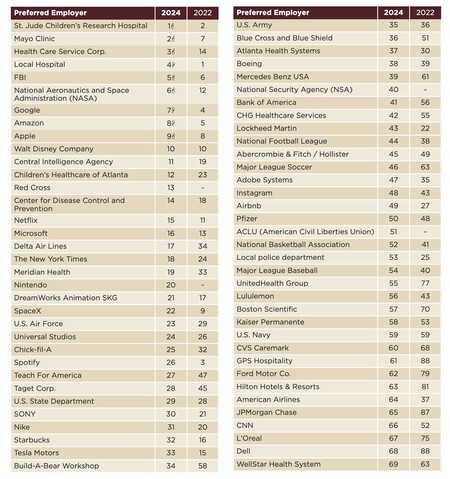
Big Tech’s appeal dwindles. In 2015, Google topped the list of desired employers, with Apple in fourth, Microsoft in seventh, and Amazon in eleventh. A decade later, Google’s ranking has slipped to seventh, Amazon to eighth, Apple to ninth, and Microsoft has fallen to sixteenth. The shift signifies a marked decline in interest for these tech giants, as four hospitals, the FBI, and NASA now occupy the top six spots.
Shifting Preferences: Spotify and More. Spotify, once the third most sought-after employer for graduates in 2022, finds itself in the 26th position today. Other notable declines include SpaceX, dropping from ninth to twenty-second, and Tesla, which has slid from fifteenth to thirty-third. Such trends reflect a major pivot in the collective consciousness of new graduates.
The impact of AI. The study highlights clear reasons behind this drastic change. The fear of growing automation and the influence of artificial intelligence (AI) have raised alarms among young job seekers. The very industry that once promised groundbreaking innovation has faced a tide of mass layoffs , injecting a sense of insecurity among aspiring professionals.
Companies cut back. As AI advances both within Big Tech and in various industries, it has validated the notion of maximizing productivity at the cost of job security. For instance, Microsoft has experienced record profits alongside substantial layoffs, while companies like Amazon have halted new hiring efforts. Google has even allowed employees deemed unsatisfied to exit voluntarily, demonstrating the volatility prevalent in these large corporations.
Shifting goals. Recent graduates from both millennial and Gen Z cohorts prioritize job stability over traditional metrics such as salary and prestige. A survey by Network Trends, referenced in The Times of India, reveals that 76% of students now prioritize job security, often placing it above other factors like location and potential earnings. There seems to be a resurgence of interest in socially responsible careers , particularly in fields related to healthcare.
Rethinking education. Another study conducted by Deloitte indicates that many in Generation Z and millennials are questioning the necessity of a traditional university education. Approximately 31% of Gen Z and 32% of millennials surveyed indicated they opted against attending university due to the exorbitant costs and skepticism regarding the return on investment from such an education.

Transformations in the job market. The technology sector is characterized by instability, evidenced by massive layoffs juxtaposed with the burgeoning demand for AI talent, often equipped with lucrative salaries. This disparity raises pressing questions among recent graduates: What is the ethical ramifications of the work I’m doing? Will my position be relevant in the next five years? This evolving job landscape is prompting a re-evaluation of career aspirations, where profitability is no longer the sole objective; jobs must now resonate with broader societal purposes.
In summary, the job preferences among recent graduates tell a compelling story of adaptation and redefinition. As fears surrounding job security and the pressures of automation continue to shape the conversation, the desire for meaningful employment is becoming increasingly prominent. Graduates are no longer simply in pursuit of prestigious names on their resumes; they seek a sense of purpose and sustainability in their careers.