
Catastrophic Earthquake Strikes Kamchatka: A Call for Caution Across the Pacific
The catastrophic events of March 2011 , when a powerful earthquake off the Japanese coast triggered a devastating tsunami, haunt the memories of many. In light of these events, residents in Japan and Russia now watch the ocean with an anxiety that is all too familiar. The recent magnitude 8.8 earthquake that struck the Kamchatka Krai, located at the eastern edge of Russia, has amplified these fears and set off a series of alerts and evacuations.
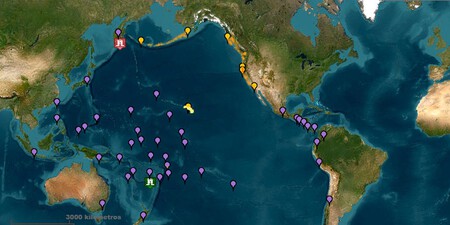
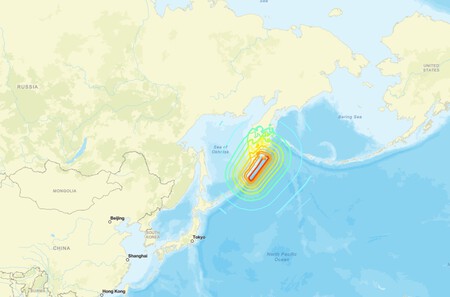
In just a matter of hours, government authorities issued evacuation orders as concerns over potential tsunami waves began to surface. The tremor’s epicenter was registered by the US Geological Survey at 23.25 GMT (01:25 local time) on July 30, 2025 . Located 126 kilometers southeast of Petropavlovsk-Kamchatsky and at a depth of approximately 19.3 kilometers, this earthquake sent waves surging up to four meters high in certain regions.
Assessment of Damage and Casualties
According to Sergei Lebedev , chief of the regional emergency department, initial reports indicated some injuries; however, none appear to be life-threatening, which paints a relatively favorable picture considering the earthquake’s 8.8 magnitude . The governor of Kamchatka also characterized this event as “serious” and noted it as one of the strongest earthquakes in decades. Notably, the shaking caused partial collapses of local structures, including a nursery school, highlighting the seriousness of the situation.
In an urgent response, the governor emphasized that a detailed list of buildings requiring inspections would be created by July 31 . The Unified Geophysical Service of Russia confirmed this earthquake as the most powerful since 1952 , marking it as the sixth strongest globally since 1900.
Widespread Reactions and Evacuations
As news spread, it became apparent that fear and caution enveloped populations in various Pacific nations. In Japan , alert sirens echoed throughout Hokkaido, prompting residents to evacuate to roofs and higher ground when tsunami waves of 30 centimeters were reported. Consequently, evacuation orders were issued for 900,000 residents across 133 municipalities along the Pacific coast, effectively impacting nearly two million people in total.
Evacuation protocols were even elevated to Level 5 for about 10,500 residents of Urakawa, a town on the island of Hokkaido. Authorities also reported expected waves of up to three meters in various regions, particularly affecting Fukushima , where workers at the nuclear plant were also relocated for safety.
Emergency Preparedness and Global Alerts
It’s worth noting that Japan and Russia are not the only nations bracing for potential waves. The U.S. Tsunami Warning Center issued recommendations for Hawaii, anticipating waves of up to three meters and prompting the state of emergency declaration by Governor Josh Green . Reports of traffic jams due to evacuations surfaced, as shelters were opened across schools and community centers.
Similarly, the National Oceanic and Atmospheric Administration (NOAA) warned regions like Alaska and the potential impacts along the California coast . Ex-President Donald Trump even urged public vigilance in the face of these threats.
Alerts Across the Americas
The ripple effects were felt as far as Chile , where President Gabriel Boric declared a tsunami alert for the entire coast. In China , warnings were issued for tsunami waves between 30 and 40 cm in cities like Zhejiang and Shanghai . Furthermore, Peru activated its coastal tsunami alert, while Ecuador ordered evacuations in the Galapagos Islands , stressing emergency protocols to safeguard public safety.
The situation remains fluid and unpredictable, as multiple countries across the Pacific prepare for any consequences that may arise. The precautionary measures taken by governments highlight the importance of emergency preparedness in the face of natural disasters, especially as historical contexts remind us of the devastating impacts such events can have globally.
As these nations brace themselves against possible repercussions from the earthquake, vigilance remains the cornerstone of community response. The hope is that through timely alerts and proactive evacuation plans, lives will be preserved amidst the chaos.