

Argentina’s Mining Sector on the Verge of New Export Records in 2025
The Argentine mining industry is gearing up to achieve a new export record by 2025, with logistics playing a crucial role in sustaining that growth. According to projections from the Argentine Chamber of Mining Companies (CAEM) and the Rosario Stock Exchange (BCR), sector exports are set to grow by 14% year-on-year, driven mainly by the robust performance of the lithium complex and stability in international prices for key minerals.
The report emphasizes that Argentine mining will hit its fifth consecutive year of export growth by exceeding the 2012 nominal record. This optimistic perspective is underscored by a global demand surge for critical minerals necessary for energy transition, particularly in the case of lithium.
Gold and silver currently dominate, accounting for 81% of the mining export basket in Argentina. However, many of the primary deposits of these precious metals are aging, leading to a steady decline in production volumes since 2020. While international price increases have partially mitigated the impact of this decrease, the sector remains highly vulnerable to sudden changes in market quotes.
Despite this production downturn, predictions indicate that Argentina will yield over 1.1 million ounces of gold and 19.6 million ounces of silver by 2025, representing an 85% compliance rate concerning estimated volumes. The cornerstone of growth, however, is pivoting toward another mineral: lithium.
The Rise of Lithium as a Key Export
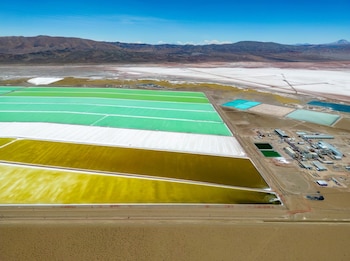
With an astounding 75% interannual growth rate projected for 2025, lithium is set to become the main driver behind the new export record. The expectations are for Argentina to produce 130,000 tons of lithium carbonate equivalent (LCE), a figure that could solidify its place as the highest recorded production to date.
This spike in demand for lithium is not coincidental; the world is increasingly leaning toward electric mobility, renewable energy sources, and advanced storage technologies, making lithium an essential commodity. According to World Bank data, the average price of lithium carbonate is forecasted to hover around $8,500 per ton by 2025, a reference that ensures the viability of newly proposed projects and bolsters sector expansion expectations.
The surge in mining exports presents a direct opportunity for the bolstering of specialized logistics solutions, especially in areas that are distant from major urban centers where many deposits are located.
Challenges in logistics include:
- The urgent need for improved road and rail infrastructure to link production hubs with port facilities.
- Specific transport requirements for sensitive materials, such as lithium.
- Capacity enhancements in international logistics to meet stringent market demands for traceability and compliance.
Additionally, the potential for copper exports is emerging on the horizon. Although not a significant part of the current export basket, investments in exploration and construction for this strategic mineral are underway, which could create a new export avenue with even more complex logistics requirements.
Comprehensive Planning for Future Growth
The logistics solution must go beyond mere transport. It also necessitates:
- Specialized storage and loading solutions tailored for high-purity minerals.
- Investments in energy infrastructure to maintain operations in hard-to-access locales.
- Sustainable management models that encompass environmental practices throughout the mining value chain.
According to the CAEM report, price stability is anticipated for gold (approximately $3,300 per ounce) and silver (around $32 per ounce), combined with favorable conditions for industrial minerals. These indicators offer a level of predictability and open avenues for the development of long-term logistics infrastructure.
In a moderate production and pricing scenario, Argentina’s mining sector projects a significant increase in export value—a feat that can only be supported by a robust logistics ecosystem responsive to evolving demands. The year 2025 will serve as a pivotal turning point: the solidification of lithium, potential copper advances, and the ongoing contributions from gold and silver shape a growth landscape necessitating strategic planning and public-private collaborations on logistics, connectivity, and service sectors.
Consequently, mining and logistics are advancing together as two strategic sectors vital to Argentine economic development, possessing the potential to generate extensive employment opportunities, attract investment, and position the nation as a significant player in the global minerals market.