
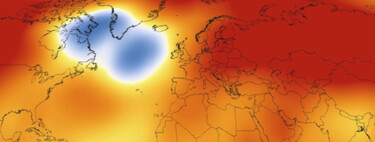
The concept of global warming seems to have fallen into disuse. Today, we often speak of terms such as climate change or even anthropogenic climate change . Are these synonyms? Are these two phrases simply different ways to refer to the same phenomenon? Not quite.
We could say that global warming is a single aspect of climate change , although it might be the central aspect. The difference between one concept and another can be subtle, but understanding it is essential for grasping the phenomenon in its entirety.
What is global warming
Let’s start with the basic question: what is global warming? We refer to global warming as a phenomenon observed in recent decades: an increase in the global average temperature of the atmosphere.
This increase in temperatures is not uniform or constant, but records indicate that it has been occurring since at least the beginning of the 20th century . It is difficult to provide a concrete measurement of this increase since it can vary depending on the reference period we use.
For example, recent data from the Copernicus surveillance system informs us that the global temperature in the year 2024 was 1.65º Celsius higher than the pre-industrial average, specifically the average temperatures between 1850 and 1900. This was the first year we exceeded the critical threshold of 1.5º Celsius, a significant marker for climate experts.
While this figure must be approached with caution—natural variability and factors like the southern oscillation could have contributed to such an immensely warm year—the observed trend is more critical than any single data point.
Difference between global warming and climate change
As mentioned, global warming is but one aspect of a broader phenomenon known as climate change ; this term is often referred to as anthropogenic climate change to differentiate it from the many climate changes that have taken place throughout the geological history of our planet.
While we tend to view weather as a static situation, climate is dynamic and changes over time. What distinguishes climate change today are two primary factors: the rapid pace of climate change and its human-induced origins .
The average increase in global temperatures is key to understanding climate change but represents only one aspect of a much larger picture. Climate change also encompasses shifts in rainfall patterns, extreme meteorological phenomena, alterations in atmospheric and oceanic circulations, and even localized atmospheric cooling.
Causes of global warming
Both climate change and global warming trace their origins to the accumulation of greenhouse gases in our atmosphere. While research is ongoing, there remains general consensus within the scientific community regarding the main triggers for this phenomenon.
The industrial era has witnessed a rapid escalation in the atmospheric concentrations of carbon dioxide and other greenhouse gases like methane. Under normal circumstances, a portion of the solar energy that reaches the Earth is reflected back into space.
However, greenhouse gases promote the retention of a significant share of this energy, creating an imbalance that leads the Earth’s atmosphere to accumulate heat, thereby contributing to global warming and initiating climate changes that extend far beyond temperature increases.
How global warming affects us
Decades of study have focused on the consequences of greenhouse gas accumulation in the atmosphere, evaluating potential impacts categorized in terms of severity and the level of certainty regarding these effects.
Rising temperatures have direct consequences . Increased heat, for example, presents health risks, such as heat strokes or cardiovascular issues, and demands more energy for cooling homes, workplaces, or vehicles. Additionally, agriculture and the habitats of various animal species may be adversely affected, leading to increased evaporation and heightened drought risks.
Not all temperature increases yield negative outcomes; in some regions, rising temperatures can benefit agriculture or enhance the well-being of local populations. However, it appears that these advantages will not outweigh the negative impacts expected in the long term.
Periodical reports from the UN’s Intergovernmental Panel on Climate Change (IPCC) focus partly on impact assessments, analyzing the aforementioned dimensions: impact severity and the certainty concerning those impacts. The sixth assessment report was published in 2022, providing the latest insights.
How can we reduce global warming
Strategies to mitigate the effects of global warming (and climate change at large) fall into two broad categories: adaptation strategies and mitigation strategies . Those that aim to reduce warming itself are known as mitigation strategies.
Mitigation strategies focus on decreasing greenhouse gas concentrations in the atmosphere. This can be achieved by either reducing the rate at which we emit these gases or accelerating the natural processes that remove them from the atmosphere.
Although efforts to curb greenhouse gas concentrations have yielded limited success thus far, we have managed to slow the rate of their increase, according to the latest IPCC report published in 2022.
How can we adapt to warming
Adaptation strategies acknowledge that a certain degree of warming is almost certain, necessitating that we adapt to these changes. Even if emissions were to cease today, greenhouse gas concentrations would take years to return to pre-industrial levels, making some warming inevitable.
Adaptation strategies can vary widely depending on the specific impacts projected from climate change. For instance, increasing temperatures elevate the risk for urban areas due to the heat island effect; thus, adapting urban design, green spaces, or infrastructure is crucial. Similarly, coastal areas may need to implement new measures to prepare for higher sea levels and mitigate flood risks.
Ultimately, addressing both mitigation and adaptation holistically will be pivotal in our efforts to combat and manage climate change and its numerous effects on society and the planet.