
Navigating the New Trade Waters: Understanding the EU-US Tariff Pact
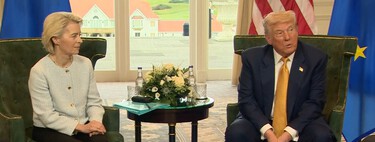
The recent tariff agreement between the European Union and the United States, announced on the scenic façade of the Turnberry golf course, has sparked a mix of relief and skepticism across the Atlantic. As the representatives of two major economies shook hands, the reality of energy trade and its geopolitical implications became apparent.
Former President Donald Trump hailed the agreement as “the greatest of all,” while Ursula von der Leyen, the President of the European Commission, expressed relief at averting a potential crisis. The fear of 30% tariffs loomed large over transatlantic commerce, threatening to disrupt trade across numerous sectors. The final pact, establishing a 15% tariff on European exports to the U.S., comes with investment and import commitments intended to rebalance an historically uneven trade relationship.
However, amidst the celebration of this diplomatic victory lies a troubling complexity—especially regarding the ambitious target for Liquefied Natural Gas (LNG) imports. The pact aims for a staggering annual purchase target of $250 billion in LNG, oil, coal, and even potential nuclear fuel from the U.S.
Can the U.S. Meet Its Energy Promises?
The reality is that the United States may not have the capability to meet this enormous commitment. According to journalist Clyde Russell from Reuters, the total value of U.S. energy exports to the EU—encompassing oil, gas, coal, and refined products—was approximately $65 billion in 2024. To fulfill the ambitious figure of $250 billion, U.S. exports would need to quadruple.
Even a complete diversion of U.S. energy supplies exclusively to Europe would still fall short of the promised target. Russell describes this aspiration as an “illusion” reminiscent of the failed “phase 1” trade agreement between Trump and China in 2019, which promised $200 billion in energy purchases that never materialized.
The Political Landscape
The motivations behind this agreement appear to be rooted more in politics than logistical feasibility. The EU has worked to avert an escalation that could cripple its industrial sectors, particularly sensitive areas such as the automotive industry, pharmaceuticals, and semiconductors.Pierre Briançon, a columnist for Reuters, argues that this deal may resemble a “chapter disguised as success,” highlighting how the new 15% tariff is tenfold the previous average while not being accompanied by substantial concession programs from the U.S.
Brussels also promised an additional $600 billion in direct investment in the U.S. throughout Trump’s presidency, entailing significant arms purchases against the backdrop of rising tensions due to the war in Ukraine and NATO’s dependence on American influence.
Energy Independence or New Dependencies?
A key justification put forth by Von der Leyen is that this energy pivot strengthens European independence from Russia. By importing U.S. gas and oil, the EU aims to free itself from Moscow’s energy influences, a sentiment echoed in a report by The Telegraph indicating that reliance on American energy resources signals a large step towards reducing Russian leverage over Europe.
However, what this actually entails is the possibility of increased dependency on an unpredictable partner. Diplomats quoted by the Financial Times highlight the precarious balance this agreement creates—one where Trump has previously wielded the threat of punitive tariffs against Europe to compel concessions.
The Uncertainty of Trade and Renewable Commitments
The pact raises concerns about the future of the EU’s environmental goals. Strikingly, there are no concrete commitments regarding renewable energy in the agreement—something that undermines the EU’s ambitious green agenda. Trump openly criticized wind energy during the summit, labeling it both “the most expensive energy form” and a “scam,” which leads to questions about the long-term sustainability of the partnership.
This development highlights a contradiction: while the EU promotes initiatives like Invest AI to advance green manufacturing and digital projects, it is simultaneously making vast financial commitments to fossil fuels. As Mujtaba Rahman states, this reflects a European focus on geopolitical factors rather than an integrated energy strategy.
A Temporary Solution?
It may well be that Europe has bought itself some time with this agreement, navigating the immediate tensions while waiting for a potential change in U.S. administration. Similar to the “Run the Clock” strategy China employed during the 2019 trade war, the EU might be postponing more challenging negotiations for a later date.
With the $250 billion objective still unrealized, energy flows yet to materialize, and critical details yet to be clarified, what seems like a tactical victory today may ultimately hold significant strategic costs tomorrow. The balance of power in transatlantic relations, especially in economic terms, may be a lot more fragile than it appears on the surface. The fallout from this agreement will likely unfold in unexpected ways, shaping the future of EU-U.S. relations for years to come.