

Unlocking Exam Success: Why Timing Matters
To successfully pass an exam, the conventional wisdom is simple: study hard . However, recent research has highlighted another crucial factor: timing . A study conducted at the University of Messina in Italy sheds light on how when you take your exam can significantly impact your performance. Findings indicate that the time of day can influence student success rates more than previously thought.
Exam Study at the University of Messina
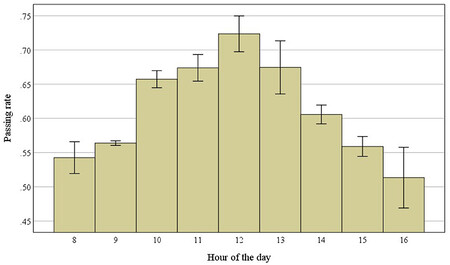
The University of Messina conducted a comprehensive analysis of exam data from late 2018 to early 2020. They evaluated over 100,000 exams across 1,243 subjects . The results revealed an overall pass rate of 57% . However, researchers noticed an intriguing trend: there was a specific time window where pass rates were notably higher.
Optimal Exam Timing: The Noon Advantage
Exams were scheduled from 8 AM to 4 PM , and the investigations showed that exams held between 11 AM and 1 PM consistently yielded the highest pass rates . For students lucky enough to have their exams scheduled during this period, the odds of excelled performance were significantly increased. Conversely, those taking tests at 8 AM , a time when many students are still waking up, or 3 PM , when fatigue often sets in, were less likely to achieve top marks.
The Science Behind the Findings
While the study does not delve deeply into the causative factors , researchers propose a compelling hypothesis centered around biological rhythms . One lead researcher stated that the evidence suggests “the impact of biological rhythms, often overlooked in decision-making, can significantly affect outcomes in high-stakes evaluations.” This indicates that cognitive performance tends to peak during the middle of the day, gradually improving in the morning and declining in the afternoon.
The Role of Chronotype
The study also mentions the significance of chronotype , which refers to an individual’s natural peaks of productivity and need for rest throughout the day. This aspect, however, was not adequately accounted for in the initial analysis. While genetics undeniably influence sleep cycles, many students tend to study late at night. This tendency can lead to subpar performance during early-hour exams due to insufficient rest.
Recommendations for Educational Institutions
Given these intriguing findings, the researchers advocate for a restructured approach to exam scheduling in educational institutions. They suggest that centralizing exams around midday could enhance overall student performance. Although students typically have limited control over when exams are scheduled, there are various assessments, like job interviews , where timing can be more flexible. This area warrants further exploration, particularly in its impact on both candidates and interviewers’ performances.
Understanding how timing affects exam performance opens new avenues to maximize student success. It invites further dialogue about prioritizing optimal exam scheduling to benefit learners. Future studies could explore whether similar trends occur in other high-pressure situations, such as job interviews or critical evaluations, thereby broadening the implications of this research.