

In the Great Puzzle of decarbonization , green hydrogen is rapidly emerging as one of the most significant pieces. As traditional energy sources face increasing scrutiny, the European Union has placed substantial bets on hydrogen as a core component of its energy transition strategy. Yet, while the production of green hydrogen primarily relies on renewable energies such as solar or wind, there is a significant hurdle to overcome: the vast amounts of fresh water required for its production. Some researchers are now exploring innovative solutions to mitigate this challenge using a resource that we generate in industrial quantities.
Sewage.
The Water Problem. When we discuss clean energy , we often must consider the entire production process, revealing an ecological footprint that persists despite advances. For instance, electric cars may not emit harmful greenhouse gases during use, but their battery production does present environmental challenges. A parallel can be drawn with green hydrogen, whose production through electrolysis consumes significant amounts of fresh water—an increasingly scarce resource for millions globally.
This explains the urgency in exploring alternative methods to generate green hydrogen without depleting precious fresh water supplies. Some researchers are investigating the use of seawater, but another overlooked option has now entered the conversation: wastewater.
Trash Treasury in Wastewater. Contrary to initial assumptions, wastewater is not merely a source of pollutants that complicate the electrolysis process—it can also be a valuable asset. Wastewater contains metals such as nickel , platinum , and chromium , which had to be removed through costly purification processes. However, researchers at the School of Sciences of the Australian RMIT University have discovered ways to leverage these metals to enhance green hydrogen production.
In electrolysis, the electrodes are pivotal, facilitating the reaction that separates water into its base components: hydrogen and oxygen. An anode initiates the breakdown of water, releasing oxygen and electrons, while a cathode allows protons to gain electrons and form hydrogen molecules. The unique twist in this research is how the RMIT team utilizes the metals found in wastewater as part of this process.
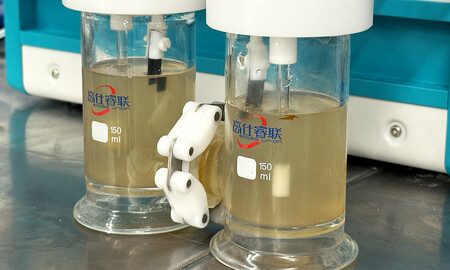
The Invention. The researchers designed an electrode with an absorbent carbon surface capable of attracting metals present in wastewater, acting like a magnet. When these metals are captured, they serve as catalysts that facilitate the electrolysis process, breaking down water into its essential components.
Nasir Mahmood, one of the lead researchers, explained the mechanism to Miragenews: “The catalyst accelerates a chemical reaction without being consumed in the process, allowing metals to interact with other elements in wastewater and boosting the necessary electrochemical reactions to separate water into oxygen and hydrogen.”
Going beyond theoretical discussions, the team developed a pilot device that achieved a stunning stability of 95%. This device, connected to a small solar panel, illustrates the potential of this innovative approach, even as it utilizes water that is far from being purified.
Potential. While the idea is promising, implementing this technology isn’t as straightforward as directly using wastewater. The team confirmed that the samples they utilized had undergone treatment to eliminate solid wastes, organic matter, and other nutrients, but not the metals.
Interestingly, the agricultural waste used in the tests opens a new frontier in the circular economy, as many areas continue to return above 80% of wastewater back to nature without any treatment. However, if a portion of this water can be harnessed for green hydrogen production, it could alleviate some pressure in drought-stricken areas, injecting energy without depleting drinking water supplies. The implications for developing countries are particularly striking.
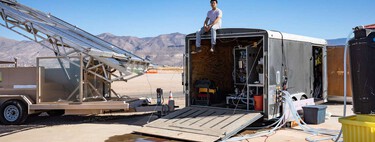
As the research unfolds, the next step will involve experimenting with more types of wastewater, as not all sources possess equivalent metal concentrations. Professor Nicky Eshtiaghi, a co-author of the study, noted that the current focus is to seek partnerships that could propel this technology and explore its commercial viability.
Xataka | In Peru, a company has devised a way to take wind energy directly to homes using turbines in a unique layout