
Andalusia: A Beacon of Biomass in Europe’s Energy Transition
As Europe grapples with the challenges posed by its energy crisis, notably the new sanctions against Russia, innovative solutions are emerging from the southern regions of the continent. Specifically, France has turned towards Andalusia to bolster its thermal power plants and reduce its reliance on gas imports. The region’s biomass is becoming an increasingly vital resource in this initiative.
Export Operations
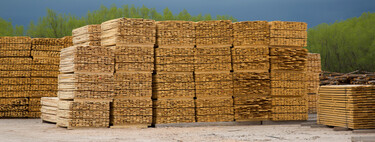
Recently, the port of Seville facilitated a significant export operation of forest biomass, sending 4,200 tons to electricity generation plants in the French regions of Provence and Costa Azul. This operation was made possible through effective forest management practices, specifically jungle treatments conducted in the Andalusian mountains by the Novalis company, as highlighted in an official statement from the Junta de Andalucía.
This initiative reflects a public-private partnership model aimed at enhancing the utilization of Andalusian forest resources, thereby establishing biomass as a viable and exportable energy alternative.
Image Source: Port of Seville
A Shift in Thinking
The burgeoning export of biomass from Andalusia signifies a transformative change in land management. Formerly regarded as waste or potential fire hazards, the region’s wood materials are now viewed as valuable resources that can generate clean energy. This transition contributes to achieving the decarbonization goals set by the European Union.
Moreover, effective forest management practices also help lessen the risks of forest fires by improving the structural integrity of forests. Juan Ramón Pérez Valenzuela, the General Director of Forestry Policy and Biodiversity, emphasized, “For years, conservation was mistaken for inaction, leading to the neglect of many mountains,” as reported by Europa Press.
The Operational Framework
The export process is meticulously coordinated. It entails a tendering system for forest exploiatation on public lands, particularly in high ecological value areas at risk of depopulation. Specialized companies conduct necessary cleaning operations, known as “clareos,” followed by the classification and transportation of biomass to energy facilities located in France, Italy, Denmark, and Sweden.
Since its inception in 2019, the port of Seville has successfully exported over 400,000 tons of biomass, including materials such as wood, cork, and olive pits, all utilized for generating clean energy across Europe. The Novalis company alone has accounted for more than 100,000 tons. When factoring in additional exports from ports in Huelva, Puerto Real, and Almería, the total biomass exported has surpassed 640,000 tons to countries in northern and eastern Europe.
No More Bottlenecks
Historically, Spain has been categorized as a Cul-de-Sac in energy, with limited infrastructure and minimal interconnections with central Europe. However, this recent operation from Seville reflects a significant shift as biomass transitions from being confined to pipelines as gas to being shipped as resourceful materials for energy. What was once seen as a liability is now an invaluable asset.
Notably, other companies are echoing this sentiment. For example, Burpellet, a firm based in the small town of Doña Santos in Burgos, demonstrates the potential of biomass as a sustainable industrial solution for rural communities. Their operations boast a maximum output of 150,000 tons per year.
The Future of Biomass
The Junta de Andalucía is fully supportive of this biomass initiative, with their operations at the port of Seville exemplifying the deployment of the Andalusian Forest Plan Horizon 2030 . This strategic plan allocates 300 million euros annually to promote multifunctional land management, leading to the development of a future forestry law that will formalize productive yet sustainable resource utilization.
As Europe braces for the colder months amid energy shortages, Andalusia’s provision of sustainable biomass serves as more than just an export; it symbolizes active forest management and offers a promising future for rural communities. The mountains of the region are reclaiming their vital role in Europe’s energy landscape.