
Beijing has just tightened its control over one of its most valuable assets: strategic minerals that feed chips, electrical networks, and satellites. A spokesman for the Ministry of Commerce assured that smuggling will be pursued without concessions.
The Asian giant redoubles the pressure. China does not remain inactive; it has launched an operation that, according to reports, already yields concrete results . Over the past two months, multiple cases of illegal exports have been investigated, leading to arrests of those involved and a “strong deterrence,” as CGTN points out.
A key meeting on July 19 in Nanning involved the Ministry of Commerce, Public Security, Customs, the Attorney General’s Office, and other agencies. This gathering served as a pivotal moment in the operation initiated in May. During this meeting, the following actions were agreed upon:
- Establish a Joint Coordination Center for Export Application and Control of Dual-Use Articles.
- Publish exemplary judicial cases and expand the list of foreign entities subject to controls.
- Issue compliance guides for exporters, emphasizing the avoidance of deviations for military purposes.
Why these minerals matter so much. Strategic minerals—including rare earths such as neodymium, praseodymium, and dysprosium—are essential for high-tech industries : computer chips, electric vehicle batteries , wind turbines, satellites, and military equipment. China controls about 60% of refined world production, granting it a critical position in global supply chains.
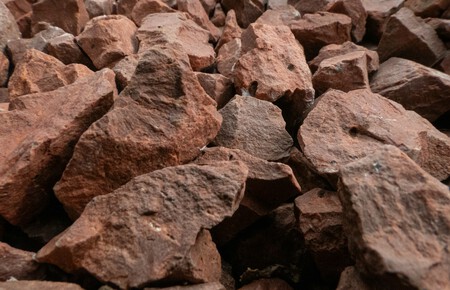
This domain enables Beijing to influence key markets and exert economic pressure during periods of international tension. Furthermore, the refining of these minerals necessitates advanced technology and complex chemical processes, creating high entry barriers for other countries.
The threat: smuggling and technological leaks. Beijing’s message extends beyond economic concerns. The Ministry of Commerce warned about an additional risk: mineral smuggling can facilitate technological leaks to foreign entities, including those linked to the military. There are fears that specific materials could end up in defense applications without proper controls, thus bypassing the official export mechanisms.
The authorities claim to have detected sophisticated attempts to circumvent regulations, using false documentation , transfers through third countries, and pagination of shipments to minimize customs scrutiny. The technical complexities of these schemes require rigorous monitoring, according to He Yadong himself.
It is not the first time that this is tried to stop. Combating the smuggling of strategic materials is not a new challenge and is rarely straightforward. Restrictions imposed by the United States on advanced chips and NVIDIA GPUs serve as a clear example. Despite the formal prohibition on exporting models like A100 or H100 to China, recent analyses indicate that these components continue to reach the country via opaque networks and triangulation through third countries.
A movement with geopolitical echoes. The decision to reinforce control over strategic minerals cannot be understood outside the geopolitical context among global powers. As the United States intensifies controls on chips, AI, and sensitive exports, China retaliates in one of the few areas where it retains real leverage: critical raw materials .
The country accounts for over 85% of global refining of rare earths and has begun to use this position as a pressure tool. Beijing demonstrated this in 2023 by imposing licenses to export gallium and germanium, critical minerals for advanced electronics and defense.
This shift solidifies China’s position and is interpreted as a response to the Western encirclement. It’s not a complete closure; rather, it serves as a reminder that those who control the materials control significant aspects of global strategy.
Will these measures work? What remains unclear is whether these measures will be effective in the long term. Smuggling networks tend to adapt quickly, especially when significant economic incentives are at play. Additionally, it’s uncertain whether these actions will impact prices, the international supply of minerals, or China’s negotiating position in future technological disputes.
Images | Alejandro Luengo | Craig Thomas
In Xataka | Amid the global battle for rare earths, an unexpected actor has raised its voice: Apple.