
The Community of Madrid’s New Screen Time Regulations for Children
The Community of Madrid recently set a date for a long-discussed initiative: to limit screen time for young children. Starting from the 2025/26 academic year, public and concerted schools will prohibit children in early childhood and primary education from working with digital devices individually. The official goal is to safeguard over half a million children from excessive or unsuitable screen exposure, thus promoting healthier interaction with technology.
What Changes Are Implemented in Early Childhood and Primary Education?
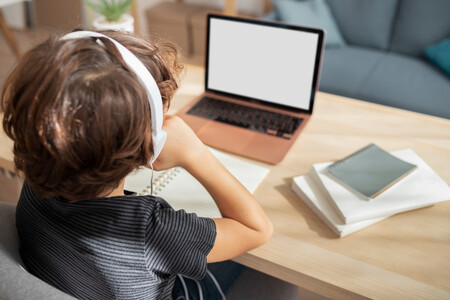
Essentially, the new rule entails that students will no longer have individual access to tablets or laptops during class. According to the Community of Madrid, teachers will be prohibited from assigning screen-related homework, and within the classroom, technology can only be utilized collaboratively and for educational purposes . The regulations delineate strict usage limits: infants (up to 3 years) will have no screen exposure, while children aged 3 to 6 will be permitted only one hour of screen time weekly. For first and second grade , the limit remains at one hour weekly, with slight increases: one and a half hours for third and fourth grade , and up to two hours weekly for the final two years of primary education.
The Exception for High Schools
Unlike younger students, high schoolers are subject to different regulations. The Community of Madrid leaves the choice to individual schools, allowing them to determine whether tablets , laptops, or mobile devices can be employed in the classroom. This decision will be tailored to the specific needs and maturity levels of students, along with the pedagogical demands of various subjects.
Private Schools: An Important Nuance
Importantly, not all educational institutions are affected equally by this regulation. As reported by Madrid’s Diario, the new rules apply solely to schools receiving public funding. Private institutions are exempt but are encouraged to establish their own guidelines regarding technology use in the classroom.
Special Cases and Exceptions
The new regulations do leave room for some exceptions. For instance, students with special needs are allowed unrestricted access to technology if recommended by a psychopedagogical report. Furthermore, devices may be utilized for specialized programs or projects, such as certain digital initiatives or robotics-based curricula that necessitate technological resources.

Progressive Supervision and Adaptation
This change won’t occur overnight. The educational inspection will be responsible for ensuring proper implementation of the decree, while also assisting schools to make the transition as smooth as possible. Additionally, schools that have been operating with a model where each student is issued their device will receive an extension until the 2026/27 academic year to adjust and minimize screen reliance.
A Context of Debate and Discussion
This initiative has sparked a mixed response from the community. More than 400 complaints have been filed, indicating that the conversation is ongoing. Are we truly protecting children, or are we stifling their exposure to tools that will be vital for their future? The Community of Madrid has placed its faith in the former perspective, but the tension between traditional education methods and digitalization remains unresolved, keeping the dialogue active and essential.
In Xataka | The icing on the cake to the works of Madrid: the city has become a gymkana of reforms, cuts, and discomfort.