
The Hidden Diversity of Portuguese Caravels: A Study Uncovers Four Distinct Species
Recent research published in Current Biology reveals a significant discovery regarding the Portuguese caravels, which have long been perceived as a single species. This international study, involving Spanish institutions, uncovers the existence of at least four different species of these fascinating marine invertebrates, each with unique biological traits. This revelation not only enhances our understanding of these creatures but also has crucial implications for public health and marine conservation, especially in coastal regions.
Confusion with Jellyfish
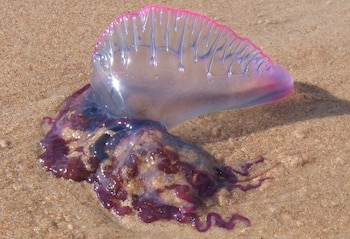
Often mistaken for jellyfish, Portuguese caravels are known for their gelatinous appearance and painful stings. Despite belonging to different biological groups, both share a similar habitat and can inflict pain on unsuspecting bathers, particularly during the warmer summer months when they frequent beaches. This resemblance and their rising notoriety highlight the need for improved public awareness about the risks they pose.
The pneumatophore of these caravels is their distinctive feature, allowing them to float, while their long, hanging tentacles vary in length and function. Alarmingly, recent years have seen these species appearing in areas where they were previously rare, such as the coasts of southern Brazil and parts of Spain. This shift is largely attributed to climate change, which has increased sea temperatures and enabled their migration to higher latitudes.
The Importance of the Study
The uptick in sightings of Portuguese caravels has raised concerns among health authorities and tourism professionals regarding their impact on beach safety and tourism activities. Understanding the diverse species within this group is critical for devising effective conservation strategies.
In this extensive study, an international team analyzed 151 specimens through genomics and evaluated around 4,000 images, enabling a comprehensive comparison of genetic and morphological features across different regions. The results confirmed a greater diversity among these creatures than previously assumed. Notably, the greatest size of colonies was found in Atlantic waters, initially thought to be due to age, but the genetic analyses indicated they represent different species.
New Species Identified
The analysis led to the identification of four distinct species: Physalia physalis, Physalia urticulus, Megalomma physalia, and a newly recognized species, Physalia minuta, which was noted for the first time in this study. These identifications helped researchers to establish that the populations were not a homogeneous group, countering the notion of a globally interconnected population.
As noted in the study, “The diversity of the open ocean has been systematically underestimated,” suggesting a pressing need to adapt marine management approaches to account for the newfound diversity. Each species may require specific protection measures, emphasizing the need for a more tailored approach to marine conservation.
Implications for Marine Management
Recognizing these four species of Portuguese caravels has direct implications for coastal risk management and marine conservation efforts. Their presence not only poses a medical risk to bathers—potentially leading to beach closures and negative impacts on tourism—but also invites a broader consideration of ecological dynamics. As the study pointed out, “The arrival of these organisms in coastal zones represents a medical risk for humans.”
Laura Prieto, a researcher at the Institute of Marine Sciences of Andalusia, has underscored the importance of these findings for environmental management. She noted, “This work is relevant because it transforms the understanding of connectivity in the marine environment.” The implications extend beyond just identifying species; they open the door to insights into local populations that require more nuanced management than if treated as a single, global entity.
Environmental and Ecological Factors
The rising prevalence of Portuguese caravels can be linked to several interconnected environmental factors, including organic pollution, rising water temperatures, and a reduction in natural predators such as certain turtles. This expansion not only threatens local ecosystems, as these caravels can prey on smaller fish, but also complicates efforts for effective management.
Understanding the complex life cycle and adaptability of these organisms is critical. The clarity gained from species identification provides a foundational platform for developing targeted management strategies that can mitigate the harmful effects of these organisms on both human recreational activities and marine biodiversity.
As researchers continue to delve into the rich tapestry of ocean life, the confirmation of at least four different species of Portuguese caravels transforms not only our scientific understanding but also sets the stage for a more comprehensive approach to marine biodiversity research and conservation. Recognizing the genetic and morphological diversity within these organisms is vital for developing effective and sustainable strategies that cater to the unique ecological roles each species plays in their respective environments.