
The Future of Cancer Treatment in Spain
In the heart of Santiago, the hospital commonly referred to as Chus, officially known as the Complejo Hospitalario Universitario de Santiago, stands as a beacon of hope for many battling cancer. Led by Ana María Carballo, the head of the Oncology department, this hospital struggles with the daily challenges of treating cancer patients, often operating at full capacity. Notably, it is one of the 3,000 hospitals that have seen an upgrade in their diagnostic and treatment equipment thanks to a significant donation from the Amancio Ortega Foundation. This generous gesture, however, has not been without its detractors. Criticism has arisen from various political factions suggesting that health should not be reliant on the largesse of billionaires, as pointedly expressed by Pablo Iglesias on a prime-time talk show.
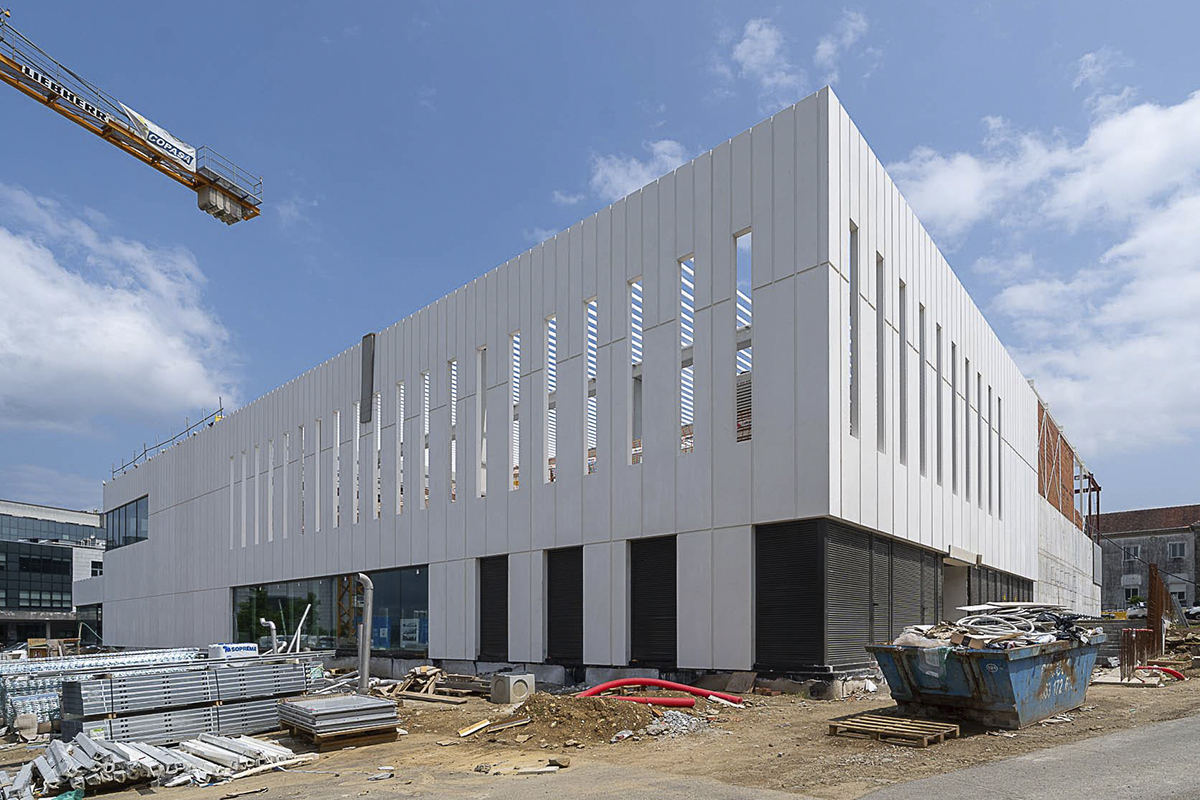
At Chus, a modest plaque adorns the entrance to the Oncology service, acknowledging the Ortega donation. Dr. Carballo takes pride in showcasing the advanced equipment funded by the foundation, but her focus shifts as she gazes across the street. Construction workers are busy completing a rather unique building that excites Carballo and her team. At first glance, this ordinary-looking structure conceals a massive concrete bunker, set to play a pivotal role in revolutionizing cancer care.
Building a Bunker for Proton Therapy
This project is not just any building. Among the ten proton therapy facilities being constructed across various autonomous communities in Spain, Chus is leading the charge with plans to become operational by 2026. These advanced centers will house delicate proton accelerators that position Spain’s public healthcare system at the forefront of cancer treatment. Locations spanning Andalusia (Málaga and Sevilla), Catalonia (two sites in Barcelona), Madrid (two facilities), Valencia, Canary Islands (Gran Canaria), and Basque Country (Vizcaya) will gradually open by 2028.
Dr. Maruxa Pérez , Nuria Rodríguez de Dios , and Concepción Victoria , specialized oncologists, walk through the nearly completed structure that will soon serve as their office. All three have volunteered for positions in the future Galicia Proton Therapy Center and are currently undergoing training to operate the new equipment, which is being manufactured in Belgium. The expected arrival of the 10,000-ton bunker is set for the third quarter of this year. Proton therapy is particularly effective for treating children’s cancers and tumors that are difficult to access, presenting the most advanced technology in radiotherapy.
An Innovative Collaboration
In October 2021, the Amancio Ortega Foundation partnered with the Government of Spain and several autonomous communities to roll out the plan for these ten proton accelerators in the public health system. Currently, only two such facilities exist – one at the Clinica de Navarra in Madrid and another at QuirónSalud in Pozuelo de Alarcón. The foundation has allocated €280 million for this initiative, while the respective administrations are funding the construction. For instance, the Xunta de Galicia has invested €20 million in the building, with the total budget being €45 million.
This facility will potentially treat around 250 patients each year , including those from neighboring regions like Asturias and Castilla y León . August of this year marks two years since Flora Pérez , the wife of Amancio Ortega , took the helm of the foundation, significantly impacting projects like the proton therapy deployment.
A Vision for the Future
The project represents a unique public-private partnership involving the business foundation, the Ministry of Health, and various regional governments. Antonio Conde, the head of Radiotherapy at Valencia’s La Fe Hospital, currently leads the Multidisciplinary Proton Therapy Platform (SPromp), designed to streamline patient referrals and ensure equity in treatment access.
Flora Pérez envisions the foundation’s role as a catalyst for societal betterment, stating, “We strive daily to make things better with a clear vision and a sincere desire to provide opportunities.” This spirit of social service permeates all initiatives, extending beyond cancer treatment. For instance, in A Coruña, the Eiris Elderly Residence , designed by architect Elsa Urquijo , is set to open soon as part of a broader plan to develop seven residences across Galicia, accommodating 900 residents and integrating into the public care system.
As Dr. Carballo supervises the ongoing construction of the bunker from her office windows, the anticipation of a sophisticated healthcare future is palpable. Her colleagues, Maruxa, Nuria, and Concepción, recognize the building’s potential for future expansion to house an additional proton accelerator if needed, marking another leap forward in cancer treatment capabilities.
The commitment to enhancing cancer care in Spain through pioneering technology and collaborative efforts unveils a hopeful future for patients and families alike.