
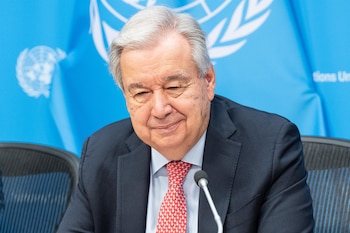
The Secretary General of the United Nations , António Guterres, has welcomed “with satisfaction” the declaration of principles signed on Saturday in Qatar by the Government of the Democratic Republic of Congo and the Congo River/Movement Alliance/Movement March 23 (AFC/M23) . This agreement includes a high-profile ceasefire, which Guterres has described as an “important step” towards achieving lasting peace .
Significance of the Ceasefire Agreement
The ceasefire agreement is crucial for stabilizing the ongoing conflict in the Democratic Republic of Congo, where millions of people have been affected by violence and instability. This initiative not only calls for a cessation of hostilities but also aims to pave the way for renewed diplomatic efforts in the region. Guterres stated, “The Secretary General hosts with satisfaction the firm signing of the Agreement of Principles and praises this important step, which opens the path to lasting peace, security, and the return of the displaced and refugees,” as conveyed by his spokesman, Stéphane Dujarric.
The Role of International Bodies
In light of the ongoing humanitarian crises , Guterres urged all involved parties to ensure the rapid implementation of the commitments articulated in the agreement. This includes cooperation from the United Nations Organization Stabilization Mission in the Democratic Republic of the Congo (MONUSCO) , which has already emphasized its readiness to support the ceasefire process. The commitment to end attacks from air, land, sea, or lake signifies a monumental shift in the approach to conflict resolution, illustrating a collective desire for peace.
Gratitude Towards Qatar
The successful negotiation of the ceasefire agreement was aided by the efforts of Qatar , which has facilitated discussions over several weeks. The engagement of a neutral third party has proven effective in bridging gaps between conflicting parties, showing the resilience of diplomatic channels in resolving long-standing hostilities. Guterres expressed gratitude towards the state of Qatar for its role in the peace process, underscoring the importance of international cooperation in promoting stability.
The Humanitarian Impact
The humanitarian implications of this agreement are profound. With millions displaced due to the conflict, the call for a ceasefire is expected to provide an avenue for refugees and internally displaced persons to return to their homes. Immediate humanitarian assistance can now be facilitated in affected areas, helping to alleviate the suffering of individuals and families who have endured unimaginable hardships. Various organizations will now have the opportunity to resume their efforts in providing essential services such as food, medical care, and shelter.
The Path Ahead
Although the declaration represents a significant milestone, the journey towards long-term peace and stability is not without challenges. All parties must remain committed and engaged in the peace process, actively participating in dialogues that foster understanding and reconciliation. The cessation of hostilities is just the beginning; it will require sustained efforts from both domestic and international actors to ensure a cohesive approach to rebuilding and rejuvenating the war-torn regions. The attention of the global community must shift towards monitoring the implementation of the agreement diligently, ensuring that commitments are not only made but also upheld.
In summary, the ceasefire agreement signed in Qatar marks a pivotal moment for the Democratic Republic of Congo. This declaration has the potential to change the trajectory of the ongoing conflict and to provide hope for a brighter, more stable future for the region. Continuous engagement from international bodies, local leaders, and communities is essential to realize the full potential of this historic accord.