

The Legendary Myklebust Ship: A Peek into Viking History
From children’s series such as Vicky the Viking to gripping shows like Vikings, the saga of the Vikings has left an indelible mark on modern culture. Films like THE WARRIOR Nº13 and How to Train Your Dragon, as well as video games like ‘Assassin’s Creed Valhalla’ and The Banner Saga, highlight their fascinating lore. One of the most notable aspects of their legacy is their ships , which still captivate audiences even today.
The Discovery of the Myklebust
The Myklebust is one of the most significant relics from this era. Discovered in 1874 by archaeologist Anders Lorenge, the ship’s remnants were located on a farm west of Norway. Initially presented as mere “strange remains,” these artifacts came from the Randehagjen funeral mound, on the Myklebust farm. Among the findings were numerous rivets, which suggested the remains belonged to a once-grand Viking ship. Despite being cremated before burial, the artifacts hinted at a magnificent vessel that had lived under the shadow of more famous ships like Gokstad and Oseberg.
The Ship’s Structure
Upon further exploration, researchers uncovered roughly 7,000 rivets . This discovery led them to estimate that the Myklebust measured around 30 meters in length. The ship’s structure was inferred from a particular component: the Umbo, a circular part of the Viking shield. A total of 44 umbos were found, suggesting that the ship could have housed 22 shields on either side, indicating significant combat readiness .
A Symbol of Power
The Myklebust’s size and construction mark it as a notable symbol of power among Viking ships. It likely evoked fear as it appeared on the horizon, a vessel belonging to a wealthy or influential individual. In Viking culture, the cremation of ships was a rare practice reserved for the elite. This custom underscored the ship’s importance as a means of transport to the afterlife in Valhalla.
In Viking burials, a complete cremation of the ship was uncommon and typically reserved for powerful individuals, such as kings. The Myklebust might have belonged to Audbjørn of the Fjords, given its size and burial customs. Along with the deceased, the ship was accompanied by several objects—including jewelry and weapons—needed for the journey to the afterlife.
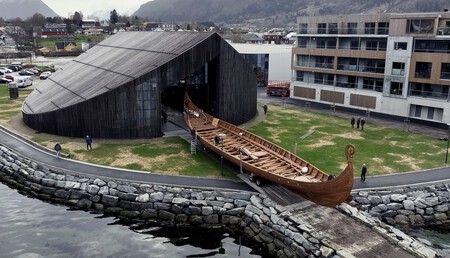
Sagastad Museum with the replica of Myklebust and its sea access ramp
Reviving the Legacy
Although the original owner’s fate remains unknown, the Myklebust’s journey did not end with its burial. Today, the ship has been revived, and you can spot it navigating the waters of Norway once more. Located in Nordfjordeid, the Sagastad Viking Center showcases this majestic reconstruction. The museum highlights various aspects of Viking culture, but the Myklebust room draws the most attention, featuring a full-scale recreation of the warship.
Beginning its journey in 2016 and completing in 2019, the museum opens the gates in spring to allow the Myklebust to meet the sea again. This stunning event highlights the significance and grandeur of Viking ships as they sail across the fjords.
Future Discoveries
The Myklebust’s story may not be over. Recent analyses suggest that more significant artifacts may still lie buried within the mound. A 2024 study revealed additional objects, such as a bronze ring and possibly more umbos. This encourages further excavations, suggesting that the legacy of the Myklebust and its historical significance may expand in the coming years.
Imnágen | Sagastad, Islandmen Fjord Norway