
The US Department of State has applauded the firm of the Declaration of Principles between the Congolese Government and the militias of the March 23 (M23) movement to initiate a negotiation process and end months of a very serious conflict in the east of the country.
The ceremony this Saturday in Doha, Qatar, where negotiations have taken place, represents a significant step towards a peaceful and lasting solution to the conflict in the east of the Democratic Republic of the Congo, according to a statement from the department.
The document underscores a shared commitment to dialogue, accountability, and a path toward stability and prosperity for the peoples of the region. The Department of State expressed its congratulations to Qatar and the involved parties for their concerted efforts to foster peace.
The US highlighted its full support for restoring the authority of the state in eastern Congo, specifically referencing the presence of M23 in the capitals of the provinces of Kivu Norte and Kivu Sur, which are currently under its control. This restoration is seen as essential in facilitating the return of thousands of individuals displaced by ongoing fighting.
The Significance of the Declaration of Principles
The Declaration of Principles symbolizes a crucial turning point in the ongoing conflict that has affected millions of lives in the eastern Democratic Republic of the Congo. This conflict, which has exacerbated humanitarian crises, necessitates immediate attention and action from both local and international stakeholders. The US Department of State emphasized the importance of dialogue and accountability as foundational elements to foster a lasting peace.
Understanding M23 and Its Impact
The March 23 movement (M23) has its roots in Congo’s complex ethnic and political landscape, emerging from grievances regarding the treatment of Congo’s Tutsi community. Over the years, it has played a significant role in perpetuating violence and instability in the eastern region. The movement’s control over key provinces has hampered state authority, affecting local governance and resources. The US’s stance indicates a profound recognition of the need to address these underlying issues to facilitate a true and substantive peace process.
International Involvement and Peace Efforts
International stakeholders, particularly countries in the Great Lakes region and organizations such as the United Nations, have consistently pushed for diplomatic resolutions to the conflict. The negotiations held in Doha signify not only regional but also international interest in stabilizing the region. Qatar, as a host nation for these discussions, has showcased its commitment to peacebuilding and diplomacy. Its involvement highlights the global community’s role in addressing local conflicts through peaceful dialogue rather than military interventions, which often exacerbate the situation.
Humanitarian Implications
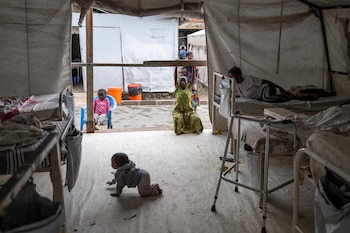
The humanitarian implications of the ongoing conflict are dire. Millions have been displaced, with thousands fleeing to neighboring countries due to violence and instability. The signing of the Declaration of Principles is a beacon of hope for these displaced individuals, indicating that a framework for their safe return could be established. The focus on restoring state authority is crucial not only for governance but also for ensuring humanitarian aid reaches those in need.
Future Steps and Challenges Ahead
While the signing of the Declaration is a positive development, it is merely the beginning. The real challenge lies in the implementation of the terms outlined in the agreement. Both the Congolese Government and M23 must demonstrate good faith in adhering to the principles established during these negotiations. A clear roadmap is essential to transition from dialogue to tangible actions that will lead to stability, security, and development in the affected regions.
The international community must also remain vigilant, providing necessary support and monitoring to ensure compliance with the agreement. Strengthening regional cooperation among neighboring countries is crucial, as conflicts do not recognize borders. Collaborative efforts will be pivotal in addressing not only the symptoms of conflict but also the underlying causes that perpetuate violence.
In conclusion, the signing of the Declaration of Principles between the Congolese Government and M23 signifies a pivotal moment in efforts to resolve long-standing conflict in the eastern Democratic Republic of the Congo. While challenges remain, the commitment to dialogue and accountability presents a hopeful path forward for millions affected by this crisis. Continued engagement from both local and international stakeholders will be essential in transforming this agreement into a lasting peace that fosters stability and prosperity for the region.