
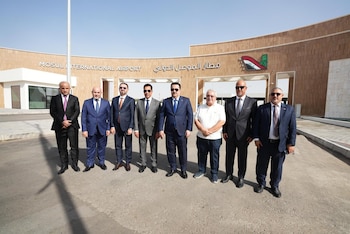
Reopening of Mosul International Airport: A Symbol of Recovery
In a historic moment for Iraq, Prime Minister Mohamed Shia Al Sudani officially reopened Mosul International Airport on Wednesday, marking a significant milestone in the city’s recovery from years of conflict. The reopening of the airport comes eleven years after the rise of the Islamic State (IS) in Mosul, which led to widespread destruction and disruption.
This announcement was made by the Prime Minister’s office via the social media platform X, following his visit to the Nineveh Governorate in northern Iraq. Al Sudani highlighted that the newly renovated airfield will serve to connect Mosul with other Iraqi cities as well as regional destinations, fostering greater connectivity and economic opportunities.
Restoration Efforts and Timeline
The restoration of Mosul International Airport was a long-overdue project that began in August 2022, after Iraq regained control of the area in July 2017 with international coalition support, primarily from the United States. For years, the airport was inoperable due to the severe damage incurred during battles to reclaim the city from IS control. In June 2014, the jihadist group proclaimed a caliphate from Mosul, marking the city’s deep entanglement in global terrorism.
During his visit, Al Sudani emphasized the resilience of the Nineveh community, expressing appreciation for the sacrifices its people made to reject the extremist ideologies propagated by IS. He cautioned that Iraq is currently navigating a delicate phase within a region experiencing various conflicts and geopolitical tensions. “We have remained firm in our position of principles in the face of conflicts that take place in the region,” emphasized Al Sudani, showcasing the government’s commitment to stability and progress.
A Broader Vision for Nineveh
Prime Minister Al Sudani’s visit was not limited to the airport reopening. It included stops at critical infrastructure and healthcare facilities, showcasing a broader vision for redevelopment in Nineveh. Among the sites visited were the UMM Emergency Hospital, the Saray market in central Mosul, and the Nineveh Refinery, which has a capacity of 70,000 barrels of oil daily.
One of the significant projects highlighted was the seventh bridge over the Tigris River, a vital infrastructure improvement that enhances logistic capabilities and connects various regions. The Prime Minister also inspected the Qayarah combined cycle center, which has a total production capacity of 1,125 megawatts, ensuring a more stable electricity supply for the area.
The visit also included engagements with local leaders, including academic figures, tribal sheikhs, and representatives from various organizations and unions. These meetings are pivotal as they aim to foster collaboration and dialogue among different factions in a region that has historically faced division.
The Economic Implications of Reopening the Airport
The reopening of Mosul International Airport represents a crucial step toward revitalization, not just for Mosul but for Iraq as a whole. Air travel can significantly bolster tourism and business activity, which can, in turn, create jobs and stimulate local economies.
By improving infrastructure, the Iraqi government is signaling its commitment to long-term recovery and growth. The airport could become a vital conduit for both international travelers and domestic movements, encouraging investment and economic diversification.
The Path Forward for Iraq
As Iraq continues to recover from years of conflict, the reopening of Mosul International Airport serves as a hopeful symbol of resilience and determination. With ongoing projects and a focus on rebuilding key infrastructure, the region is poised to make strides toward national unity, fostering a sense of community among its inhabitants and welcoming opportunities for growth.
Overall, the commitment shown by the Iraqi government to re-establish crucial infrastructures like Mosul International Airport reflects an ambitious vision for a peaceful and thriving Iraq. While challenges remain, the efforts to revitalize Mosul symbolize a turning point for a city that has endured immense hardship. The future holds the potential for Mosul to reclaim its position as a vibrant hub within Iraq and the broader region.