
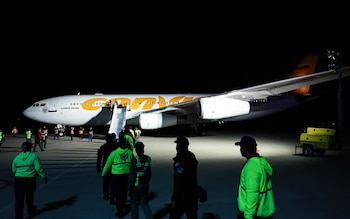
Venezuela’s authorities have received 186 nationals on Wednesday who have landed at the Maiquetía airport, in the state of La Guaira, located on the outskirts of the Venezuelan capital, Caracas, after being deported by the United States, on a flight that, as on other occasions, has made a scale in Honduran territory.
A total of 19 women and 167 men make up this group that has returned to the Latin American country in a plane operated by the state airline convasa, within the framework of the ‘Return to the Homeland’ repatriation plan, which has confirmed these figures in its Instagram social network account.
“The men and women who today step on Venezuelan soil were received by the authorities and attended with health services and all the human heat that our homeland can offer,” they added from this initiative promoted by the Government of Nicolás Maduro to move back to those citizens who are abroad.
Understanding the Repatriation Process in Venezuela
The repatriation of Venezuelan nationals from abroad is a significant topic, particularly amid the country’s ongoing economic crisis and political turbulence. The process reflects the government’s commitment to assist its citizens in returning home, especially those who find themselves in dire situations in foreign countries.
The recent flight carrying 186 deported Venezuelans highlights the complexities of international migration policies, particularly those enforced by the United States. Deportation often stems from immigrant status violations or other legal challenges faced by individuals abroad. Consequently, this large return becomes a focal point for discussions surrounding immigration reform and the evolving nature of relations between the two countries.
The “Return to the Homeland” Initiative
The ‘Return to the Homeland’ project is an effort led by the Venezuelan government to support nationals eager to return after facing challenges abroad. This initiative aims to offer hope to Venezuelans who have fled the country in search of better opportunities but ended up experiencing hardship instead.
Recently, the Venezuelan government stated that the returning citizens were attended to with necessary health services and emotional support. Receiving such humanitarian assistance is crucial for reintegrating these individuals back into society. The event at the Maiquetía airport serves as both a warm welcome and an acknowledgment of their struggles while abroad.
The Demographics of the Returnees
The returnees comprised a diverse demographic, with 19 women and 167 men on board. This statistic sheds light on the different experiences faced by men and women in migration. Variables such as age, family responsibilities, and reasons for migration can significantly impact individual experiences.
Many individuals who return often face challenges related to employment, psychological trauma, and reintegration into their communities. The government’s repatriation initiative aims not just to bring citizens back but to also facilitate their settlements and help with workloads upon returning.
The Role of International Relations
The relationship between Venezuela and the United States has long been fraught with tension, exacerbated by diplomatic disputes and economic sanctions. The deportation of Venezuelan nationals from the U.S. is a product of these strained ties, influencing how both parties interact in terms of immigration and foreign policy.
Honduras acts as a transit point for many deportations, serving as a logistical hub due to its geographical proximity. The ongoing geopolitical landscape makes these movements more intricate, placing additional layers of bureaucracy in a system already overwhelmed by crisis-driven migrations.
The Health and Well-being of Returnees
Health services provided during the reception of returnees are critical, particularly considering the potential mental health impacts of migration and deportation. Migrants often suffer from stress, anxiety, and trauma stemming from their experiences abroad, which necessitates the need for robust health services to facilitate their reintegration.
Moreover, the Venezuelan government promotes a communal approach, called “human heat,” to ensure that emotional support and care are prioritized alongside physical health during these challenging transitions.
A Look Ahead
The ongoing situation for returned Venezuelans remains complex. Returning individuals frequently confront obstacles like unemployment and lack of housing, leading to uncertainty about their future. The Venezuelan government must take decisive actions to ensure that these citizens can stabilize their lives upon returning.
The need for sustained economic support and social programs is crucial to help reintegrate former migrants. Addressing these challenges is vital not only for those returning but also for the future stability of Venezuela as a whole.
In conclusion, the repatriation of Venezuelan nationals by U.S. authorities highlights significant issues related to immigration, international relations, and individual experiences during migration. By implementing effective support structures through initiatives like ‘Return to the Homeland’, the Venezuelan government aims to assist and reintegrate its citizens, ultimately fostering a more hopeful future for those who have faced adversity abroad.