
It is not enough to promise that a plane is less noisy. You have to prove it. That is what NASA proposed with its X-59, an experimental plane that aims to change the future of supersonic flight. To achieve this, it needed data—very precise data. And therefore, although the project is American, a key part of validation was carried out in Japan, at one of the supersonic reference facilities in Asia.
The X-59 Quesst is an experimental plane created with a very specific mission: to demonstrate that it can be flown at supersonic speed without causing a disturbance on land. What NASA wants to eliminate is not speed but noise. The classic sonic boom, that dry burst that rumbles when a plane breaks the sound barrier, continues to be one of the great obstacles for the return to commercial aviation. The X-59, on the other hand, promises something different: A slight THUMP barely noticeable from the ground, thanks to a design that controls—and disintegrates—the shock waves before they manifest as an acoustic explosion.
But it is not enough to design a streamlined and elongated form. It is not enough to simulate it on a computer or anticipate its behavior with computational models. What defines the X-59 is not only its silhouette but the sonic signature it projects when flying at Mach 1.4. That signature, that acoustic footprint, must be measured with surgical precision. And that’s where Japan enters the scene.
NASA did not do everything at home: key part of the validation was done in Japan
Although the epicenter of the project is located in Palmdale, California, under the direction of Lockheed Martin Skunk Works, part of its most delicate validation was carried out on the other side of the planet. Instead of limiting itself to testing its model in its own facilities, NASA decided to repeat the trials in a supersonic wind tunnel belonging to the Japanese space agency (JAXA), located in Chofu, Tokyo. There, researchers from both agencies exposed a plane model reduced to 1.62% of its actual size—50 centimeters from tip to tail—to conditions simulating its cruise speed. The objective was clear: to verify how the air flowed around the aircraft and, above all, to record its sonic signature with the highest level of precision possible.
Japan’s choice was not symbolic. As NASA itself details, this was the third round of wind tunnel tests carried out with that same model: one was conducted in Ohio, at the Glenn Research Center; another, in the same JAXA tunnel years before; and this latest test, also in Chofu, formed part of a cross-validation strategy. Even if you test the model in another wind tunnel, a slightly different version of the data is obtained, which is beneficial. Melissa Carter explained, responsible for NASA’s Supersonic project. “By using the same model in both tunnels, we can increase the certainty of the data and enhance our understanding of the X-59 design.”
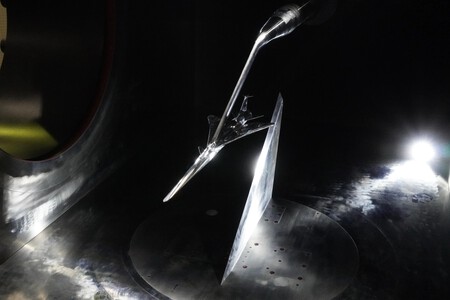
The measurement of the pressure profile—the acoustic footprint that the plane leaves when it breaks the sound barrier—must be incredibly accurate. And the best way to reduce any margin of uncertainty is to verify that, under different conditions and with independent instrumentation, the results remain consistent. This collaboration with JAXA enhances reliability. As part of an agreement signed in 2020, both agencies pledged to share data, compare methodologies, and repeat tests in both countries, thus reinforcing the credibility of the entire experiment.
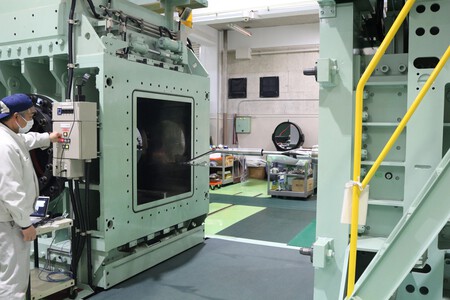
The wind tunnel where the tests were performed is not just any facility. It is a supersonic installation operated by JAXA, with a section measuring just over a meter by one meter. Although its dimensions may seem modest, they are ideal for working with very small models like the X-59. In this tunnel, the airflow can reach sufficient speeds to simulate real flight conditions, which is exactly what NASA engineers were looking for.
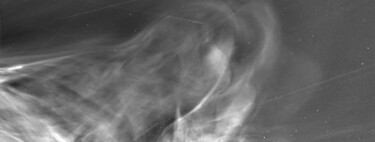
For JAXA, this collaboration was also significant. The Japanese agency has been developing its own “silent” supersonic flight program for years, with projects like Sky Frontier. Sharing information with NASA enables them to refine their own designs, learn from different approaches, and validate their simulation tools with real data. In return, JAXA offers its experience, equipment, and infrastructure that complement those of the United States.
Images | NASA (1, 2, 3) | Roméo A.
In Xataka | Ryanair’s new competition does not come from any European airline: it comes from India and has an ambitious plan