
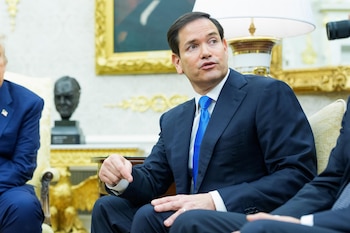
The United States Secretary of State, Marco Rubio , expressed optimism about reducing tensions in southern Syria . Expecting a de-escalation “in the next few hours,” he highlighted ongoing communications with both Druze and Bedouin communities involved in the conflict. This surge of violence that erupted in Sueida has raised alarm in Washington.
During a press conference alongside President Donald Trump , Rubio emphasized the importance of engaging both sides to facilitate a potential resolution. “We have been in contact all morning and all night with both sides, and we believe that we are on the way to a real unknowing,” he stated. His remarks come amidst the backdrop of a complicated historical narrative that sees long-standing rivalries between various groups in southern Syria.
The Humanitarian Crisis in Sueida
The humanitarian situation in Sueida is precarious. Conflict has caused significant displacement, with families forced to flee their homes in search of safety. As the fighting escalates, the need for humanitarian assistance grows dire. Displaced persons are in urgent need of food, shelter, and medical care, which is often scarce in the war-torn region.
Calls for De-Escalation
The U.S. State Department’s spokeswoman, Tammy Bruce , echoed a similar sentiment, urging the Syrian transition government to withdraw its military forces. This, she said, is essential for all parties to lower tensions and seek an exit from the ongoing crisis. Bruce’s comments reflect Washington’s strategy to facilitate dialogue and mitigate conflict in Syria, prioritizing diplomacy over military action.
In conjunction with this strategy, Bruce has also called on Israel to exercise restraint. Though lacking specific details regarding the diplomatic discussions , she referred to a “misunderstanding” following recent Israeli military actions on Syrian territory, causing further complications in the already tangled geopolitical landscape.
Israel’s Role and Response
Israeli Prime Minister Benjamin Netanyahu addressed the situation from a security standpoint, declaring that the scenario in Sueida is “very serious.” Netanyahu stressed that the Israeli army is conducting operations to A> protect the Druze, a minority group located predominantly in this region. Reports indicate that Israeli forces have targeted military units in the Syrian capital of Damascus , as well as specific positions in the predominantly Druze city.
The unfolding events are not only a matter of territorial conflicts; they resonate deeply with ethnic and sectarian divisions. The Druze community , known for its unique religious beliefs and cultural practices, has been caught in a web of violence and instability. With the Druze populating both Syria and Israel, the implications of the conflict extend beyond national borders.
A Path Toward Peace?
The international community’s response to this escalating crisis highlights a growing awareness of the fragile nature of peace in Syria. The complex interplay of ethnic and political dynamics requires a nuanced approach, emphasizing the importance of dialogue over aggression. If the U.S. can mediate effectively, there might be a flicker of hope for a peaceful resolution.
However, the historical rivalries and entrenched positions make finding common ground extremely challenging. Each party in the conflict has its own agenda, complicating the diplomatic efforts aimed at a lasting peace.
General News – 2