
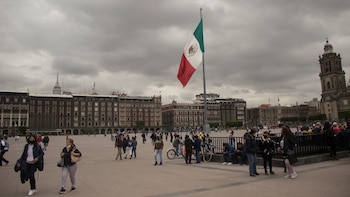
Following the atmospheric phenomenon known as “The Girl,” cloudy days and an increased rainfall in the Valley of Mexico are forecasted to be between 20 and 30 percent more than the 800 liters per square millimeter that are typically recorded during the entire rainy season. This information comes from Dr. Felipe Omar Tapia Silva, a researcher at the Metropolitan Autonomous University (UAM).
Dr. Tapia Silva explains, “The rains typically begin in mid-May and continue until mid-October, although they can occasionally extend into early November, leading to about six months of rain and six months of drought.”
In light of these developments, here is the weather report for the upcoming hours in Mexico City this Wednesday:
During the day, the temperature is expected to reach a maximum of 24 degrees Celsius, with a 60% chance of rain, an 81% cloud cover, and wind gusts reaching up to 35 kilometers per hour. Concerning UV rays, it is projected to hit a level of 11.
As night falls, the temperature will drop to 13 degrees, with a 75% precipitation forecast and full cloud cover, while wind gusts will settle at 18 kilometers per hour during the night.

It might be assumed that due to its geographical location and extensive area, CDMX would exhibit a uniform subtropical climate; however, this is not the case. The region showcases various climates, ranging from temperate and humid cold to alpine tundra in the higher southern areas.
Typically, the weather is warm and temperate in CDMX, with daily temperatures hovering between 22 and 27 degrees. The summers are often characterized by significant rainfall, most notably during June, August, and September.
In winter, temperatures can dip to below zero degrees in higher peripheral areas, like the Ajusco. Conversely, municipalities like Iztacalco, Iztapalapa, Venustiano Carranza, and Gustavo A. Madero tend to remain dry and temperate.
Among the historical records, one noteworthy event occurred in 1967 when snow fell in the city; additionally, the highest recorded temperature was on May 9, 1998, when temperatures reached 33.9 degrees Celsius, while the lowest point was recorded on December 10, 1972, at -10 degrees Celsius.
Due to climate change, the capital faces numerous environmental challenges. The Ministry of the Environment (Sedema) has partnered with German cooperation for sustainable development (GIZ Mexico) and the Mexican Climate Initiative (ICM) to implement various actions. These initiatives focus on integrated and sustainable mobility, solar energy solutions, zero waste strategies, sustainable water management, river restoration projects, and enhancing urban and rural vegetation alongside improving air quality.
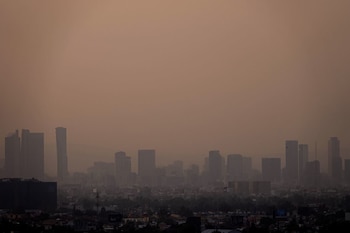
Mexico is recognized as one of the nations boasting the greatest biodiversity in the world. This is largely due to its geographical position, which facilitates an array of climates. Consequently, Mexico is home to approximately 12% of the world’s species, including 12,000 endemic species.
The country is traversed by the Tropic of Cancer, which divides it into distinctly different zones. The tropical zone coexists with the temperate climate zone, with variations influenced by oceanic and relief features.
Thus, it’s not surprising that in the highlands of Chihuahua, temperatures can plummet to -30 degrees Celsius, while the Mexicali desert can experience scorching heat of up to 50 degrees.
Geographic features create a range of climate zones: warm rainy climates along the coastal plains of the Gulf of Mexico and the Pacific, warm humid regions in Chiapas and the Yucatan Peninsula, dry climates in the Sierra Madre Occidental and Oriental, temperate zones primarily in the northern territory, and semi-desert conditions in the high Altiplano region.
The average temperature for the country stands at 19 degrees Celsius; however, extreme high temperatures are found in cities like Mexicali, Culiacán, and Monterrey.
The record temperatures documented in Mexico highlight a stark contrast: on July 6, 1966, temperatures in San Luis Río Colorado soared to a staggering 58.5 degrees, while the lowest recorded temperature was -25 degrees Celsius in the municipality of Madero, Chihuahua, on December 27, 1997.
Experts assert that due to ongoing climate change, Mexico is anticipated to face decreasing annual rainfall and escalating temperatures. Furthermore, severe droughts and floods have impacted farmers and ranchers in recent years. Leading urban centers like CDMX and Monterrey have seen increasing environmental contingencies during heat waves.