
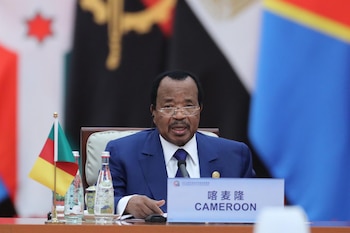
The political landscape in Cameroon has taken a significant turn, as the nation’s longstanding president, Paul Biya, has announced his candidacy for the upcoming presidential elections scheduled for October 12, 2025. At the age of 92, Biya aims for an unprecedented eighth term, solidifying his position in a political career that has spanned over four decades.
Biya’s Presidential Announcement
Biya’s announcement came on a Sunday during an event hosted by his political party, the Cameroonian People’s Democratic Movement. He took to social media platform X to declare, “I am a candidate for the presidential elections of October 12, 2025. My commitment remains strong in light of the serious challenges we face.” He conveyed a message of unity, emphasizing that together, there are no challenges too great to overcome.
Addressing National Challenges
During his speech, Biya expressed dedication to the well-being of the people of Cameroon. He referred to them as “the daughters and sons of our beloved and beautiful country,” which reflects a paternalistic view often found in his governance style.
“The security and well-being of our people is a sacred mission that I have devoted my time to since I assumed the presidency,” Biya stated, underscoring his belief that tangible progress has been made during his administration. However, he also acknowledged that significant challenges remain, including an “increasingly restrictive international environment” and “acute challenges” facing the nation.
Historical Context of Biya’s Leadership
Having governed Cameroon since 1982, Biya’s lengthy administration has elicited mixed reactions both domestically and internationally. He is credited for introducing a multiparty system in the early 1990s, a move that appeared to open political dialogue within the nation. However, his rule has also been characterized by perceived authoritarianism, suppression of dissent, and regional conflicts—particularly in Anglophone areas where tensions have been high.
Future Implications
If re-elected, Biya will be 99 years old by the end of his next term. Questions arise about the implications of such longevity in leadership, particularly in a nation struggling with various socio-economic issues such as poverty, unemployment, and corruption. His candidacy reignites debates surrounding age, leadership, and the future direction of Cameroon.
As international observers look on, Biya’s decision to run again proves that his political ambitions remain undeterred despite mounting challenges. The outcome of this election is anticipated not just in Cameroon, but also regionally, as it may signify the shifting dynamics of power across Africa.
In conclusion, Paul Biya’s candidacy marks a fascinating chapter in Cameroonian politics. As he prepares for the forthcoming election, many questions linger around governance, accountability, and the future of democracy in a nation shaped by his decades-long rule. The upcoming election will not only define his legacy but could also serve as a turning point for the country’s people and their aspirations for change.
General News – 2