

The world is facing a significant challenge regarding fish consumption . While some regions, like China, have an insatiable appetite for seafood, others, like Spain, are experiencing a downward trend in marine product consumption. This shift has led fishmongers in Spain to consider reinventing their businesses, even catering to pets instead of humans. Conversely, in China, the demand is so high that their fish farms are expanding globally, reaching seafood sources from Latin America. To address the looming risk of overfishing, researchers are exploring alternative proteins , with the U.S. spearheading developments, notably cultivating salmon in laboratories for culinary use.
Rising Fish Consistency. Recent forecasts indicate that global demand for aquatic foods is projected to nearly double by 2050, skyrocketing from about 80 million tons in 2015 to an estimated 155 million tons. This surge is largely driven by population growth , increased living standards in various countries, and the rapid advancements in aquaculture.
China plays a pivotal role in this global narrative as the world’s largest fish consumer and an innovator, developing substantial maritime facilities for fish farming. Additionally, Africa is witnessing a noticeable uptick in seafood demand; according to the Food and Agriculture Organization (FAO) , total fish production must increase by 22% by 2050 to maintain current consumption levels, posing a daunting challenge for the industry.
Cultivating Salmon. The U.S. company, Wildtype, has gained attention from high-profile investors including Jeff Bezos and Leonardo DiCaprio. Based in San Francisco, they have developed ‘Saku’, a cultivated salmon targeted for sashimi-style consumption, boasting a flavor and texture comparable to wild salmon.
The key to this innovation lies in the cultivation process. Researchers carefully extract live cells from young coho salmon and take them to bioreactors . By using a proprietary blend of nutrients, these cells are cultivated and combined with plant-based ingredients to replicate the texture and taste of traditional salmon.
According to a report from The Washington Post, while a typical salmon takes up to two years to mature, Wildtype’s method can produce a 220-gram ‘fish’ block in as little as two weeks, offering nutritional and omega-3 profiles similar to wild fish.
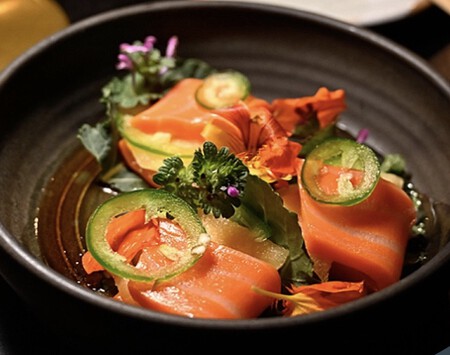
One from Saku
“NO OBJECTION”. Regulatory bodies responsible for food safety in the U.S. are not opposing Wildtype’s cultivated salmon. The Food and Drug Administration (FDA) recently granted permission for its commercialization. ‘Saku’ has made its debut at Kann , a well-known Haitian restaurant in Portland, with plans for broader availability in restaurants and markets, packaged attractively.
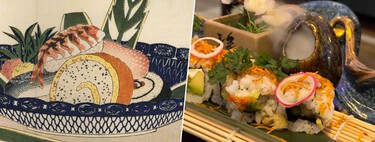
Looking at the Advantages. Lab-grown salmon promises a sustainable alternative to overfishing and environmental degradation. Moreover, this ‘Saku’ product is cultivated in a controlled environment, minimizing exposure to various contaminants including pollutants and microplastics.

And another from Saku
And what about Fishermen? With innovations that disrupt established industries, questions arise regarding the future of traditional occupations. The co-founder of Wildtype, Justin Kolceck, emphasizes their intention to supplement , not replace, current fishery practices. Given the rapid rise in fish consumption, he believes that both lab-grown and traditionally farmed fish will coexist to meet global demands.
In some Spanish supermarkets, plant-based salmon substitutes are already on the shelves. However, while they may mimic the taste, they often fail to replicate the authentic texture of seafood. Perhaps innovations like Saku may just be the solution needed to bridge this two worlds.
Image | Lou Stejskal.
In summary, the rise of lab-grown seafood represents a significant shift in how we view sustainable food production. By alleviating pressure on wild fish populations, these advancements could offer a promising future for both our diets and the environment.