
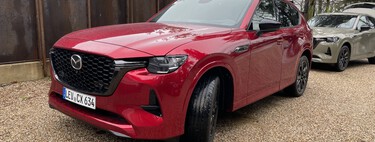
Playing funambulism has never been easy. Keeping balance on a rope, step by step, navigating a path where any unexpected obstacle can lead to a fall. Managing air currents to stay firm in your position is crucial; you know that yielding to these forces can result in a fatal misstep. This precarious dance is akin to what Mazda has been undertaking as they strive to remain a viable choice in the crowded automotive landscape. Always a company that prides itself on being different , Mazda endeavours to captivate an audience seeking something distinctive , but it must do so with solid products that justify its decisions.
Now, with the introduction of electric vehicles, those currents of change are stronger than ever.
Mazda 6e Technical Card
Mazda 6e | |
|---|---|
Body type | Five-seater |
Measures and weight | 4,921 meters long, 1,890 wide, and 1,491 meters high. Wheelbase of 2,895 meters. Weight of 2,027 kg. |
Trunk | 466 liters. 70-liter front trunk. |
Maximum power | 190 kW (258 hp) and 320 Nm. |
WLTP consumption | 16.6 kWh/100 km |
DGT environmental badge | Zero emissions. |
Driving aids (ADAS) | Mandatory by the EU. |
Others | 10.2-inch screen for the instrument cluster. 50-inch head-up display. 14.6-inch central screen. Compatibility with Android Auto and Apple CarPlay. Sony sound system with 14 speakers. |
Electric hybrid | No. |
Plug-in hybrid | No. |
Electric | Yes. 68.8 kWh battery (479 km autonomy) with a 190 kW motor (258 hp). 80 kWh battery (552 km autonomy) with a 180 kW motor (245 hp). |
Price and launch | Already available for reservations starting from €43,725 (€38,715 with output discount). First deliveries in September 2025. |
Winds of Change
Everything about Mazda embodies Japanese refinement . The company prides itself on its philosophy of precise attention to detail, a quality that is deeply rooted in Japanese culture. This meticulous approach has enabled them to remain resilient despite the overwhelming push toward eliminating physical controls in vehicles and the harsh realities of electric cars, which are often bulky and heavy.
With their electric vehicle offerings, including the MX-30, Mazda aims to address urban needs—recognizing that an electric vehicle shines in city environments where it can offer silent and vibration-free operation . They successfully launched a vehicle with these attributes, aspiring to blend electric mechanics with lightweight design . Unfortunately, their initial pursuits in this area faced hurdles, particularly in the form of range limitations; the 200 km of autonomy proved too limiting for many consumers. In a bold yet calculated move, Mazda opted to integrate a rotary engine for extended range, producing a light plug-in hybrid optimal for everyday city travel while retaining utility for longer journeys.
This practical approach faced challenges in an industry often driven by the irrational desires of consumers . Surprisingly, this gamble yielded unforeseen success. In China, a partnership with Changan, which began when Mazda was still associated with Ford, led to a surge in sales of a large electric sedan. Though it bore Mazda’s exterior design, the interior was tailored to satisfy consumer demands—featuring a massive screen that appealed to customers.
Success in this realm encouraged the company to venture into Europe with a 4.92-meter-long electric sedan. Targeted at those seeking both affordability and performance , the Mazda 6e promises competitive pricing without sacrificing quality. While many electric competitors have cut corners in interior quality to maintain budget constraints, the Mazda 6e seeks to stand out.
Assignments That Hurt (but Understand)
The launch of the new Mazda CX-5 spotlighted how the company has relied heavily on naturally aspirated engines while incorporating high-performance diesel options like those in the CX-60. More crucially, it has shied away from embracing an all-digital interface, even within its high-end offerings such as the Mazda CX-80.
For a true Mazda enthusiast, these decisions impact the perception of the Mazda 6e . The company has introduced its electric sedan with minimal alterations, largely focusing on fine-tuning. The vehicle offers a firm suspension that prevents the body from excessive roll—a stark contrast to many Chinese-made vehicles with softer suspensions designed for a cushy ride.
This superior rolling quality is perhaps one of the car’s standout attributes. Its performance is complemented by a quiet ride and gradual acceleration, providing a stable yet swift driving experience. Offering 245 or 258 hp depending on the selected battery, the linear thrust gives a sense of security on the road—especially when confronted with sudden situations.
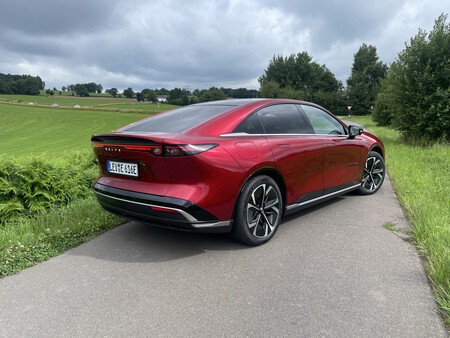
In Sport mode , the handling feels overly sensitive, compromising the brand’s hallmark precise steer. This sensitivity results in uncomfortable swaying while negotiating straight lines on highways. Such minor adjustments feel exaggerated, creating a somewhat disconcerting experience for drivers.
Inside the cabin, the appeal lies in the flattened steering wheel and massive 14.6-inch display , coupled with a notable absence of tactile controls. The fine ergonomics that defined Mazda vehicles seem lost in this design. Creating an entirely new infotainment system from scratch would not only escalate production costs but also risk essential features like route navigation—critical components for an electric vehicle.
Our initial assessment didn’t allow us much time to explore the infotainment system’s options thoroughly. However, it appears to be complex, necessitating time for familiarization. Certain functions, such as windshield wiper controls, ought to have been retained as physical buttons, rather than relegated to the screen.
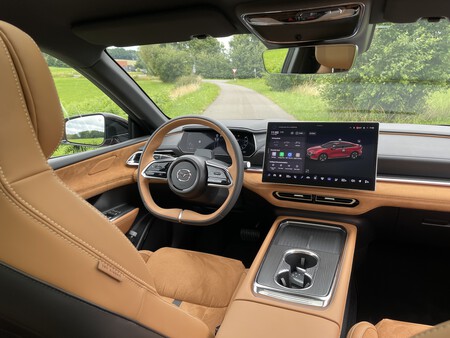
Goodbye, physical buttons, goodbye
Notably, there are elements within the system that hint at a thoughtfully designed infotainment experience. In our exploration, we found two configurable shortcut buttons on the steering wheel. Additionally, up to six always-visible lower buttons can be adjusted on the central screen, allowing users to incorporate their most frequently accessed functions.
If we acknowledged that the Mazda 6E’s handling is stellar, the interior quality stands as another impressive feature. The choice of high-quality materials gives the cabin a spacious and welcoming feel. Selecting the top-tier finish only adds €1,650 to the overall price, providing an approachable yet luxurious vibe, reminiscent of home comfort.
This quality perception permeates the spacious rear seats, which offer individual air conditioning controlled via a new touch screen, further enhancing passenger comfort. A generous sunroof adds to this ambiance, aiding in creating a warm, inviting atmosphere .
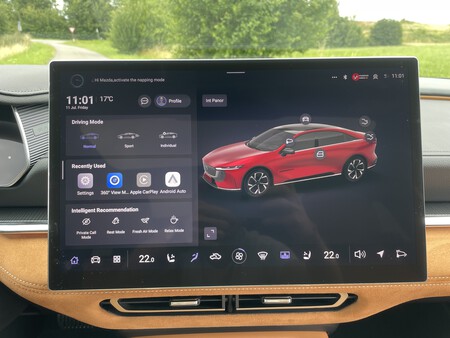
The infotainment system is complex but it seems to move smoothly and is highly customizable
High-quality materials combine with impressive standard equipment. Highlights include 64 customizable interior lighting options , six voice commands, and numerous Advanced Driver Assistance Systems (ADAS), such as alerts to avoid leaving children in rear seats.
These trade-offs could be forgiven, especially since Mazda presents two intriguing options for the sedan.
The first features a 68.8 kWh LFP battery paired with a 190 kW (258 hp) electrical motor , offering 479 kilometers of range. In practical use, expect to achieve between 350 and 400 kilometers. Its max charging speed is 135 kW, allowing for a 10% to 80% charge in just 24 minutes. Priced starting at €43,725 , including specific discounts brings it down to €38,3815 .
For those interested in the upgraded 80 kWh battery , additional costs apply. This variant uses a 180 kW engine and claims a 552 kilometers range . However, charging power caps at 90 kW , resulting in a 10% to 80% charge time of 47 minutes—numerous drivers may find this delay less appealing. Given the discrepancies in performance, the recommendation would lean toward the initial option.

Furthermore, with potential discounts from the MOVES III Plan , savings can reach up to €7,000 , plus an additional €3,000 tax deduction on the income statement. If the final pricing falls around €40,000, positioning the Mazda 6e becomes incredibly appealing when considering its features and materials quality. Pricing below €35,000 further solidifies its status as a top contender for buyers seeking the ideal blend of size and luxury in an electric vehicle.
Photos | Xataka
In Xataka | Mazda aims to challenge the transformation toward electric vehicles. The new Skyactiv-Z engine will serve as its pivotal argument.