

Uncovering the Ancient Fat Factories of Neanderthals
For centuries, fat has been largely misunderstood and frequently demonized in popular culture. However, recent research has shed light on its necessity and benefits for optimal human health. New dietary paradigms are placing fats in a more favorable light, with studies showing that certain types of fat can be key allies in weight management. While we may be just catching up to this realization, Neanderthals were utilizing the benefits of fat long before us.
Discoveries at a site in Germany, known as Neumark-Nord, have revealed significant insights into the habits and survival strategies of our Stone Age ancestors. Located just southwest of Berlin, this archaeological site has captured the interest of researchers for its previously unknown aspects. A past study showed how Neanderthals vastly modified their landscape to suit their needs, but recent findings delve deeper into their dietary practices.
As published in the journal Science Advances, a groundbreaking study has revealed that Neanderthals engaged in an “industrial” process to extract fat from the bones of large mammals. This extensive effort was focused on obtaining bone fat to supplement their diets.
This fat factory concept comes from an analysis of over 2,000 bone fragments and numerous flint tools. Researchers identified signs of these tools being used to crush bones , indicating a systematic approach to fat extraction. Notably, there were concentrated deposits of nutrient-dense marrow bones, alongside tools that facilitated fat extraction.
This concentration suggests that the site served as a dedicated “factory” where Neanderthals employed a labor-intensive method to derive fat from animal remains. More specifically, researchers determined that 172 mammals, including deer and horses, were utilized to procure bone fat. The process involved breaking the bones and treating the small fragments with water and heat to extract the fat. This methodical approach underscores the sophistication and organization of Neanderthal life.
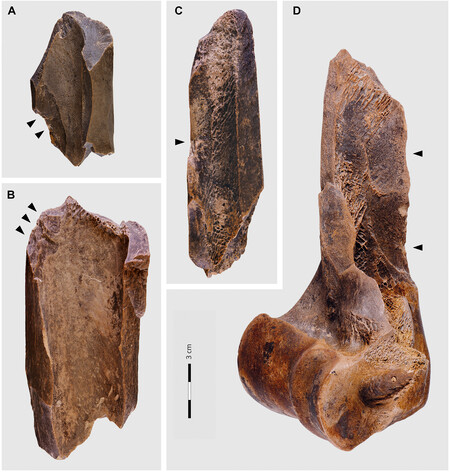
Bones damaged by a hammer
The motivation behind this complex process was primarily dietary. A balanced intake of fats, proteins, and carbohydrates is crucial for maintaining health. If one macronutrient is too low, health problems can arise. The effort to extract fat further suggests that Neanderthals might have experienced food scarcity, particularly during colder periods, making dietary fat crucial for their survival.
Neanderthals’ efforts to obtain fat hint at a known issue known as ” rabbit starvation .” This occurs when one consumes too much lean protein without sufficient fats, which can lead to serious health complications. Historically, Arctic explorers who primarily consumed lean rabbit meat became critically ill from this imbalance. Having adequate fat sources was essential for their survival, particularly during challenging periods.
Our bodies can utilize either carbohydrates or fats for energy, while protein serves poorly as fuel. Hence, during times of carbohydrate scarcity, Neanderthals resorted to fat obtained from their prey’s bones. This awareness indicates their problem-solving abilities and the complexities of their lifestyle.

This remarkable find also pushes back the clock on the understanding of resource management among early humans. Previous evidence of similar industries dates back only 28,000 years, highlighting just how advanced our ancestors were.
Not only does the existence of these ancient fat factories challenge previous assumptions of Neanderthal lifestyle , but it also compels us to reconsider our interpretations of their intelligence and adaptability. The discovery at Neumark-Nord reaffirms that our ancient relatives were not just primitive hunters; they displayed remarkable ingenuity and sophistication.
In conclusion, the intricacies of Neanderthal life continue to unravel as new discoveries emerge. Understanding their dietary practices enhances our appreciation for their adaptability and resourcefulness, providing a more nuanced picture of human evolution that will undoubtedly influence future discussions.
Images | Athree23