
The Enigmatic Salome Cave: A Jewel of Judean Archaeology
Centuries ago, Christians sought spiritual enlightenment in the ancient caves of the Judea Lowlands, specifically near Eliav. As time passed, these sacred spaces evolved, becoming places of pilgrimage not only for Christians but also for Muslims . Central to this exploration is the cave associated with Salome, a biblical figure linked to the birth of Jesus Christ. Some traditions identify her as the midwife during Jesus’s birth, while others consider her a disciple and a witness to his crucifixion. Notably, some even claim she might be the sister of Mary, Jesus’s mother.
A New Perspective on Salome’s Identity
Recent excavations by Israeli archaeologists have unveiled startling insights regarding the tomb within the Salome Cave. It is now believed that the remains resting in this crypt may not belong to the midwife or disciple of Jesus but to an influential aristocrat connected to King Herod. According to studies, the cave serves as a testament to the opulence of the era.
Unveiling the Salome Cave
The Salome Cave, located in the Sefela region, is regarded as one of the most elaborate burial sites from the Second Temple period, which spanned between the 6th century BCE and the 1st century CE. Experts estimate that this remarkable burial crypt was constructed between the 1st century BCE and the 1st century CE. While the cave was first excavated in the mid-1980s, recent studies by the Israel Antiquities Authority (IAA) have further illuminated its history and structure. It has been confirmed that this cave has served as a venerated site for centuries, used for both burial and pilgrimage purposes.
The Architectural Marvel of the Cave
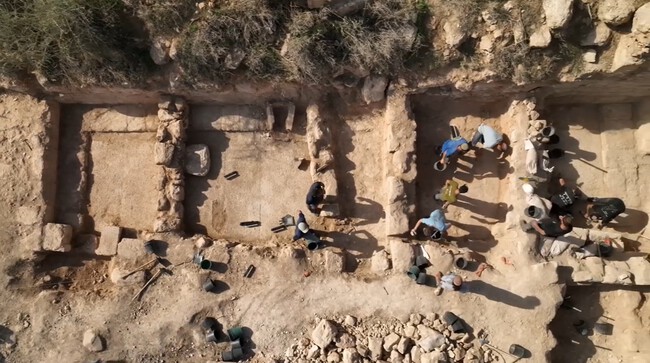
What makes the Salome Cave particularly fascinating is its immense size and architectural intricacy. Featuring a large courtyard, intricate stone walls, and multiple funeral niches known as Kokhim , the cave offers a glimpse into the burial practices of the time. Recent exploration of the 350 m² courtyard revealed decorations of Jewish motifs and delicate designs, indicative of its significance. Unlike the typical graves found during this period, Salome Cave’s structure demonstrates careful craftsmanship and artistic ambition.
History of Pilgrimage
In addition to its architectural grandeur, the cave is noted for its role as a pilgrimage destination. Archaeologists uncovered evidence of clay lamps that had been both sold and rented in the courtyard, suggesting that visitors came to illuminate the cave or participate in religious ceremonies. The discovery of Greek, Syriac, and Arab inscriptions further attests to the site’s importance across various cultures and religions. This indicates that it was a place of Christian pilgrimage during the Byzantine period, spanning from the 5th to the 9th century CE.
The Significance of Salome’s Presence
One of the most compelling aspects of this cave is the identity of the individual it commemorates. Many inscriptions reference “Salome,” a figure of considerable significance to early Christians. Scholars have identified Greek inscriptions that directly mention this name, suggesting her relevance within this sacred context. Historical evidence shows that by the 1090s, early monks discovered an ossuary inscribed with “Salome,” raising questions about her true identity.
Who Was Salome? Unraveling the Mystique
Diverse traditions associate the name Salome with various narratives. One particularly influential story comes from the Protoevangelium of James , which describes her as the midwife who witnessed the miraculous birth of Jesus. According to this tradition, her disbelief in Mary’s virginity resulted in punishment until she held the newborn Jesus. Other tales cast her as a disciple or even as a close relative of Mary. The cult surrounding Salome became a focal point for Christian pilgrims, intertwining her memory with early Christian worship practices.
Speculations Around Salome’s Identity
The rampant speculation regarding Salome’s identity opens the door to the possibility that the cave was not merely a burial site for a midwife or disciple but might belong to someone of royal significance. The Herodian dynasty, known for their connections to ancient Judea, stands as a leading candidate for the potential identity of Salome. According to the IAA, Salome’s identity could tie back to Herod’s family, possibly his sister, given their ethnic backgrounds and ties to the region. This reaffirms the notion that the Salome Cave is of not only religious but also historical significance .
As excavations continue and more findings emerge, the Salome Cave remains a focal point for those interested in the intersections of religion, history, and culture in ancient Judea. The evolving narrative surrounding this ancient site enriches our understanding of the past while inviting us to contemplate the layers of history that exist beneath our feet. Here, legends and realities intermingle, crafting a compelling narrative that bridges the ancient and the modern world.