
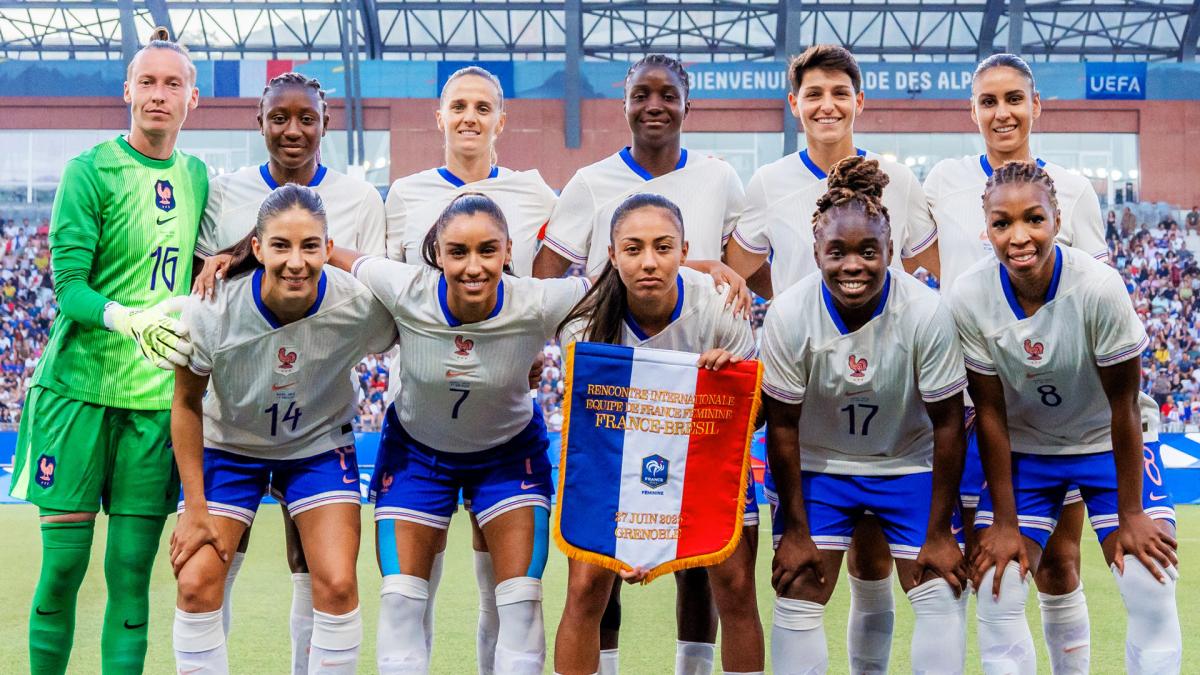
TF1’s Controversial Decision: Women’s Euro Match Rescheduled
In a surprising turn of events, TF1 , France’s leading television channel, found itself at the center of controversy recently. The channel was initially scheduled to broadcast the highly anticipated match between France and the Netherlands during the Women’s Euro. However, following Paris Saint-Germain’s qualification for the final of the Club World Cup , which coincides with the Women’s Euro match, TF1 made the unexpected decision to prioritize PSG’s game instead.
This decision did not sit well with many fans, particularly those supporting the French women’s national team, affectionately known as the Bleues . Viewers expressed their disappointment on social media platforms, questioning the channel’s priorities and commitment to promoting women’s sports.
Public Backlash and Response from TF1
The backlash was swift and widespread, with numerous fans and sports enthusiasts voicing their frustrations. Social media exploded with calls for TF1 to reconsider its scheduling choice, emphasizing the importance of women’s sports in the collective consciousness of French athletics. Critics pointed out that this decision undermined the visibility of female athletes and their achievements.
In light of this public uproar, TF1 took swift action by announcing a partnership with France Télévisions to ensure that the match would still be available for viewing. In a press release, the channel expressed its commitment to providing the best possible exposure for the Women’s Euro match, stating, “In order to offer the best possible exhibition to the meeting ‘Netherlands-France’ as part of the UEFA Euro Female 2025, the TF1 and France Télévisions group are delighted to have signed an agreement for a broadcast on France 2 this Sunday, July 13, at 8:50 p.m.” This collaborative effort is seen as a significant step for women’s sports broadcasting in France.
The Importance of Women’s Sports Visibility
Women’s sports have long struggled for attention and equal representation in the media. Consequently, such scheduling decisions often reflect broader societal attitudes toward female athletes. Increasing visibility through broadcasting is crucial in changing these narratives and paving the way for future generations of female athletes.
The UEFA Women’s Euro is a monumental event, showcasing the talents and skills of some of the best female footballers from across Europe. Matches like France vs. Netherlands not only entertain but also serve as an opportunity to inspire countless young girls around the world to engage in sports.
What This Means for Future Broadcasting
The controversy surrounding TF1’s initial choice raises essential questions about the ongoing dynamics within sports broadcasting. As more viewers demand equitable coverage for women’s sports, broadcasters can no longer afford to sideline these events. This incident could serve as an eye-opener for many media companies, pushing them to consider the commercial viability and audience engagement of women’s sports more seriously.
The collaboration between TF1 and France Télévisions is a promising sign for the future of women’s sports coverage in France. By prioritizing the match and responding to the public’s needs, broadcasters can significantly contribute to shifting the narrative towards greater equality in sports coverage.
The Role of Fans and Social Media
The role of fans in this situation cannot be understated. Social media has become a powerful tool for fans to express their opinions, rally support, and hold media entities accountable. The outcry against TF1’s decision demonstrates how vocal fanbases can influence decision-making in sports broadcasting.
As the match between the Netherlands and France approaches, fans will have the opportunity to watch their favorite players compete on a prominent platform. The collaboration is seen not just as a remedy to a controversial situation, but as a significant step toward respecting and promoting women’s sports in mainstream media.
With growing viewership and increasing interest in women’s sports, media channels like TF1 and France Télévisions have the chance to foster this momentum. As excitement builds for the Women’s Euro 2025, stakeholders in sports and media must work together to create an environment where women athletes are celebrated and receive the coverage they deserve.
In conclusion, the recent controversy over TF1’s broadcasting choices has sparked an important conversation about the representation of women’s sports in the media. With the swift response from both TF1 and France Télévisions, there is hope that female athletes will gain the visibility they rightfully deserve. As audiences increasingly demand equitable coverage, it is essential for media outlets to adjust their strategies to meet the needs of viewers, ensuring that the hard work and talent of women in sports are recognized on an equal footing.