
Israel’s Controversial Stance on Gaza: Netanyahu’s Latest Threats
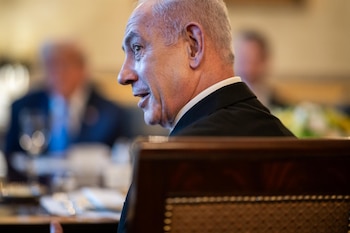
On Thursday, Israeli Prime Minister Benjamin Netanyahu issued a stark warning, threatening to re-engage militarily in the Gaza Strip if ongoing 70-day truce negotiations with the militant group Hamas do not yield satisfying results. Netanyahu, speaking from Washington D.C. , emphasized the Israeli government’s determination to secure demilitarization of Gaza and insisted that Hamas must relinquish its weaponry to end the cycle of violence.
In a video shared on the social media platform X, he articulated that while diplomacy is the preferred avenue for conflict resolution, Israel’s strategy includes the potential for military intervention if necessary. “If a lasting truce is achieved, excellent! But if not, our heroic army will secure peace by other means,” he asserted. These comments underscore just how precarious negotiations can be, especially considering the backdrop of recent escalations.
Netanyahu’s terms for ceasefire negotiation revolve around several non-negotiable prerequisites. He proclaimed that for Hamas to earn any semblance of a truce, they must fully disarm and allow Gaza to be demilitarized, ceasing any capability of military governance. This stance may be interpreted as Israel exerting its considerable influence in the region while asserting that security cannot hinge on trust, but rather on tangible disarmament.
Hamas, for its part, has responded affirmatively by proposing the release of ten hostages, a gesture intended to demonstrate goodwill during ongoing discussions. However, the organization has also articulated its requirements, including the complete withdrawal of Israeli forces from Gaza. They demand a steady flow of humanitarian assistance and guarantees for a lasting ceasefire. The stark contrast of demands between the two sides brings the feasibility of a peaceful resolution into question.
The timeline for negotiations is critical. Netanyahu has publicly declared that Israel would consider other means if the 60-day period of discussions fails to meet its objectives. The urgency of the situation cannot be understated; the September 2023 attacks that ignited this conflict resulted in the deaths of approximately 1,200 Israeli citizens and have prompted an ongoing military response that has reportedly led to the devastation of Gaza, where the fatalities have surged to an estimated 57,800 Palestinians . The humanitarian crisis in this area continues to escalate, raising accusations against Israel for excessive military action.
Moreover, Netanyahu’s rhetoric extends beyond Gaza; it also includes warnings directed at Iran , suggesting the negotiation terms could influence broader regional dynamics. “If the United States can broker a deal with Iran within this time frame, good. But if not, we will act decisively,” he stated, further complicating an already intricate geopolitical landscape.
The humanitarian implications of this conflict are dire, with thousands displaced and in desperate need of assistance. Both sides are entrenched in their positions, leaving little room for compromise. The balance between military action and negotiation remains a contentious issue, as each escalation can either propel the countries closer to a truce or further entrench their positions.
As the clock ticks down on the negotiation period, the world watches closely. The potential for renewed violence is palpable, with both sides prepared to act swiftly in defense of their respective interests. The challenge of moving from rhetoric to actionable peace remains formidable, and the prospect of reconciliation hangs in a delicate balance.
The present situation reflects deep-rooted issues that have historically plagued Israel and its neighbors. The coming weeks will be crucial in determining the future of not only the immediate conflict but also the long-term stability of the region. Both sides must weigh the cost of continued strife against the benefits of genuine diplomacy, especially as humanitarian needs intensify and the calls for peace grow louder across the globe.