
Since the end of the summer of 2021, my experience with foldable smartphones had been limited to two models: the Samsung Galaxy Z Fold3 and the Samsung Galaxy Z Flip3. While I appreciated their advancements over previous iterations, I found myself skeptical about the practicality of foldables. However, my recent visit to New York for the Galaxy Unpacked event showcased the new Galaxy Fold7 and Flip7, and I must admit— they have changed my mind .
This Fold Yes
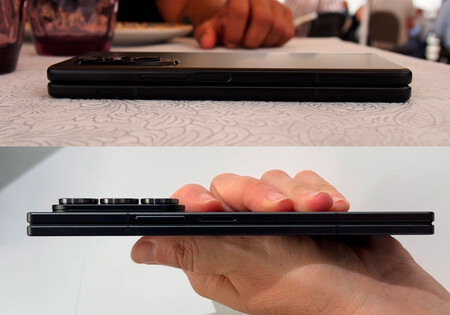
<span>Samsung Galaxy Z Fold3 and Galaxy Z Fold7</span>While the Fold3 had made strides in design, it still felt bulky. When folded, it felt like holding two phones , which is not ideal for everyday use. The thickness made it uncomfortable for prolonged handling, with an exterior screen that felt overly stretched and awkward. In contrast, I found the Flip3 much more appealing for its ability to fold and easily fit into pockets, rendering it practical without compromising usability.
Upon interacting with the Fold7, I was pleasantly surprised; it appeared sleek and manageable. It feels like a normal smartphone , lacking the previously awkward form factor. Even when folded, you could mistake it for an average Galaxy S series phone.
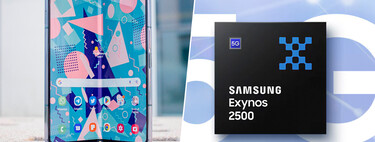
The Fold7 measures just 8.9 millimeters in thickness when closed, which is a mere 0.7 millimeters thicker than the Galaxy S25 Ultra. For context, the Fold3 had a hefty 16-millimeter thickness and weighed 271 grams. It has lost an impressive 7 millimeters and 56 grams , marking significant progress in its design evolution.
The External Screen That Flip Deserved
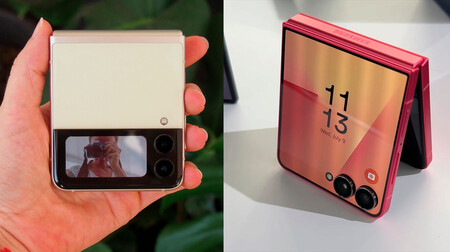
<span>Samsung Galaxy Z Flip3 and Galaxy Z Flip7</span>When I first tried the Flip3, I appreciated its compact design; however, it had limitations. When closed, it was hardly functional. The screen was expanded from earlier models but still lacked utility, offering little more than the ability to view notifications.
The transition to Flip7 is monumental, both in size and display quality . The screen now occupies the entire front, features cutouts for cameras, and measures 4.1 inches diagonally with a resolution of 1,048 x 948 . The refresh rate has also been upgraded to an impressive 120Hz , a major upgrade from the Flip3’s small 1.9-inch screen with a lower resolution. Unfortunately, the functionality still remains limited, as users cannot access apps directly from this external screen.
The transition to Flip7 is monumental, both in size and quality, as the screen now occupies the entire front.
Another improvement is design; the Flip7 is now thinner and lighter, achieving a thickness of 6.5 millimeters when opened compared to Flip3’s 6.9 mm. The most noticeable difference occurs when closed, with Flip3 measuring 17 millimeters compared to the Flip7’s 13.7 millimeters . This is primarily due to the new hinge design that allows the screen to fold smoothly without any gaps.
Initially, the Flip3 was my top choice, but after experiencing the advancements in both models over four years, I’ve reversed my stance. The issues I had with the Fold have been effectively resolved, while the Flip hasn’t seen as much innovation. If I had to choose a foldable today, it would certainly be the Fold.
The Competition Has Spurred Samsung
It’s essential to recognize that Samsung is not just competing with itself; the complete foldable smartphone landscape has changed dramatically. While Samsung pioneered the market, other brands have entered the field and made notable improvements. For instance, the external screen of the Flip is now comparable to the Motorola Razr 50 Ultra , which showcased a full-front display last year.
In terms of thickness, while the Fold7 has made impressive strides compared to the Fold3, brands like Honor have surpassed Samsung’s advancements. The Honor Magic V2 , for instance, measures just 9.9 millimeters when folded, and freshly announced models like the Honor Magic V5 are even thinner at 8.8 millimeters . This could lead to competitors claiming the title of the world’s thinnest foldable, while Fold7 still holds the title of “thinnest fold to date.”
The Bad of Renewing Every Year
Over time, consumer excitement surrounding new mobile launches appears to be dwindling. The trend of introducing models with only marginal differences raises questions about the frequency of releases . While this business model aims for continual profit, from a user perspective, it often results in a feeling of stagnation.
My experience after four years away from foldables exemplifies this trend. Conversations with peers who have closely followed Samsung’s releases led me to conclude that much of the innovation has plateaued. The most talked-about feature of the Fold7 was its thinness, but little else stood out. Perhaps taking a few years off from the foldable market is the secret to rediscovering the thrill of new launches.
In conclusion, the evolution of foldables has been captivating, but while improvements have been made, the overall excitement may need to be reignited with more substantial innovations in the future. The Galaxy Fold7 and Flip7 reflect progress, yet the industry is dynamic, and consumers are eager for groundbreaking changes to enhance the smartphone experience.