
Madrid. July. The thermometer signals an astonishing 38ºC . The heat is so suffocating and sticky that all you want to do is sit in front of a fan, a cold soda by your side, and simply wait for the hours to pass. Alternatively, one might look for refuge under the shade of a tree in El Retiro or any of the other expansive parks in the capital. These vast, green, leafy areas are designed for exactly this purpose, right? However, there’s a twist: upon arriving at El Retiro, you discover it’s closed.
This closure amidst an extreme heat wave seems absurd to many. Neighbors and politicians alike denounce it as a “common sense” issue, highlighting the frustration of seeking shelter only to find it’s barred. The City Council , however, defends the measure, claiming it is essential to avoid misfortunes associated with high temperatures. The *big question* remains: Is this logic valid, and does this closure genuinely serve a purpose?
When the heat arrives… Madrid needs shade . So much so that it has invested €1.5 million in installing awnings at Puerta del Sol to prevent the square from transforming into an oven. When temperatures exceed 35º , many residents naturally seek refuge in the city’s parks. Notable ones include the Whim , the Rosaleda of the Park of the West , Juan Carlos I Park , and, of course, El Retiro, with its 125 hectares filled with lush trees and revitalizing shade.
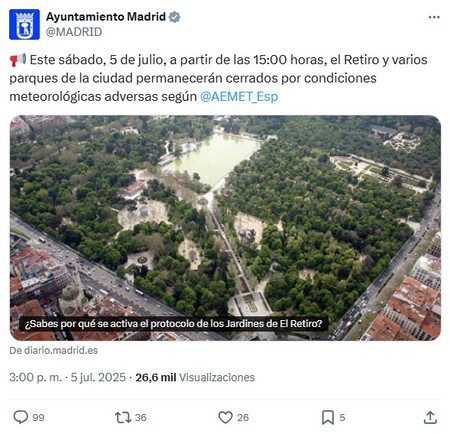
Click on the image to go to Tweet.
Closed Parks, Needed Shade. Unfortunately, these parks do not always remain open. A recent incident on July 7 saw the temperatures surpassing 35ºC in several areas of the community. Yet, in spite of these sweltering conditions, the City Council announced the closure of El Retiro and other parks due to “adverse weather conditions.” This raises eyebrows: why are parks closed even when the climate is begging for shade?
A quick scan of the City Council’s official account reveals that this is not an isolated incident. Just today, nine green areas including El Retiro have sections under restriction. A previous Saturday saw several of these parks shutting their gates after 3 PM, precisely when the sun is at its peak intensity. A similar scenario had unfolded just a few days prior.
Why the Closures? The City Council cites “adverse weather conditions,” accompanying each notice with a link to their website, detailing their protocols for park closures. Their approach follows a four-color traffic light system (green, yellow, orange, red) to gauge the suitability of park conditions based on forecasts from AEMET . This protocol aims to mitigate risks but prompts questions about its effectiveness.
The City Council’s technicians assess El Retiro, looking at various factors—temperature, soil moisture, and risk of storms. The utmost severity, classified as a “ red alert ,” leads to the suspension of all planned activities, the evacuation of park visitors, and its complete closure.
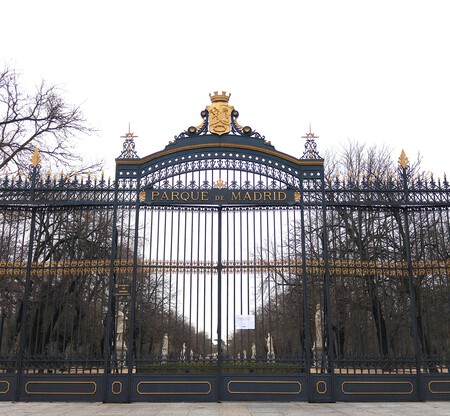
When Does a Closure Occur? Technicians issue a closure alert with wind gusts exceeding 65 km/h and temperatures below 35ºC or when gusts surpass 55 km/h at higher temperatures. These alerts can cascade to other large parks in the municipality as well, emphasizing the widespread impact of this policy.
The Bigger Picture. Critics argue that while park closures might be for our safety, the regularity of these shutdowns during sweltering heatwaves raises legitimate concerns. Numerous trees in El Retiro are ancient and large, posing risks during harsh conditions. This history includes tragic incidents, such as a fatal accident involving a young boy in 2018 and injuries to other park-goers from various tree-related incidents.
<img alt="Madrid's installation of awnings against heat" width="375" height="142" src="https://i.blogs.es/4e43ef/dsc04758/375_142.jpeg"/>“Against Common Sense”. These closures have stirred significant debate, raising questions about their rationality. If extreme heat poses threats, why close parks that could alleviate such discomfort? Activists and opposition parties call for a review of these protocols, advocating for alternatives to complete park shutdowns.
Statistics Tell the Story. In defending its closures, the City Council emphasizes the numbers. According to their data, parks close less than 1% of the time but significantly diminish risks— 80.7% of falling branches and trees occur during those closures. The Almeida administration contends that this protocol is not politically motivated but driven by a commitment to safety while balancing park usage.
The controversy continues to unfold as both residents and officials navigate this complicated issue. Advocates for change are pushing for characteristic assessments that would account for specific tree types and the unique nature of each park while limiting sweeping policies that affect everyone equally. The ongoing struggle to align safety with public enjoyment takes center stage in this heated discussion.