
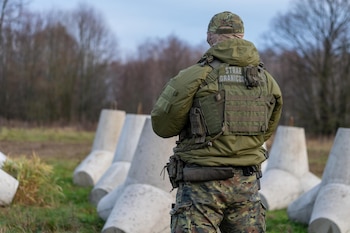
Poland’s Strategic Deployment of 5,000 Soldiers to Reinforce Border Control
Poland has recently announced the deployment of 5,000 soldiers to bolster its border control operations, particularly along its frontiers with Germany and Lithuania. This initiative comes in response to heightened concerns regarding illegal immigration and reflects ongoing tensions within the region. The General Staff released the information, stating that this move is a direct reaction to Germany’s intensified border control strategies initiated in 2023.
The situation at the Polish-German border has become increasingly complex since German Interior Minister Alexander Dobrindt took office in May, pushing for more stringent border measures. His policies include a controversial directive to reject asylum seekers attempting to cross into Germany, a strategy aimed at reducing the influx of migrants into the country.
Despite the cross-border dynamics, Polish Minister of Defense, Wladyslaw Kosiniak-Kamysz, has emphasized Poland’s commitment to conducting border management unilaterally. “Germany will not tell us what we have to do in Poland,” he stated firmly, reiterating Poland’s sovereignty in handling its own security matters.
The backdrop to this situation is Poland’s previous experience managing borders. In recent years, the Polish army has closely collaborated with border agents to enforce security along its border with Belarus. These efforts have been vital due to numerous altercations related to Belarusian policies perceived to exploit migration as a political tool in response to sanctions from the EU.
The ongoing debate regarding migration policies often surfaces within Polish political circles, particularly among opposition parties. Critics of the current government, led by Donald Tusk, accuse it of capitulating to Berlin’s pressures and inadequately addressing the influx of migrants. In contrast, some factions within Poland, especially those associated with the Law and Justice Party (PIS), have expressed support for increased border defense activities and local citizen patrols—which has included backing from figures associated with the ultra-right political spectrum.
The tension escalates with statistics highlighting the situation at the border. Since May 8, approximately 1,300 individuals have been turned away at the Polish-German border, underscoring the increased efforts of the German authorities to manage the flow of migrants effectively.
In this context, the Polish government’s decision to deploy additional military personnel comes as a proactive measure to secure national borders while addressing the complex challenges posed by migration. Enhanced military presence is expected to facilitate more stringent border checks, and provide support to existing police forces in their efforts to control unauthorized crossings.
On one hand, this solution addresses immediate concerns of illegal immigration; on the other, however, it raises questions about the need for coordinated efforts among EU countries facing similar challenges. Critics argue that unilateral action may complicate existing frameworks for cooperation, potentially undermining collective solutions to migration across Europe.
The situation further complicates perceptions regarding regional stability. The rise of nationalist sentiments across eastern Europe often leads to diverging approaches to immigration. Poland, facing as many internal challenges as it does external pressures, finds itself in the spotlight as it navigates the intricacies of enforcing border policy amidst broader geopolitical tensions.
To that end, Poland’s move reflects a growing trend where countries feel compelled to act independently in response to immigration pressures, rather than relying on cooperative EU strategies. The ramifications of these actions will likely shape not only bilateral relations with Germany but also influence Poland’s position within the broader European community.
As these developments unfold, all eyes will be on how Poland balances the delicate operation of reinforcing security without compromising its diplomatic relationships in an increasingly polarized environment. The deployment reflects a critical juncture for Poland as it seeks to reclaim agency over its borders while also grappling with the pressing humanitarian concerns that inevitably arise from mass migrations. It is an ongoing narrative—one that encapsulates the struggles of many nations in today’s world to maintain sovereignty while addressing the complexities of human mobility and international obligations.