
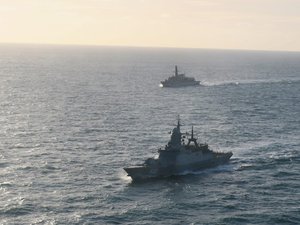
In a startling incident reported on June 24, it has come to light that a Russian warship successfully navigated the waters near the European coasts on June 21 without being detected by British intelligence. This was achieved by issuing a false identification signal , as unveiled in a thorough investigation by the BBC.
The vessel in question, a corvette named Boikiy , equipped with guided missiles and machine guns , reportedly utilized a deceptive signal to facilitate its passage through the English Channel. The BBC’s investigation shed light on how the corvette went undetected while escorting two oil tankers from what has been deemed the Russian ghost fleet .
An action to dissuade states from entering ships
Accompanying the Boikiy were two oil tankers: the Selva , which sails under the Palauan flag, and the Sierra , flagged under Malawi . Both these nations are subject to European sanctions , raising questions about the legitimacy of these vessels. The primary aim appears to be to deter nations such as the United Kingdom and other NATO allies from intervening with these Russian vessels, escalating the risk of confrontation.
The Two Tankers Sierra (IMO: 9522324) and Naxos (IMO: 9336426, AIS Name “Selva”) are sailing under false AIS flags (Malawi and Panama respectively). Nearby in Escort Training: Russian Corvette “Boikiy,” likely behind the generic MMSI.
– Christian Panton (@pa.nton.cx)) June 21, 2025 at 11:11 PM
Dmitry Gorenburg, a researcher at the Naval Analysis Center , noted that this tactic “seems to have the aim of discouraging Western nations from attempting to intercept these maritime operations since the military escort significantly raises the stakes for further conflict.” This underlines the deliberate strategy employed by Russia in the region, showcasing a calculated risk within naval movements.
“It is therefore very rare that they will pretend to be something else”
In standard maritime operations, military ships typically activate an Automatic Identification System (AIS) . However, the Boikiy was reportedly traveling from Conakry to Guinea without any AIS signaling initially, only activating after some time with a misleading identification signal. According to satellite analyses conducted by the BBC, this convoy successfully crossed the Channel before making its way toward the Baltic Sea .
Former Belgian Navy officer Frederik van Lokeren commented, “Normally, if the Russians prefer to remain discreet, they simply turn off their AIS signal. It is therefore very rare that they will pose as something else.” This insight illustrates the unusual nature of the incident and underscores the growing tension in maritime operations, particularly as geopolitical dynamics continue to evolve.
The implications of such maneuvers resonate throughout international waters and military strategy, touching not just on maritime law but also on global security protocols. As nations grapple with potential maritime confrontations, the strategic use of deception and diplomatic pretense is likely to shape future naval engagements. The unwanted attention placed upon the actions of Russian naval vessels serves as a reminder of the intricate dance involved in international maritime navigation, where a mere signal can alter the course of diplomacy.