
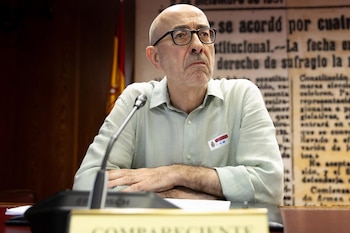
In a recent Senate hearing, Ignacio Zaldívar , the former Sub-Director of Administrative Management at ADIF , shed light on the controversial employment of Jésica Rodríguez , an ex-partner of former Minister José Luis Ábalos . His testimony has raised concerns about potential nepotism and the legitimacy of hiring practices within Spanish public companies.
The Context of the Testimony
The inquiry revolves around allegations that Jésica Rodríguez was granted a position at Tragsatec shortly after her tenure at Ineco, without the standard hiring processes being followed. Zaldívar confirmed during his testimony that he contacted Tragsatec in November 2020, suggesting that five profiles, including Rodríguez, should be considered for roles within the organization. He claimed that Rodríguez did not have any incidents during her time at Ineco, which prompted him to reach out to her.
“I transmitted to Tragsatec the request of five profiles for incorporation,” Zaldívar stated. “I called Jésica Rodríguez to see if she wanted to continue serving, as I had no incidents like the rest of the candidates.” This assertion has opened a can of worms concerning the criteria employed in hiring decisions at state-owned companies.
Understanding the Hiring Process
Despite Zaldívar’s explanation, questions about who initially hired Rodríguez at Ineco continue to linger. He insinuated that the decision must have come from someone in a higher position , possibly the General Director or the President of ADIF. He stated, “I do not have clarity on who hired her in Ineco, but it must have been someone above me.” This ambiguity has cast doubt on the transparency of public sector employment practices.
Interestingly, in ADIF’s official communication, they denied any connection with Koldo García, affirming that they were unaware of Rodríguez’s employment status until her testimony before the Supreme Court. This raises concerns about the communication lapses and possible lack of accountability within these public bodies.
Ábalos’s Allegations and Further Complications
Zaldívar’s account also intersected with claims made by former President Pardo de Vera of ADIF, who alleged that Ábalos had previously expressed dissatisfaction with the employment situation surrounding his ex-partner. Zaldívar noted, “The first time I heard of Jésica was through President Isabel Pardo de Vera. She contacted me about her working at Tragsatec.” This suggestion leads to questions about whether political connections influenced her hiring.
Furthermore, Zaldívar affirmed that his interactions with Rodríguez were limited to phone calls and emails, reinforcing his stance that he acted within the standard protocols for employee referrals. He candidly shared, “I asked if she would be interested in continuing , as her contract with Ineco was coming to an end.” This underlines a broader issue regarding the ethics of public service employment and potential cronyism.
Audits and Accountability
In the wake of the scandal involving Rodríguez potentially receiving compensation without attending her job, Zaldívar revealed that both ADIF and Tragsatec initiated audits to assess their hiring and operational mechanisms. This move serves as an acknowledgment of the need for higher accountability standards within public companies, particularly regarding prominent individuals who may bypass conventional hiring scrutiny.
While Zaldívar maintained that his actions were customary and above board, the implications surrounding this case highlight the growing scrutiny on governmental practices in Spain. As public trust in institutions continues to erode, the importance of transparency and integrity in public service becomes increasingly critical.
General News – 2