
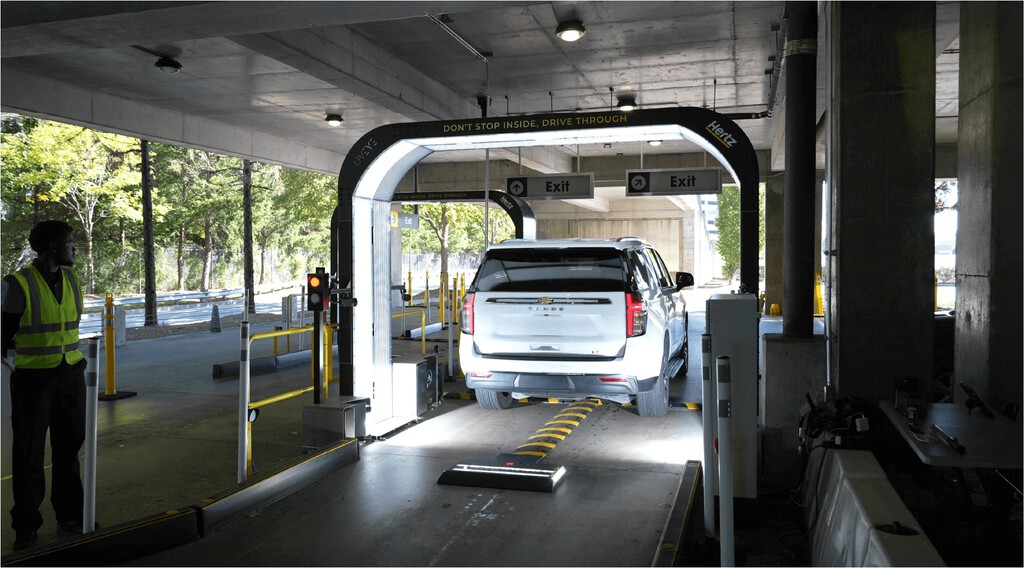
Traveling comes with its own sets of challenges, from delayed flights to unexpected weather. However, some travelers encounter unforeseen circumstances that leave them both shocked and confused. Such was the case for Patrick , a recent traveler who returned his rental car at the Hertz location in Hartsfield-Jackson Atlanta International Airport and discovered an additional bill of more than $400 . This peculiar incident raised significant questions about the technology employed in car inspections.
The story began when Patrick returned his rental car, a Volkswagen, only to be greeted with an unexpected financial demand. An AI-driven system had thoroughly analyzed the vehicle’s exterior and identified a 2.5 cm scratch on the rear wheel . The AI’s capability, seemingly designed to offer an efficient vehicle inspection, instead led Patrick to an exorbitant charge that he couldn’t believe was warranted.
According to an article from The Drive , Patrick’s situation has sparked concern among potential renters in the greater Atlanta area. After delivering the car, he was informed he owed a staggering $440 for what the company deemed damage. The breakdown of these costs included nearly half for repairs, and the rest allocated to various fees, which left Patrick puzzled and frustrated. Notably, $125 was tagged for processing and $65 for administrative costs.
Betrayed by Algorithms
For Patrick, the experience unravelled in a manner reminiscent of unexpected surprise bills one often hears about. After being informed of the costs, he engaged with a Hertz chatbot but found little satisfaction from that interaction. Following this, he took his inquiries to email, hoping for a more satisfactory resolution.
The situation became more convoluted as Patrick discovered that there could be financial incentives for early payment. In his case, if he paid the fee within 48 hours , he would receive a discount of $52 . Furthermore, for any delays in payment beyond a week, this amount would decrease to $32.50 . However, Patrick decided against hastily handing over his funds for a charge he believed was unjustified.
Despite the financial pressure, he opted to let the bill sit. When reflecting on the situation, Patrick stated, “Saving $30 to accept responsibility is not worth it,” a sentiment that resonates with many consumers who feel unfairly fined due to such technology-driven processes. It’s clear that the incident was not just about money; it raised larger questions about the accuracy and implications of using AI for vehicle inspections.
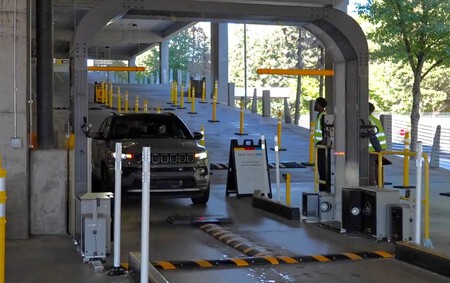
What makes Patrick’s experience noteworthy is not merely the bump in costs but how the company determined the alleged damage. This wasn’t a case of thorough human inspection but rather a new AI scanning system developed by Uveye , a partnership announced by Hertz to enhance their vehicle inspection process. The technology involves machine learning algorithms and camera systems designed to identify possible issues with vehicles in mere seconds.
In April, Hertz announced this partnership, aimed at modernizing their processes and enhancing efficiency. The program aims to automate inspections of various vehicle components, including bodywork, tires, and more. According to Hertz, this marriage of technology should offer unprecedented speed and accuracy in recognizing potential damages.
Despite touting advancements in operational efficiency, the necessity of fees charged for the detection process still comes under scrutiny. Hertz justified these charges as covering the cost of inspecting and estimating damage that occurs during rental periods. While the intention is to ensure customers have a transparent experience, this approach has not mitigated disappointment among clients.
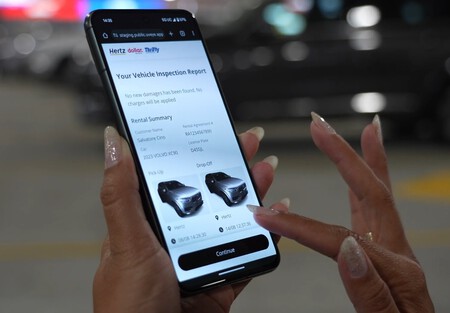
It’s also worth noting that the app provided to Patrick contained an image of the purported damage side-by-side with an image from when he first rented the car. This technology is aimed at providing clarity and justification for the charges, but the outcomes can vary significantly in terms of perceived fairness.
As digital processes become more integrated into everyday transactions, such experiences illustrate the delicate balance between technological efficiency and customer care. Individuals like Patrick are left grappling with the implications of automated systems, highlighting the need for companies to ensure that their technology not only functions optimally but also aligns with customer expectations and ethical considerations. With the increasing reliance on AI systems, it remains critical for companies to learn and adapt from such incidents, fostering a better understanding of the human experience intertwined with technology.
Images via Uveye.
In summation, the case of Patrick and his unexpected car rental charges shines a light on the complexities involved with AI technologies and customer service, urging companies to reassess their processes for the betterment of both business and consumer relations.