
False images circulating on social networks is no novelty, but in the era of AI, it is increasingly difficult to detect them. This has even made us distrust real photos. Photos generated by AI going viral during significant events are becoming the new normal. We witnessed this after the blackout and also during the conflict between Israel and Iran. It is clear that AI has become adept at generating false images, but what if we could utilize it for the opposite purpose? That remains to be seen.
The Photos in Question
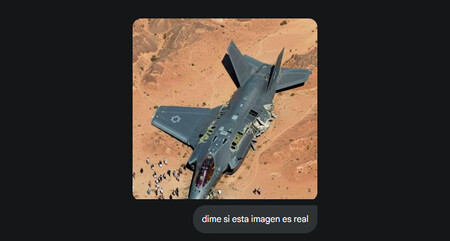
The photos in question emerged concurrently with a half-Iranian report claiming that Iran had successfully shot down an Israeli F-35. Almost immediately, two images began to spread like wildfire on social media, despite being debunked quickly. One of these images, which portrayed an F-35 surrounded by curious bystanders, is strikingly disproportionate. To start, the F-35 is said to measure 16 meters, yet in the image, it appears enormous, while people seem larger than the surrounding buildings. Not to mention the minimal damage depicted on the plane, which looks improbable for a shot-down aircraft.
A Wave of AI-Generated Illusions
These misleading images were not the only AI creations circulating during the early days of the conflict. Various videos, including one featuring a massive Iranian missile, appeared almost convincingly until clues—like the brand of water in the frame—revealed their AI origins. Another manipulated image showed Tel Aviv in ruins. These examples underscore how quickly misinformation can spread.
AI’s Struggles with Fact-Checking
AI is terrible at performing FACT-CHECKING. Organizations dedicated to fact-checking, such as Maldita, have discredited these and other AI-generated images in the context of the Israel-Iran conflict. Some users turned to AI tools to verify the authenticity of these images and received confusing answers. An analysis of over 130,000 posts revealed that Musk’s AI struggled to detect some false images or identify their sources, with community notes proving far more reliable.
Testing AI’s Capabilities
We have tried it. To gauge the capabilities of various AI models, we used the image of the distorted F-35 and posed several questions to different AI tools. Here are their responses:
- ChatGPT: This OpenAI tool begins, “This image does not seem real,” analyzing the proportions of the plane and correctly identifying it as an F-35, stating that the damage appears inconsistent.
- Perplexity: Like ChatGPT, it notes that the proportions, perspective, and aircraft damage suggest digital manipulation.
- Gemini: Initially deemed the image real but claimed it depicted a non-combat incident involving birds in Israel in 2017. After we pointed out discrepancies, it eventually apologized for its “serious mistake.”
- Claude: This AI was the only one to firmly state that the image is fake, providing context: “This is one of the many false images circulating as part of misinformation campaigns during the conflict between Israel and Iran.”
The Reliability of AI Technology Remains a Concern
The reliability of generative AI remains a pressing issue. In our testing, while ChatGPT and Perplexity succeeded to an extent, they didn’t elaborate enough on their conclusions. Gemini invented answers completely, while Claude provided the most accurate context. Although language models have improved remarkably in a short timeframe, many answers continue to be fabricated, even when they possess access to online information. Clearly, ensuring reliability is the critical challenge that generative AI must address moving forward.
Images | 404 Media
In Xataka | ChatGPT guide: 22 functions and things you can do to maximize the potential of this artificial intelligence.