
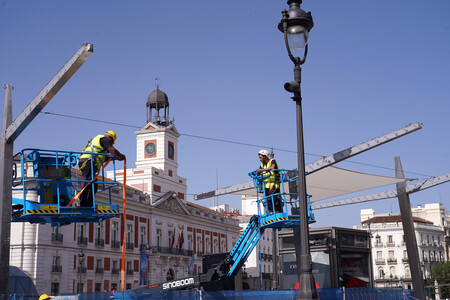
Seeking Shade: Madrid’s New Awnings at Puerta del Sol
With the thermometer soaring to a maximum of 40ºC and the sun bearing down relentlessly, one thing that many residents and tourists alike are searching for in the bustling streets of Madrid is shade. The City Council has taken note and initiated an installation project that aims to transform the famous Puerta del Sol into a more bearable urban space by incorporating 32 awning panels. Though this project is hailed as a long-overdue step towards creating "climatic shelters," it has attracted considerable criticism due to its costs and efficacy.
The Need for Shade
Puerta del Sol is not just another square; it’s an iconic landmark that attracts thousands of tourists each year. However, during the peak months of summer, the square can become an oven, with its 12,000 square meters often described as a "frying pan." This lack of shade has been a growing concern, especially as climate change intensifies heat waves throughout the region. The local jokes surrounding the square’s design often refer to it as "La Sartén del Sol," illustrating a widespread recognition of its sun-baked reality.
The Controversy Surrounding Awnings
While the installation of the awnings is intended to provide respite from the scorching sun, it has ignited controversy for several reasons. City officials argue that the square has existed for 163 years without any shaded elements, but critics point to a history that included trees and awnings in its past.
The city is also faced with structural limitations beneath the square. Under its pavement lies a major subway station and a network of galleries, which restrict what changes can be made on the surface. The usual wonders of planting trees were swiftly dismissed, as the Municipal Historical Heritage Commission opposed any initiative that could alter the square’s historical landscape.
Debating the Effectiveness of Awnings
So why choose awnings over trees? The City Council believes that these micro-perforated PVC fabric panels offer a practical solution to the immediate problem of sun exposure for pedestrians. The installation will also feature stainless steel masts anchored to granite benches, allowing for panels to be erected or taken down throughout the year, similar to practices seen in cities like Seville and Málaga.
Critics argue that this method is more reactive than proactive, claiming that the 1.5 million euros spent on this project is a hasty and expensive fix to what could have been solved with a more sustainable approach like planting greenery.
The Financial and Environmental Implications
The financial aspect of installing these awnings has raised eyebrows. Critics point out that the cost is exorbitant considering the number of panels being installed. With the city already having invested heavily in renovations just a few years prior, the additional financial burden seems unjustifiable to some. As the installation progresses, the City Council has defended the expenditure, indicating that significant preparatory work went into engineering the foundations to ensure durability against wind gusts.
What remains to be seen is whether these awnings will be effective in providing real shade to the multitude of visitors. The claims regarding their potential utility for the vast expanse of 12,000 square meters are questioned by urban planners who argue that more thoughtful solutions are needed, particularly for an area that experiences high pedestrian traffic.
A Historical Perspective
The pushback against the installation also reflects broader discussions about urban planning in Madrid. City officials maintain that this will be the first time the Puerta del Sol incorporates any form of shade, but as noted earlier, critics disagree. The changes in the urban design of the square should arguably be accompanied by an analysis of sustainable practices that can holistically contribute to Madrid’s environment.
In light of this debate, public opinion is polarized. Some residents welcome these awnings, viewing them as a step toward improved urban comfort, while others see them as a superficial effort that neglects deeper issues of greenery and sustainable design.
This ongoing discourse isn’t just about a series of awnings; it symbolizes the larger, pressing conversation about how modern city planning can integrate nature and form functional, enjoyable public spaces.
Ultimately, the success of installing awnings in Puerta del Sol may set a precedent for how Madrid adapts to climate change and urban planning challenges. Will this initiative lead to more profound changes in the city or simply act as a decorative bandage on a much larger issue? Only time will tell.