
Heightened Security Measures for Diplomatic Embassies in Peru
The National Police of Peru (PNP) has requested urgent reinforcement of police security at the embassies and diplomatic residences of Mexico, Brazil, and Bolivia. This action comes in response to concerns that former president Martín Vizcarra Cornejo might attempt to escape or seek political asylum amid his ongoing judicial troubles related to corruption allegations. The request reflects the precarious situation stemming from Vizcarra’s tenure as the regional governor of Moquegua (2011-2014).
On June 27, 2025, the PNP’s Directorate of Integral Security (Diros-Dart) dispatched a communication to General Enrique Hugo Felipe Monroy, head of the Lima Police Region, requesting immediate police support to bolster security services at the specified diplomatic sites. This official correspondence was signed by Colonel PNP Luis Ángel Santos Villar and details the urgent need for police personnel, particularly from the Special Operations Services (SOES), to protect these sensitive locations.
The Legal Battles of Martín Vizcarra
This urgent request is motivated by the allegations against Martín Vizcarra, who now faces a six-month preventive detention request from the Public Prosecutor’s Office for alleged acts of corruption during his administration. The legal deadline for his departure from the country is currently set to expire on July 4, 2025, marking a critical juncture that raises the risk of his potential flight or asylum plea.
The Embassy Protection Division has already taken preliminary steps to shore up security, but the escalating concerns around Vizcarra’s legal situation warranted a more substantial deployment of preventive measures.
The former president, who served from 2018 to 2020, is accused of accepting bribes totaling S/2.3 million from construction firms in exchange for public contracts, notably involving the Lomas de Ilo project and the Hospital of Moquegua. The prosecution, spearheaded by Germán Juárez Atoche from the special team Lava Jato, has demanded a sentence of 15 years in prison, a nine-year disqualification from holding public office, and a fine of S/151,580.

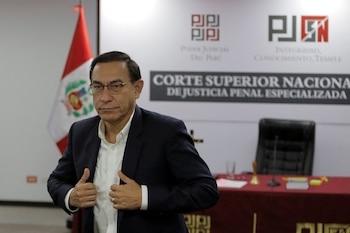
Martín Vizcarra questioned the lack of conviction of Edward Málaga when referring to the presidential vacancy.
The Response of the Judiciary
The fifth National Preparatory Investigation Court reviewed the preventive detention request on June 27, 2025, but Judge Víctor Alcocer ruled against the need for immediate incarceration. He asserted that the necessary evidence did not sufficiently justify preventive detention at this stage. Nevertheless, Alcocer did impose restrictions to ensure Vizcarra’s presence throughout his trial.
The magistrate indicated that while Vizcarra has familial connections and roots in Peru, his lack of stable employment was a red flag that could facilitate his attempts to evade legal action. He issued a ruling mandating appearance with restrictions and impediment of departure for a six-month period beginning July 5, 2025. As part of these restrictions, Vizcarra will not be allowed to access diplomatic venues or communicate with anyone linked to diplomatic representations and must provide monthly biometric controls and activity reports.
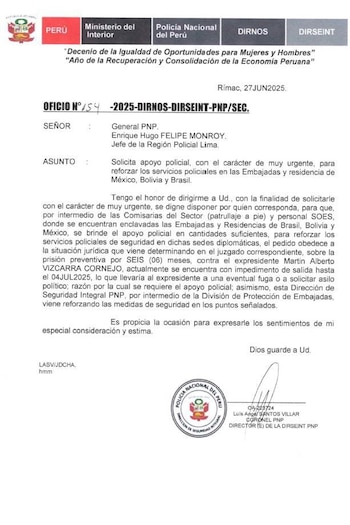
Peru reinforces diplomatic security for risk that Martín Vizcarra asks for political asylum.
Political Implications and the Broader Context
Prosecutor Germán Juárez Atoche announced intentions to appeal the judicial decision that denied preemptive detention. He expressed that with the gravity of the charges against Vizcarra, the risk of flight was significant. According to the Public Ministry, the former president could leverage his potential refuge in an embassy as a means to escape the judicial system.
The call for escalated security at embassies aims to thwart any such attempts, thus safeguarding the system of justice in Peru. The Embassy Protection Division, operating under the Directorate of Integral Security of the PNP, has already coordinated preventive measures, but the current situation necessitates a formal and broadened deployment of security personnel.
The legal woes of Martín Vizcarra highlight a larger and troubling narrative in Peru concerning corruption and accountability among public officials. As a former leader who assumed office amid the Odebrecht scandal, Vizcarra’s case has sparked significant public interest—and outrage. Although he had positioned himself as a champion against corruption, his removal from office in 2020 for "permanent moral disability" over bribery allegations reversed his political fortunes.
Today, this ongoing saga underscores the complexity of fighting corruption in the country, revealing the challenges faced by not only Vizcarra but numerous other prominent figures embroiled in similar predicaments. The security reinforcements at embassies signify a crucial measure aimed at ensuring that justice prevails, safeguarding the integrity of Peru’s legal and political landscape.