
Conflicting Statements: Army’s Authority on Arrests
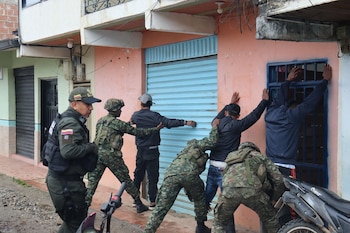
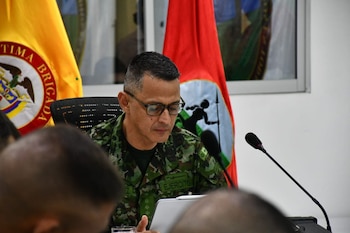
General Erick Rodríguez, commander of the National Army of Colombia, recently addressed a critical debate regarding the military’s authority to conduct arrests during operations. His remarks come after General Royer Gómez, head of Army Operations, suggested that the military lacks the Judicial Police powers necessary for executing arrests and that previous releases of captured individuals stem from these limitations.
General Rodríguez asserted, "I want to indicate that the National Army does capture," clearly contradicting Gómez’s statements. This issue highlights a significant struggle within the institution concerning operational protocols and authority in the field.
The Complex Landscape of Military Operations
In the recent incidents involving military kidnappings, Gómez emphasized that the army is not endowed with the authority to arrest individuals, stating, "We in the National Army do not have Judicial Police powers, therefore we are not empowered to make captures. " This statement becomes even more complex as the National Prosecutor’s Office weighs in, indicating that the captured individuals could not be formally prosecuted due to a lack of evidence linking them to the crimes.
General Rodríguez, however, expressed the importance of having substantial evidence to substantiate arrests. He noted that processes are underway for identifying and individualizing those responsible for orchestrating kidnappings, stressing the need for cooperation with civilian prosecutors to procure arrest warrants.
Despite internal disagreements, the Prosecutor’s Office reported there were insufficient grounds to conclude these individuals were caught "in flagrance," leading to their immediate release. General Rodríguez maintained that the military has the necessary competence to act in situations threatening the integrity and rights of army personnel.
Kidnapping and Its Implications for Colombian State Authority
In statements to The Spectator, Rodríguez remarked that these kidnappings are tactics employed by criminal structures such as Carlos Patiño to assert territorial dominance over the state and intimidate the civilian populace. He insisted that the rights of the soldiers involved are just as critical as those of the communities impacted by these acts of violence.
He further outlined that the machinations behind such kidnappings extend beyond mere local dissent. He stressed that these actions are orchestrated by organized groups, which are capable of mobilizing resources effectively. “They give the order that 400 people meet, but they have to have the logistics for food and supplies," he explained, underscoring the structured nature of these movements.
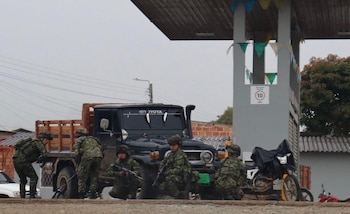
He warned that if these activities continue unabated, they risk eroding state authority in areas already vulnerable due to a weak government presence. This phenomenon is particularly pronounced in regions engaged in coca cultivation or illegal mining, where criminal organizations hold significant sway.
The Army’s recent rescue operation on June 22 in the Fondas district brought immediate action against a criminal network. They arrested at least 16 suspects associated with the kidnappings; however, these individuals were later released.
Rodríguez identified Alias Kevin as a pivotal leader of the Carlos Patiño group in the region, thought to be directly responsible for orchestrating the kidnappings and maintaining control over community dynamics.
In addressing these issues, it is crucial for the government to re-evaluate its strategies to restore order, healing communities, protecting military personnel, and dismantling the organized crime that threatens the foundation of the Colombian state.