
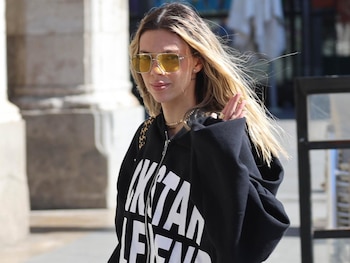
Alejandra Rubio has found herself at the center of criticism after a recent video surfaced on social media. The video, shared by her partner, captures a visit they made to the jail where Rocco and Pietro Costanzia are currently incarcerated, coinciding with her birthday. This public display of what many consider a deeply personal moment has raised eyebrows, especially given the nature of their visit.
The backlash intensified when colleagues from the show “We are going to see” expressed their disbelief at the apparent contradiction in Alejandra’s actions. One questioned whether her decision to share such personal content aligns with her stance of keeping her private life off the public radar. During the broadcast, reactions from co-hosts including Adriana Dorronsoro, Alessandro Lequio, and Antonio Rossi sparked heated discussions, prompting a ripple effect on social media platforms.
Joaquín Prat, who is also a host on the show, had a particularly poignant response. He advised Alejandra to reconsider her approach and reminded her that the audience does not see them as enemies, emphasizing the supportive environment they strive to maintain on the program. His words resonated widely, gaining traction on social media as many users began to echo his sentiments about her conduct.
Within just a couple of hours following the show, Alejandra took to her own social media to address the uproar. She stated that she feels “tremendously misunderstood,” acknowledging that some of the blame may rest on her. She explained that they aimed to showcase a “less beautiful part” of their lives, asserting that they are multifaceted individuals with complex circumstances. In her message, she clarified that sharing their story was not a means of monetary gain and emphasized that she does not typically exploit her family’s experiences for publicity.
Despite the intention behind her actions, viewers have pointed out that Alejandra’s frequent appearances on a televised program often centered around social news contradict her claims of privacy. Her lineage, being the granddaughter of the illustrious María Teresa Campos, means that she has been part of this public sphere since coming of age, and her endeavors in the media have often reflected her family’s legacy.
Furthermore, Alejandra openly acknowledged her “failures” and expressed a desire for more kindness among her peers. She expressed regret over the expectation of criticism in her workplace, stating, “it often feels like people are waiting for me to slip up so they can pounce.” This highlights her awareness of the scrutiny she faces as a public figure, yet she continues to grapple with the complexities of being in the limelight.
She yearns for a more supportive environment filled with “warmth, a hug, [and] a good word,” rather than constant reproach. While she did not name anyone specifically, her comments indicated a longing for greater camaraderie and understanding from her colleagues and the public alike. However, she further clarified that her life does not revolve around the entertainment industry, distinguishing her from her family members who are deeply entrenched in the business of sharing their personal lives for fame.
As Alejandra navigates these challenging waters, the incident serves as a reminder of the fine line between public and private life, particularly for young personalities with significant family legacies. She remains determined to carve out her own identity, even if it involves taking some hits along the way. The unfolding controversy is a testament to the complexities of modern celebrity, where personal choices can quickly become fodder for public debate. With her words, Alejandra invites reflection on the nature of empathy, support, and understanding in a world that often thrives on sensationalism.